


November 2011 Vol.56, No.4
 |
Animal Behavior SocietyNEWSLETTERNovember 2011 Vol. 56, No. 4 |
| Sue Margulis, Secretary Department of Animal Behavior, Ecology and Conservation Department of Biology Canisius College, Buffalo, NY 14208 |
Heather Paye, Editorial Assistant Department of Animal Behavior, Ecology and Conservation Canisius College, Buffalo, NY 14208 |
CANDIDATES FOR 2011 ELECTION OF OFFICERS:
Second President-Elect:
Michael Breed
Regina Macedo
Treasurer:
Andrea Aspbury
Molly Cummings
Member at Large:
Ingo Schlupp
John Swaddle
Executive Editor:
Michelle Pellissier Scott
Vladimir V. Pravosudov
See biographies of candidates here.
|
VOTE! VOTE! VOTE! Please take the time to vote in the upcoming election! You will receive an e-mail from the Central Office, containing a link that when clicked upon will take you to the ballot on Survey Monkey. You will receive this e-mail provided the Central Office has your e-mail address and you were an active ABS member as of November 1, 2011. A ballot is enclosed in the paper copy of our newsletter and also available in our pdf version here. If you vote by regular mail, your name MUST be on the envelope. |
2010-2011 ABS OFFICERS
The current list of ABS Officers can be found here.
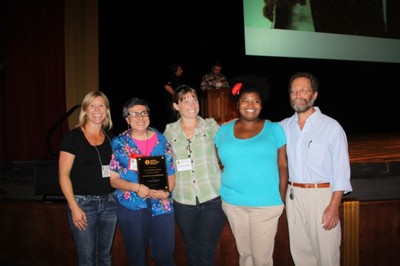
In the picture: The "Tang Gang" at the 2011 ABS meeting celebrates the election of Zuleyma Tang-Martinez as a Fellow of the Animal Behavior Society and Stan Braude's receipt of the Distinguished Teaching Award. From left: Debbie Bogie-Tobin, Zuleyma Tang-Martinez, Elizabeth Congden, Danielle Lee, Stan Braude.
CHILDREN'S BOOK REVIEWS
Capturing the Interest of Young Readers with Insights into the Challenges Animals Face:
How Animals Work, by David Burnie
Published by DK Publishing (2010)
Reviewed by John P. Roche, Thunder Bay Regional Research Institute
How do animals work? That is, how do they function, and how do they overcome the many formidable obstacles that they face in the physical and biological worlds in which they live? How Animals Work, by David Burnie, does an admirable job of introducing readers to these fascinating questions.
How Animals Work opens with a chapter on body basics, introducing the diversity of body-plan organization in the animal world. The book closes with a chapter called "The Animal World", which summarizes the evolutionary diversity of animal life, including coverage not only of vertebrates, but also of invertebrates, with particular foci on mollusks and arthropods. The rest of the book is organized into chapters on key problems animals must solve: moving, performing basic life support like breathing and surviving temperature extremes, perceiving, eating, communicating, and mating. For each of these key problems, David Burnie provides a series of two-page introductions to sub-topics, each including a short, general summary, and then providing several illustrative examples and concepts, all strengthened with superb photographs. For example, the chapter on communication, called "Keeping in Contact", includes sub-topics titled "signaling by sight", "calls and songs", "signals in scent", "staying in touch", "attracting a mate", and "pairing up". These sub-topics provide rigorous insights into the functional challenges animals face, and are effective in capturing the interest of young readers.
This book is written with accuracy, care, and finesse, providing coverage of an important taxonomic group that has evolved and diversified over the last 700 million years. Furthermore, it enjoys the tremendous asset-an asset that is a hallmark of all DK Books-of being filled with captivating photographs. This is a book that is highly recommended for both children and adults. In fact, it admirably succeeds in serving a wide age range of readers. As a winner of the 2011 Animal Behavior Society Outstanding Children's Book Award, it was overwhelming chosen as the top choice by students in third grade, fourth grade, and fifth grade classrooms across North America, and yet it offers a level of rigor and interest that is compelling also for adults, including trained scientists. If you ever wonder about how animals function and overcome obstacles-and who doesn't?-you will thoroughly enjoy this wonderful book.
Tricky Behavior, by Kimberley Jane Pryor.
Published by Marshall Cavendish (first published in the United States in 2010)
Reviewed by Michelle Solensky, Jamestown College
Animals do the strangest things, and Kimberley Jane Pryor has assembled a fascinating collection of weird behaviors used by a variety of animals to avoid becoming a predator's lunch. Tricky Behavior is one of six outstanding books in the Animal Attack and Defense series. In this book, readers can learn about the bizarre and amazing ways in which animals defend themselves by surprising or fooling potential predators.
Many readers will recognize some of the animal defenses highlighted, including grouping together (fish, penguins), emitting noxious odors (skunks, stink bugs), and playing dead (possums, hognose snake). Even for those familiar with these strategies, this book offers wonderfully colorful photographs to illustrate these behaviors, and a brief yet detailed and entertaining description of each animal and its behavior. Even readers who are familiar with defensive tactics like fleeing or freezing will still find something new to learn about in this book-birds that vomit on potential intruders, lizards that shoot blood from their eyes, fish that mask their scent by secreting a mucus sleeping bag, and ground squirrels that mask their odors with rattlesnake scent.
Each page of this book features a different tricky behavior, with pairs of behaviors grouped by themes. For example, one of the two-page layouts features animals that blow themselves up to look larger (porcupine fish) or anchor themselves tightly into rock crevices (chuckwallas). This book is certainly entertaining enough to read cover to cover, but also works well when read a few pages at a time, since each page features a self-contained description of one animal and its tricky behavior. This book is a great read for upper elementary school children, and for older kids and adults who enjoy learning about the crazy things that animals do.
Animal Snoops, by Peter Christie
Published by Annick Press
Reviewed by Abby L. Schwarz, Dandelion Environmental Consulting
Peter Christie, the author of Animal Snoops, has chosen a great topic to get young readers interested in animals: how and why animals monitor each other's behaviour. He presents a great variety of examples, organised into categories: mate-finding, winning fights, finding prey and avoiding becoming prey, and figuring out social relationships. Some are relatively simple (e.g. eavesdropping); others show animals using deception, mimicry, and counter-espionage. Sensory channels are likewise varied: hearing, olfaction, vision, and electric pulse detection. Exotic animals (e.g., the Uganda kob) and domestic ones (e.g., the eastern grey squirrel), terrestrial, marine and fresh water species all make up the "snooper parade". Each example is illustrated with cartoons by Cat MacInnes, as well as photographs.
The explanatory context for all these examples is evolution, including fitness, which is presented in understated, easy language. I thought the author did a creditable job in including this in a book for grades 3-5! Most examples of mate choice are explained in terms of sexual selection. However, the author says little about the relative importance of genetics and learning in producing successful snoopers, except for the example of bonnet macaques listening to langur warning sounds. Older children may wish more discussion here.
The book contains two major errors, one in the illustrations (p. 11: the photo is of the jewel cichlid, Hemichromis bimaculatus, but the text is about convict cichlid, Amatitlania nigrofasciata) and one in the text (p. 50: "Fish can't hear . . ." in reference to killer whales hunting salmon). Salmon cannot hear the high frequencies of killer whale echolocation calls, but they can hear lower frequencies, and the author's statement "Fish can't hear . . ." is just plain wrong.
In my opinion, it was unnecessary to describe how humans stage fights between Betta splendens males and gamble on the outcome (p. 33) when discussing the role of fighting in establishing a dominance hierarchy in these fish. It would have been enough just to discuss how the fish themselves respond to watching conspecifics fight. If the object was to increase the interest of readers, it was poorly chosen.
In spite of these errors, Animal Snoops is a lively book, full of information. It is sure to arouse interest and curiosity in many young readers.
A Book that Teaches with Every Flip of the Page: What in the Wild?, by David M. Schwartz and Yael Schy
Published by Tricycle Press
Reviewed by Wendy Hein, 4-H Youth Development, Oregon State University Extension Service
Do you know a budding nature detective? They will love What in the Wild? This book, which was a finalist for the 2011 Animal Behavior Society's Outstanding Children's Book Award, encourages readers to look closely at the visual signs that animals leave. From egg sacs to droppings to burrow entrances, Dwight Kuhn's photographs show the evidence that an animal is near. Charming poems by David Schwartz and Yael Schy accompany each photo and contain additional clues as to what the animal might be. Think you know the answer? Lift the gatefold page to reveal more photos and text describing the animal and explaining the behavior that leads to the strange sight. The interactive flap-flipping and fun poems will keep younger children entertained, while older readers will enjoy probing the mysteries and reading the science facts. This book is from the same team that wrote the 2008 Animal Behavior Society's Outstanding Children's Book Award Winner, "Where in the Wild?", and the same team that also wrote "Where Else in the Wild?" The ABS appreciates Tricycle Press's sustained and outstanding commitment to publishing engaging science books for youth.
CALL FOR NOMINATIONS FOR 2012 CAREER AWARDS
The Animal Behavior Society has a series of Career Awards that include the following: Distinguished Animal Behaviorist - outstanding lifetime achievement in animal behavior; Exemplar Award - major long-term contribution to animal behavior; Outstanding New Investigator - outstanding contribution by a new investigator; Quest Award - outstanding seminal contribution; Exceptional Service Award - sustained service contributions to the Animal Behavior Society; and Distinguished Teaching Award - distinguished contributions in teaching animal behavior to undergraduates.
All members of the society are encouraged to prepare and submit nominations for these awards. To aid the Selection Committee and to help codify the procedures involved, the following items must be submitted for a nomination: (1) a letter of nomination indicating the award for which the nominee is being proposed. It should provide details on the reasons the nominee should be considered for that award; (2) a curriculum vitae of the nominee; and (3) additional supporting letters from colleagues solicited by the nominator. These materials (except for the Distinguished Teaching Award; see below) should be sent to ABS Past President, Susan Foster, Department of Biology, Clark University, 950 Main St., Worcester, Massachusetts 01610-1473 USA. Phone: (508) 793-7204, E-mail: [email protected]. Deadline this year is November 30, 2011.
DISTINGUISHED TEACHING AWARD
PLEASE NOTE THE CRITERIA HAVE BEEN BROADENED IN ORDER TO RECOGNIZE A GREATER RANGE OF TALENTED MEMBERS.
The recipient of this award receives recognition, a plaque from the Society, and the opportunity to organize an education-related event at the following annual meeting. It is easy to know about our colleagues' research by reading publications; it is much more difficult to know about their teaching excellence. We rely on nominations. PLEASE NOMINATE QUALIFIED COLLEAGUES FOR THIS PRESTIGIOUS AWARD. Selection of the award recipient will be made by the Animal Behavior Society Education Committee and approved by the Executive Committee. The award recipient will be announced at the annual meeting of the Society.
Deadline: Nominating letters (or the form at the end of the Newsletter) should be submitted by 30 November 2011 to Penny Bernstein, [email protected]. Questions can also be directed to Jennifer Mather, [email protected].
Although e-mail copies are acceptable by the deadline, hard copies of letters of nomination with signatures are required before final considerations can be made.
Criteria and Procedures
1. Nominees must be current members of the Animal Behavior Society. (Note: current officers and committee chairs are not eligible for nomination.)
2. Nominees must have demonstrated highly effective and innovative teaching in the classroom or in an informal education setting (e.g., zoos, aquaria, museums, 4-H programs, research labs and field stations, and environment centers). They should have a reputation among peers and students for excellence in educating people about animal behavior.
3. Persons wishing to nominate an individual for the award should submit a one-page nomination letter providing evidence to support the nomination. The letter should also include names of at least two additional peer reviewers, and two current or former students or program participants. If students are under 18 years old, the student/participant references should be accompanied by, or attached to, a letter from the appropriate teacher or youth program coordinator. (Note: Department chairs, directors, supervisors, or colleagues may be helpful sources for this information if you are not at the same institution as the person you are nominating.)
4. The Education Committee will solicit appropriate supporting materials, including those indicated in nominating letters (e.g., documentation of other teaching awards, peer and student evaluations, additional references, evidence of innovation in curriculum development, development of educational tools, programs, or multimedia products, or other appropriate indicators of superior educating).
5. If you would like to renominate an individual for the award, please submit a letter indicating that you are doing so and provide any additional information you feel might be helpful to the committee. Please also include the date of the original nomination. Names of additional peer or student reviewers may also be provided.
ABS STUDENT RESEARCH GRANTS
DEADLINE 6 JANUARY 2012
(must contact ABS Central Office by 3 January 2012)
JOINT APPLICATION PROCESS
Applicants for the following grants may apply via a single application process:
ABS Student Research Grant; E. O. Wilson Conservation Award; George W. Barlow Award; Amy R. Samuels Cetacean Behavior & Conservation Award; Developing Nations Research Grant.
Application materials should be submitted through the ABS website: http://new.animalbehaviorsociety.org/web. This grant site is now open and will close on Friday, 6 January 2012 (midnight, Eastern Standard Time). Submissions will not be accepted after the closing date. Students who have paid their society dues in full prior to Tuesday, 3 January 2012 and have contacted the ABS Central Office by 3 January 2012 will be eligible to submit a grant application. If you have any questions about your membership, problems with the grant site or the submission process, contact the ABS Central Office ([email protected]) prior to Tuesday, 3 January 2012. For questions regarding application content or the grant review process, potential applicants for these grants may contact ABS Senior Member-at-Large Scott Forbes, Department of Biology, University of Winnipeg, 515 Portage Ave, Winnipeg, Manitoba, R3B 2E9, Canada. Email:[email protected]
ABS Student Research Grant
ABS Student Research Grants for graduate student research are awarded at a level of US$500 to $2000 each, depending on referee evaluations. Applicants must: (1) be currently enrolled in a graduate program; and (2) be active student members of ABS, enrolled or renewed by Tuesday, 3 January 2012, and (3) have contacted the ABS Central Office ([email protected]) to activate their grant account by Tuesday, 3 January 2012. The deadline for receipt of completed submissions is Friday, 6 January 2012 (midnight, Eastern Standard Time). Late submissions will not be accepted. All applicants must arrange to provide a letter of support from an advisor or other scientist. All applications will be reviewed by members of the ABS Student Research Grant Committee, and decisions will be announced in April/May 2012.
E. O. Wilson Conservation Award
The Edward O. Wilson Conservation Award seeks to encourage graduate students of animal behavior to participate in meaningful conservation-related research. This single grant of up to US$2000 supports a proposal considered meritorious for its integration of behavior and conservation. The award is named for Dr. E. O. Wilson, professor at Harvard University, one of the world's preeminent scientists and pioneers in biodiversity conservation. Dr. Wilson received the ABS Distinguished Animal Behaviorist Award in 2002. Applicants must: (1) be currently enrolled in a graduate program, (2) be active student members of ABS, enrolled or renewed by Tuesday, 3 January 2012, and (3) have contacted the ABS Central Office ([email protected]) to activate their grant account by Tuesday, 3 January 2012. The deadline for receipt of completed applications is Friday, 6 January 2012 (midnight, Eastern Standard Time). Late submissions will not be accepted. All applicants must arrange to provide a letter of support from an advisor or other scientist. All applications will be reviewed by members of the ABS Student Research Grant Committee, and decisions will be announced in April /May 2012.
George W. Barlow Award
The George W. Barlow Award's purpose is to encourage excellence in graduate student research in the field of animal behavior. This grant will be given annually to one top-ranked proposal in the Student Research Grant cycle in accordance with the most recent ABS Student Research Grant competition rules. Applicants must: (1) be currently enrolled in a graduate program, (2) be active student members of ABS, enrolled or renewed by Tuesday, 3 January 2012, and (3) have contacted the ABS Central Office ([email protected]) to activate their grant account by Tuesday, 3 January 2012. The deadline for receipt of completed applications is Friday, 6 January 2012 (midnight, Eastern Standard Time). Late submissions will not be accepted. All applicants must arrange to provide a letter of support from an advisor or other scientist. All applications will be reviewed by members of the ABS Student Research Grant Committee, and decisions will be announced in April /May 2012.
Amy R. Samuels Cetacean Behavior & Conservation Award
The purpose of the Amy R. Samuels Cetacean Behavior & Conservation Award is to provide financial support for graduate students studying cetacean behavior and/or cetacean conservation in natural environments. The goal of this grant is to encourage original and significant research that focuses on endangered populations or species, or on critically important problems in cetacean behavioral biology. This year, a grant of up to US $2000 will be made to a successful applicant. The grant must be used for field research; it cannot be used for laboratory research. This grant will be awarded only if there are proposals deemed worthy by the committee in any given year. Thus, there may be years in which no award is made. Eligible applicants must: (1) be enrolled in a Masters or Doctoral Program in a University accredited by a regional college association, (2) be members in good standing of one of the following professional societies: Animal Behavior Society or Association of the Study of Animal Behaviour (enrolled or renewed by Tuesday, 3 January 2012), and (3) have contacted the ABS Central Office ([email protected]) to activate their grant account by Tuesday, 3 January 2012. The deadline for receipt of completed applications is Friday, 6 January 2012 (midnight, Eastern Standard Time). Late submissions will not be accepted. All applicants must arrange to provide a letter of support from an advisor or other scientist. All applications will be reviewed by members of the ABS Student Research Grant Committee, and decisions will be announced in April/May 2012. ASAB members planning to apply for this grant must contact the Central Office ([email protected]) prior to Tuesday, 3 January 2012 to be able to submit an application through the ABS web site.
Note: Applicants may receive only one of the following grants in a lifetime: ABS Student Research Grant; E. O. Wilson Conservation Award; George W. Barlow; Amy R. Samuels Cetacean Behavior & Conservation Award).
Animal Behavior Society Developing Nations Research Grant
ABS announces the annual Developing Nations Research Grant Competition. The funds are intended to provide financial support for scientific studies of animal behavior conducted by current Animal Behavior Society student members, as well as more established researchers, who are residents of a developing nation and are conducting research at an institution in a developing nation. (Please note that developing nation student members of ABS are also eligible to apply for the annual Student Research Grants Competition, and are eligible to receive both a Developing Nations Research grant and a Student Research Grant, but not in the same year.)
The following nations shall not be considered developing nations: Australia, Austria, Belgium, Canada, Denmark, Finland, France, Germany, Iceland, Ireland, Israel, Italy, Japan, Luxembourg, New Zealand, Norway, Portugal, Spain, Sweden, Switzerland, the Netherlands, the United Kingdom, and the United States. Grants are awarded for research to be conducted within a 1-year period from the date of receipt of this grant.
Applicants must be active members of ABS (i.e., enrolled or renewed by Tuesday, 3 January 2012) and have contacted the ABS Central Office ([email protected]) to activate their grant account by Tuesday, 3 January 2012. The deadline for receipt of completed applications is Friday, 6 January 2012 (midnight, Eastern Standard Time). Late submissions will not be accepted. All applicants must arrange to provide a letter of support from an advisor or other scientist. All applications will be reviewed by members of the ABS Student Research Grant Committee, and decisions will be announced in April/May 2012.
|
CALL FOR ABS MEETING INVITATIONS |
LATIN AMERICAN TRAVEL AWARD
The Latin American Travel Awards are intended to encourage greater participation of Latin American researchers in ABS meetings, by helping to defray the costs of international travel, housing, and/or meals at meetings. These awards are restricted to Latin American graduate students enrolled in programs in Latin American institutions, who will be presenting a talk/poster at the ABS meeting. Priority will be given to Ph.D. students who are attending an ABS meeting for the first time and who have not received a Latin American Travel Award in previous years. Award values vary according to funds available. The deadline for applying is 1 APRIL 2012.
You may apply for a Latin American Travel Award once you have successfully submitted an abstract for a talk or poster, via the 2012 meeting web page. To apply for a Latin American Travel Award, please submit by email a single electronic file (.pdf is preferred) that contains the following materials, to Member at Large, Dr. Kevin McGraw ([email protected]): (1) a copy of the abstract of your talk or poster; (2) a short CV (two pages maximum); (3) a brief statement (one page maximum) explaining how the meeting will enhance the applicant's career development; and (4) an itemized budget estimating travel costs, the amount of funds available or requested from other sources, and the amount requested from ABS.
DIVERSITY FUND STUDENT REGISTRATION FEE AWARD
The Diversity Fund Student Registration Fee Awards are intended to encourage participation and defray costs of attending the annual Animal Behavior Meetings by covering registration fees for graduate students and, in some cases (see below), established professionals, of under-represented minorities. Awards will be made by lottery of all valid applications received before the deadline, which is 1 APRIL 2012. Applications should be emailed to ABS Treasurer, Dr. Philip Stoddard ([email protected]). Please include in the subject line "ABS Diversity" followed by your name. Preference is given to individuals presenting research results.
Eligibility: Applicants from North America must be enrolled in a graduate program at the time of application and must be members of under-represented minorities who are of African, Asian, or Latin American descent or of Native American heritage. Citizens (graduate students or established professionals) of Latin American countries and non-white citizens of African countries are also encouraged to apply.
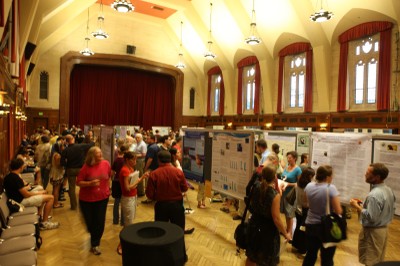
In the picture: Conference attendees enjoy the poster session at the 2011 joint ABS-IEC meeting in Bloomington, IN
Journal Promotes Innovations in Life Science Education
Do you want to improve your teaching, or have you been exploring ways to help students learn more effectively? Check out CBE-Life Sciences Education (CBE-LSE) at www.lifescied.org. CBE-LSE is an online journal that emphasizes teaching innovations and evidence of their effectiveness. It publishes original research articles, essays, and features that help you apply education research to your own teaching.
Now in its 10th year, CBE-LSE is a journal for educators at all levels and across all life science disciplines. It is published quarterly by the American Society for Cell Biology with partial funding from the Howard Hughes Medical Institute. The journal is freely available without a subscription.
I had the honor of becoming Editor-in-Chief of CBE-LSE in August 2010. In my first editorial, I outlined some priorities for the journal (www.lifescied.org/cgi/content/full/9/4/379). One priority is for CBE-LSE to serve as a venue for publishing studies on institutional change, which especially important with national movements underway to transform undergraduate biology education.
Another priority will be to broaden readers' and authors' views of what constitutes data. Specifically, I and the other members of the Editorial Board want to make sure that CBE-LSE is a venue for publishing well-designed studies that reveal not only "what works," but also what "working" means and "why or how it works.";
CBE-LSE is a unique venue for reaching the "grassroots"-biology faculty who want to improve their own teaching and their students' learning. The journal is written by and for professionals engaged in biology teaching in all environments, including K-12 schools, two-year colleges, four-year colleges, universities, and professional schools, as well as science centers and museums. CBE-LSE publishes articles and essays that influence science education at all levels, from policy-making to classroom teaching and learning to partnerships among students, teachers, and scientists.
-Erin L. Dolan, University of Georgia
IN MEMORIAM: GARY R.A. BORTOLOTTI
(1954-2011)
Gary Roy Anthony Bortolotti, Houston Professor of Ornithology and Rawson Professor in Biology at the University of Saskatchewan, Canada, passed away suddenly on 3 July 2011, after complications in a brief battle with acute leukemia. His studies have made a large contribution to many aspects of avian behavioral ecology and ecophysiology. His energy, passion, and charming personality will be deeply missed. He is survived by his children, Lauren and Eric, his wife of 23 years, Heather Trueman, and his sister, Linda (Michael) Hutcheon.
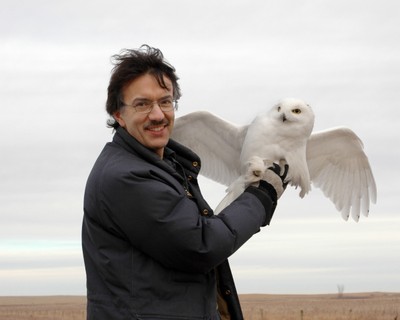 Gary was born in Smiths Falls, Ontario, on 17 August 1954 and grew up in the suburbs of Toronto. He received his Bachelor of Science from the Faculty of Forestry at the University of Toronto. His enthusiasm for natural history and ornithology led him to conduct his Ph.D. thesis on the ecology and behavior of Bald Eagles at Besnard Lake, Saskatchewan, under the supervision of Jon C. Barlow of the Royal Ontario Museum. Gary defended his dissertation in 1984 at the University of Toronto, and in 1987 joined the Department of Biology at the University of Saskatchewan as a University Research Fellow, a program of the national granting agency of Canada to employ and retain the most talented and promising young scientists in the country. Gary was promoted to Associate Professor in 1990 and Full Professor in 1996. Recognition of his significant research contributions led him to be appointed the Stuart and Mary Houston Professor of Ornithology (2002) and service to the department of biology including assistant headship from 2000-2007 led to his appointment as the Rawson Professor of Biology (2008). He was active in teaching and research in a variety of fields including animal behavior, ecophysiology, ecology and evolutionary biology.
Early in his career as a field ecologist, Gary established a life-long personal and professional bond with the pristine nature of Besnard Lake, in the depths of the Canadian boreal forests. Here he described himself as feeling “…such a sense of satisfaction, or perhaps relief, the way one feels when finally starting on the journey home after an extended absence”. At Besnard Lake, he initiated long-term studies on Bald Eagles and American Kestrels and was one of the first to study the behavior and ecology of raptors in such a depth that it provided foundational insights into topics such as sex ratio manipulation, sibling rivalry and mate choice. He also performed vast research on the evolution of plumage and integumentary coloration in birds, revealing links to immune function, endocrine profiles and health status that now constitute key elements in understanding the costs of signal expression and honest signaling. Using kestrels and storks as study models, Gary also worked extensively on the effects of different pollutants in wildlife. During the last years of his career, Gary contributed to the development of a non-invasive technique to monitor avian endocrine status through feather composition, and produced several ground-breaking papers applying this technique to monitor stress in wild avian populations.
Gary was an indefatigable force in shaping thoughts and directing research through his review papers, talks, discussions, and numerous meetings, producing 2 books, 8 book chapters and over 130 papers in journals and collected works to his name. He travelled extensively to conduct fieldwork and established collaborations with more than 40 scientists worldwide. In the last15 years, he visited Spain at least once a year to collaborate and in return, no fewer than ten young Spanish biologists visited his lab over the years to get training and advice.
Gary was a meticulous scientist, an excellent mentor and a memorable teacher, always happy to provide help and advice. He influenced the direction of a generation of students, both undergraduate and graduate, at the University of Saskatchewan. Gary was honest and direct in providing critical comments on the work of students and colleagues, but his feedback was always constructive.
Gary was as much an active conservationist and nature photographer as he was an outstanding behavioral ecologist. Generous and kind-hearted, above all, Gary was a true friend. His many colleagues and friends will miss his energy and passion for life, his gift for working with people and his outgoing personality.
Submitted by J. Blas1, R.D. Dawson2, J.J. Negro1, J.L. Tella1 and K.L. Wiebe3
1Doñana Biological Station, Sevilla, Spain; 2Ecosystem Science and Management Program, University of Northern British Columbia, Prince George BC, Canada;3 Department of Biology, University of Saskatchewan, Saskatoon, Canada
"THINKING EVOLUTIONARILY: EVOLUTION EDUCATION ACROSS THE LIFESPAN": CONFERENCE REPORT
Jennifer Mather--Chair, Education Committee
This fascinating conference, was held on October 25 and 26th in Washington. DC. Particularly in the US, religious fundamentalists have been challenging evolution, presenting the 'intelligent design' doctrine as an alternative and making the teaching of this important area difficult, particularly for high school teachers. The conference was sponsored by the Carnegie Institute of Science, the US National Academy of Science and National Research Council. Attendees included the Editor-in-Chief of Science, program officers from NSF and NIH, participants from Howard Hughes Medical Institute and the Smithsonian. But there were also the representatives of scientific societies, about 20 (that's where I came in, as chair of the Education Committee of the Animal Behavior Society), high school teachers, an editor from Pearson Ed and a science writer. It was a fascinating mix, and a lot of interesting ideas washed back and forth through the two days. These ones stuck with me.
WHO: There was no consensus about which target audience we should aim for in our better teaching of evolution. Many went for the Advanced Placement (AP) course in high school, but others felt that the high school Biology curriculum was a better place to start, since not that many students do AP. We heard advocates of the teaching of evolution grounding the first year Biology course in university, pointing out that most students take this and only this course in their university education. A few people pointed out that we should be trying to reach children in the elementary schools, that they are a lot smarter than we give them credit for, and others noted that the general public should be our target, that children grow up in families and are influenced all their lives by those around them. A suggestion was made by the Societies that we might work at bringing high school teachers into our conferences.
WHAT: There was a strong push for teaching evolution all across the curriculum, as a foundation rather than a special chapter. First, it belongs there and second, you can't boycott 'the evolution lecture', glue together the 'evolution pages' in a high school text (as one school committee member did) or present evolution as 'just a theory' as creationists do. It was pointed out that 'theory' may be a problematical word for the general public. For scientist its meaning is clear, but for others it's 'well, I think this is true but I don't really have proof'. One suggestion was that we talk instead of 'evolution science'. Besides spanning the curriculum, evolution needs to be taught as something that's still going on, and also as important to us. Thus medical education is beginning to take this approach, and giving examples like antibiotic-resistant bacteria.
HOW: There was a pretty general consensus that lecturing and 'canned' labs aren't the way to convince students of the process of evolution. Inquiry learning is being highlighted in the AP Biology course, rather than rote learning it wants thinking. This approach was lauded in university courses as well, and a couple of good examples were presented to us. One professor gave his students data sets, and commented how they got to work to understand not just outcomes but the process. Inevitably it was pointed out that many of us would like to teach smaller classes and use more hands-on approaches, but that the University system rewards research and not teaching, and shoves students into ever larger classes. We're not the ones who need to be persuaded there!
One thing that came through loud and clear in the sessions was the need for more communication and better networking. When the reps of the different Societies met finally on the second afternoon, that was almost the first thing we wanted (we're being assured we will have our own network). We heard about good examples--there's a friendly web site in California, some societies have an Outstanding Teacher award (ABS being one of them), there are curricular tips and approaches to teaching as well as to the topic that are 'out there'. We don't need to 'reinvent the wheel', and widespread follow-up communication is one of the planned goals of the conference.
New Chief Editors for Behavioral Ecology and Sociobiology
After 17 years of dedicated and excellent service, Tatiana Czeschlik (Heidelberg, Germany) retired as Chief Editor  of Behavioral Ecology and Sociobiology, the first journal devoted exclusively to the publication of original research in these now-preeminent disciplines in behavioral biology. Tatiana is succeeded by Theo C. M. Bakker (University of Bonn, Germany) and James F. A. Traniello (Boston University, USA). Theo Bakker specializes on the behavioral ecology of fishes and will handle manuscripts dealing with vertebrates, while James Traniello, who studies the behavioral ecology of social insects, will be responsible for submissions using invertebrate models. The Editors-in-Chief invite the submission of manuscripts which present results of significant research on core topics in the disciplines, and encourage innovative articles integrating cutting-edge conceptual and empirical approaches in genomics and neuroecology to provide novel insights into behavioral adaptation.
|
CALL FOR SYMPOSIA |
ANNOUNCEMENTS
49TH ANNUAL MEETING OF THE ANIMAL BEHAVIOR SOCIETY - JUNE 10-14 2012
The 49th Annual meeting of the Animal Behavior Society will be held at the University of New Mexico, Albuquerque, New Mexico from June 10 to 14 2012, hosted by Steven Gangestad. This meeting features a special joint meeting day with the Human Behavior & Evolution Society (HBES) meeting (June 13-17) which promises to be a unique opportunity for cross-fertilization of ideas relating to overlapping areas of interest. The joint meeting day will include plenary talks, symposia and talk sessions open to members of both societies.
CALL FOR PAPERS. Abstracts due March 16, 2012.
Each ABS member may present or sponsor one contributed paper at an Annual Meeting. Any topic related to the field of Animal Behavior is welcome, including all aspects of the behavior of animals for field, laboratory or theoretical studies. Abstracts submitted by non-members must include the name of an ABS member willing to sponsor the presentation. ABS members may also show one film, participate in invited paper sessions or present plenary lectures in addition to giving or sponsoring their single contributed paper. The research reported at an Annual Meeting must comply with the ABS guidelines and all applicable laws concerning animal care and welfare. More details on abstract submission guidelines and abstract submission deadlines will soon be available on the conference website, linked to the ABS meeting site here: http://new.animalbehaviorsociety.org/web/absmeetings/.
Registrants may submit abstracts for Talks or Posters. Talks will be allocated on a first-come-first-served basis, as per ABS policy. Registrants are encouraged to consider giving a poster presentation. Posters will be presented in well-attended evening receptions and provide the opportunity for extensive interaction and discussion. Registrants will be given the option of flagging their contribution as one that may be particularly appropriate for the day of overlap with HBES. Talks presented on this day in open sessions will garner wide exposure as members of both societies may attend. Only a limited number of talks will be chosen for presentation on this day. The joint-day programming committee will make final decisions as to which contributions will be scheduled for this day.
Given the complexities of the joint day, final registration fees are not yet determined, but approximate fees will be:
| Membership | Early | Late |
| Full-Member | $200 | $280 |
| Non-Member | $260 | $340 |
| Student | $100 | $150 |
CALL FOR SYMPOSIUM PROPOSALS, 49th Annual Meeting.
Symposium proposals for the 49th annual meeting may still be considered if they are submitted immediately to one of the ABS program officers.
2012 WARDER CLYDE ALLEE COMPETITION
The 2012 Warder Clyde Allee Competition for Best Student Paper will take place June 10 to 14 at the University of New Mexico, Albuquerque. All eligible students are encouraged to participate. The following rules govern the Allee Award for best student paper presented in the Warder Clyde Allee session at the annual meeting:
Eligibility requirements: Any independent graduate student research (including, but not limited to, the doctoral dissertation) is eligible. The work presented may be part of a larger collaborative effort, but the student should be first author and have the principal responsibility for the conceptualization and design of the research, the collection and analysis of the data, and the interpretation of the results. The entrant cannot have been awarded the Ph.D. Degree before the preceding ABS annual meeting (for the 2012 competition, this date is July 30, 2011). An individual can enter the session only once per lifetime.
To enter: Students must indicate their desire to be considered for the competition by checking the appropriate box on the abstract submittal form for the annual meeting; submit an electronic version of their paper, which includes their addresses, telephone numbers, and e-mail addresses; fill out a signed and dated form indicating that they meet all eligibility requirements (to be supplied to entrants after receipt of their papers); present a spoken version during the 2012 Annual Meeting; attend both the Allee welcoming dinner on the evening before the competition day and the banquet during the Annual Meeting. The spoken portion of the competition is limited by the number of papers that can be presented on the day assigned for the competition. Applications for the 2012 competition, including the written paper, will be due on February 16th, exactly one month before the meeting abstract submission date (March 16th, 2012). This will enable the Allee judges to evaluate the written papers and determine further eligibility. Applicants will be informed of status prior to the abstract submission due date for the meeting. The manuscript must be submitted in electronic PDF format, of no more than seven double-spaced, line-numbered, text pages, and no more than a total of four tables and/or figures (this limit does not include abstract, references, or acknowledgments), and must be received by ABS 2nd President-Elect Dan Rubenstein, Department of Ecology and Evolutionary Biology, Princeton University, Princeton, NJ 08544, USA, Phone: (609) 258-5698, E-mail: [email protected]. Electronic submission is required. If you do not receive acknowledgement of receipt within 7 days, please send a follow-up query. Papers MUST be formatted using the instruction for authors for a research paper in the journal Animal Behaviour to insure eligibility. Check instructions at the site: http://www.elsevier.com/wps/find/journal description.cws_home/622782/authorinstructions. If significant new results arise after submission, students may submit a one-page addendum to their papers up to 30 days before the first day of the Annual Meeting. Questions should be addressed to Dan Rubenstein, [email protected].
GENESIS AWARD POSTER COMPETITION
Undergraduates who submit posters for presentation at the annual meeting of the Animal Behavior Society are automatically entered in the Genesis Award poster competition unless they indicate they do not want to be included in the competition when they submit their abstract. Judging criteria include significance of the research topic, research methods, research results, and presentation. Presentation encompasses the student's oral discussion with the judges and the poster itself, including clear statements of the questions and results, demonstration that there has been appropriate literature review, good organization and visual appeal. Students should be prepared to demonstrate a mastery of their subject material. Information about this award is available at the ABS website link:
http://new.animalbehaviorsociety.org/web/grants-and-awards/meeting-related-awards/genesis-award-for-undergraduate-research. Further information, if needed, can be obtained from the Education Committee Chair, Jennifer Mather, [email protected].
|
Join an ABS Committee! Would you like to volunteer for one of the society's active committees? This is an important and rewarding way to participate in the business of the society, and we need your help! Committees include Membership, Policy, Public Affairs, Education, Latin American Affairs, Conservation, Animal Care, Film and others. Contact ABS President Joan Strassmann, Washington University in St. Louis, Campus Box 1137, St. Louis, MO 63130-4899, USA. E-mail: [email protected] |
2013 ABS MEETING - Organizing Symposia and Paper Sessions
The historic 50th meeting of the Animal Behavior Society will be held July 28 to August 2, 2013, at the University of Colorado at Boulder. Hosted by Michael Breed, this meeting will mark 50 years since the formation of the Animal Behavior Society. Members interested in hosting a symposium are encouraged to contact the Program officers to discuss preparation of a proposal. Symposia that include 'state of the field' reflection may be particularly appropriate for this 50th anniversary meeting. To organize a symposium, an invited paper session, or a workshop for the ABS Annual Meeting, you should contact the Program Officers to discuss your ideas. We will first make sure that there are no potential conflicts with the topic that you are considering. Then we will ask you to prepare a pre-proposal and submit it to the Program Officer Elect. Organizers often find that consultations with the Program Officers are helpful when drafting the pre-proposal. The pre-proposal should be a page or two summarizing your intent for the session, and suggesting potential participants.
A symposium should be a profound and stimulating review of an important subject area that currently is a major focus of research. It should be a thorough treatment of past work and current research advances, and should be of general interest to the majority of ABS members.
An invited paper session is a special grouping of papers that focus upon empirical results relating to a particular topic. Usually there is no all-encompassing historical-theoretical perspective, although the organizer(s) may wish to summarize the individual papers or arrange them according to some theme.
Pre-proposals for the 2013 meeting are due before the annual meeting at the University of New Mexico in 2012 and will be circulated to the Executive Committee - EC prior to the Annual Meeting and then discussed at the EC meeting.
The 2012 meeting is scheduled for 10-14 June. The Program Officer Elect encourages potential organizers to begin discussions about proposals for that conference. Further information can be found on the ABS website or by contacting the ABS Program Officers: Maydianne Andrade, Department of Biological Sciences, University of Toronto Scarborough, 1265 Military Trail, Scarborough, Ontario, Canada M1C 1A4. Phone (416) 287-7425, E-mail:[email protected] and Michael Beecher, University of Washington, Animal Behavior Program, Seattle, WA 98195-1525, USA. Phone: (206) 543-6545, E-mail: [email protected]
MEETINGS
ANIMAL BEHAVIOR SOCIETY ANNUAL MEETINGS
2012: 10-14 June, Animal Behavior Society - 49th Annual Meeting, Albuquerque, New Mexico, preceded by the Human Behavior and Evolution Society (HBES) meeting from June 13-17 (one day overlap of open sessions for members of both societies)
2013: 28 July-2 August, Animal Behavior Society - 50th Annual Meeting, Boulder, Colorado.
OTHER US MEETINGS
2012: Society for Integrative and Comparative Biology (SICB) Annual Meeting, 3-7 January, Charleston, South Carolina.
2012: American Association for the Advancement of Science (AAAS), 16-20 February, Vancouver, Canada.
INTERNATIONAL MEETINGS
2011: 21-25 November, Annual Conference of the Ecological Society of Australia. Hobart, Tasmania
2011: 5-9 December, Annual Congress for Conservation Biology. Christchurch, New Zealand
2012: 12-17 August, 14th Congress of the International Society for Behavioral Ecology (ISBE), Lund, Sweden
| NOTICE! ABS Financial statement is available to all ABS members upon request. Please contact the ABS Central Office: [email protected]. |
CANDIDATES FOR THE 2012 ELECTION OF ABS OFFICERS
The order in which candidates are listed may influence voting. Please avoid this bias in making your choice. This year the candidates are listed in alphabetical order.Second President-Elect:
Michael Breed
Education: B. A. Biology and English, 1973, Grinnell College; M. A. Entomology, 1975, University of Kansas; Ph. D. Biology, 1975, University of Kansas.
Current Position: Professor, Ecology and Evolutionary Biology, University of Colorado, Boulder; Associate Chair (undergraduate studies), Ecology and Evolutionary Biology, University of Colorado, Boulder.
Research interests: Social insect behavior and ecology; kin and nestmate recognition; division of labor; foraging ecology and communication about food resources
ABS and Related activities: Local Host, ABS annual conference, 2013; 2003-2006, Editor, Animal Behaviour, 2006-2009; Executive Editor, Animal Behaviour; Member, Chair, Proposal Review Panel, Graduate fellowships, National Science Foundation,2007-2011; Member, Proposal Review Panel, Graduate fellowships, National Science Foundation, 2002-2004; Member, Proposal Review Panel, Animal Behavior, National Science Foundation, 1993-1995; Fellow of the American Association for the Advancement of Science; Fellow of the Entomological Society of America (elected 2006).
Regina Macedo
Education: B.S. 1984, Universidade de Brasilia. Brazil; M.S. Zoology 1986, University of Oklahoma; Ph.D. Zoology 1991, University of Oklahoma.
Current Position: Professor, Departamento de Zoologia, Universidade de Brasilia, Brazil.
Research Interests: Conflict and cooperation within social systems, sexual selection, reproductive behavior and mating systems; communal and cooperative breeding; bird conservation in the tropics.
ABS and Related Activities: ABS member since 1995; Developing Nations Grant Committee member 1999-2000; Latin American Affairs Committee member 1998-2001; Chair of Latin American Affairs Committee 2001-2005; ABS Executive Committee Member-at-Large 2005-2007; ABS Secretary 2008-2011; administered ABS Latin American Travel Grant program 2007; Plenary Speaker, ABS-IEC 2011 Conference; Organizer of 46th ABS Annual Meeting, Brazil, 2009; Skutch Fund Committee member 2006-2008; Scientific Committee member for 28th International Ethological Conference, Brazil 2003; Associate Editor, Behavioral Ecology, 2010-present; Associate Editor, Emu - Austral Ornithology, 2008-2010.
Treasurer:
Andrea Aspbury
Education: B.S., 1994, Biology, University of Arizona; M.S., Biology, 1996, Illinois State University; Ph.D., 2002, Biology, University of Nebraska-Lincoln; Post-doc, 2002-2004, Texas State University-San Marcos; Lecturer, 2002-2005, University of Texas-Austin.
Current Position: Senior Lecturer Department of Biology, Texas State University.
Research Interests: Sexual selection and speciation, variation in behavior, evolutionary maintenance of asexual vertebrates.
ABS and Related Activities: ABS member since 1997; NSF Graduate Research Panel (2010).
Molly Cummings
Education: B.A., Human Biology, 1990, Stanford University; Post Graduate Diploma, Marine Sciences, 1994, James Cook University, Queensland, Australia; Ph.D., Ecology, Evolution and Marine Biology, 2001, UCSB; NSF & TARP Postdoctoral Fellow 2001-2003, UT Austin.
Current Position: Associate Professor, Integrative Biology Department, University of Texas, Austin
Research Interests: evolution of communication traits, sexual selection; neural mechanisms of mate choice; visual communication and camouflage
ABS and Related Activities: ABS member since 2002; NSF DDIG panelist (2008); recipient of the ABS Outstanding New Investigator Award (2009); reviewer for Animal Behaviour and NSF Animal Behaviour panel; NSF workshop participant on the future of Organismal Biology (2011); Editioral Board Member for Journal of Comparative Physiology A, Frontiers in Neurogenomics, and Biology Letters; Associate Editor, Evolutionary Ecology.
Member-at-Large:
Ingo Schlupp
Education: Diploma Biology, 1991, University of Hamburg; Dr. rer. nat. Zoology University of Hamburg, 1995.
Academic positions: Postdoc with M. Schartl 1995, Heisenberg Fellow 2000, Assistant Professor University of Oklahoma 2005, Associate Professor University of Oklahoma 2008.
Current Position: Professor, Department of Zoology, University of Oklahoma.
Research Interests: Behavioral ecology livebearing fishes, with a focus on the role of social influences on mate choice. Ecology, evolution, and behavior of unisexual fishes
ABS and Related Activities: joined ASAB first as graduate student, ABS since 2005; Associate editor for Acta Ethologica, frequent reviewer for behavioral journals, grant proposals. Co-organizer of the Evolution Meetings in Norman Oklahoma 2011. Co-edited a book on Ecology and Evolution of Poeciliid Fishes in 2011.
John Swaddle
Education: B.Sc.(Hons), Psychology & Zoology, 1991, University of Bristol, UK; Ph.D., Biology, 1994, University of Bristol; Natural Environment Research Council Postdoctoral Fellow 1994-1997, University of Glasgow, UK; 1997-2001 Royal Society of London University Research Fellow, University of Chicago and University of Bristol; Sabbatical Research Fellow at National Center for Ecological Analysis and Synthesis (NCEAS), University of California Santa Barbara, 2007-2008.
Current Position: Professor of Biology and Courtesy Professor of Applied Science, The College of William & Mary.
Research Interests: Cognitive and developmental processes underlying sexual selection mechanisms; the influence of anthropogenic stressors and land use change on the behavioral ecology and population viability of wildlife; effects of population ecology on human health and security; the interactions of ecology and evolutionary biology with policy making processes.
ABS and Related Activities: ASAB member 1991-2001; ABS member since 2001; awarded Young Investigator Prize by the American Society of Naturalists in 1996; awarded Most Outstanding New Investigator Prize from ASAB in 1998; host and organizer of ABS Annual Meeting at The College of William & Mary in 2010; reviewer for ABS student research grants; panel member for NSF behavior and biomathematics panels; regular reviewer of NSF animal behavior grant proposals; reviewer for Animal Behaviour and 46 other journals; five-year term as Chair of large integrative Environmental Science and Policy program at William & Mary; regularly involved in fundraising/lobbying activities for home institution with private donors, foundations, and corporations; active member of several strategic planning committees that report to University Provost and President.
Executive Editor:
Michelle Pellissier Scott
Education: B.A. 1961 Wellesley College; M.A. 1980 Harvard University; Ph.D. 1984 Harvard University; Lecturer, 1984-85 Harvard University; Research Associate 1985-87 Boston University; Research Assistant Professor 1987-91 Boston University; Visiting Professor 1996-97 Duke University.
Current Position: Professor Emerita, Department of Biological Sciences, University of New Hampshire.
Research Interests: Behavioral endocrinology, Parent/offspring behavior (insects), Social evolution, Behavioral genetics.
ABS and Related Activities: Member since 1984; Editor Animal Behaviour 2007-10; Member-at-large 1997-2000; Student Research Grants competition 2000; Mentor for Founders’ awardees 2002; Symposia organizer at ABS meetings 1998 & 1989; Allee competition judge 1991 & 1994; Host and organizer of Northeastern Regional Animal Behavior Meeting 1994. Runner-up Founders’ award 1986.
Vladimir V. Pravosudov
Education: B.S and M.S., Zoology, 1983, Leningrad State University, Russia; Ph.D., Zoology, 2007, The Ohio State University; NSF Postdoctoral Fellow in Biosciences related to the Environment, 1997-1999, Purdue University; NIH NRSA postdoctoral fellow, 1999-2002, University of California Davis; K01 NIH Career Award, 2002-2005, University of California Davis.
Current Position: Associate Professor, Department of Biology, University of Nevada Reno.
Research Interests: Cognitive ecology, neuroecology/ neuroethology of memory, comparative cognition, evolution of cognition and the brain, behavioral endocrinology, food hoarding, birds.
ABS and Related Activities: ABS member since 1995; Plenary speaker at the 10th Jubilee Congress of the ISBE, Jyvaskyla, Finland (2004); Member of the NSF Animal Behavior DDIG Panel (2010 and 2011); Member of the Organizing Committee for the international conference (“Integrative Biology of Scatter Hoarding: Ecology, Psychology and Neuroscience”), Cornell University (2008); reviewer for ABS Student Research Grant Awards (2003); Member of the ABS Founder’s Award Committee (2005); Member of the ABS film committee (2003-2007); Editor for Animal Behavior (2009-present); The lead Guest Editor for a theme issue in the Philosophical Transactions of the Royal Society B: Integrating Ecology, Psychology and Neurobiology within a Food-Hoarding Paradigm (2010); Review Editor for Frontiers in Behavioral Neuroscience (October 2008-current).
OPPORTUNITIES
ASSISTANT PROFESSOR
ANIMAL BEHAVIOR/ANIMAL COGNITIONCanisius College invites applications for a full time, tenure track position in its Animal Behavior, Ecology, and Conservation department beginning Fall 2012. We seek an individual committed to excellence in the teaching and mentoring of students, as well as the conduct of productive scholarship. This position will involve offering courses in our undergraduate Animal Behavior program, and in our online Anthrozoology Master’s of Science program. The development of a research program involving students is also expected. The ideal candidate will bring expertise in one or more of the following: animal cognition, applied animal behavior, research methods in animal behavior, human-companion animal relations, shelter animal welfare. Applicants should hold a PhD (or equivalent degree).
Our undergraduate and graduate programs combine the rigorous scientific study of animals with a values- focused curriculum in the liberal arts tradition. They produce graduates who are not only experts in the science side of animal behavior and anthrozoology, but who are also strongly grounded in the ethical and moral considerations in these disciplines. We serve students who want to understand the facts and theoretical underpinnings of science, but who also want to use that understanding to promote animal welfare and wildlife conservation.
To apply please submit a letter of application, statement of teaching philosophy, research plan, curriculum vitae, and contact information for three references as a single PDF document to: Michael Noonan, PhD, Chair of Animal Behavior, Ecology and Conservation at [email protected], by December 1, 2011.
Canisius College is an independent, co-educational, medium sized institution of higher education conducted in the Catholic and Jesuit tradition. It is located in the Buffalo/Niagara Region of New York State where the cost of housing, excellent school districts, numerous cultural organizations and a wide range of sports, entertainment and dining venues are just a few of the many things that make for an excellent quality of life. Our four-season climate allows for myriad outdoor recreational activities that range from the beach in the summer to the ski slopes in the winter. For additional information visit www.canisius.edu/hr/jobs.asp or email [email protected].
Canisius College is an Affirmative Action/Equal Opportunity Employer. Minority candidates are encouraged to apply.
CALL FOR PROPOSALS - SABBATICAL SCHOLARS, WORKING GROUPS AND CATALYSIS MEETING
Proposals for Sabbaticals, Working Groups and Catalysis Meetings are now being accepted at The National Evolutionary Synthesis Center (NESCent). We are looking to support innovative approaches to outstanding problems in evolutionary biology. In particular, proposals that have a clear interdisciplinary focus, or involve evolutionary concepts in non-traditional disciplines, are strongly encouraged, as are proposals that demonstrate international participation and a mix of senior and emerging researchers, including graduate students. Proposals are accepted twice a year, with deadlines on July 10 and December 1. Proposals for Sabbaticals may be for up to a full year. We also accept proposals for short-term visits (2 weeks to 3 months; deadlines on January 1, April 1, July 1 and September 1). For more information, please see our website at https://www.nescent.org/science/proposals.php.
MS DEGREE OPPORTUNITIES FOR BEHAVIOR RESEARCH AT EASTERN KENTUCKY UNIVERSITY
The Department of Biological Sciences offers various opportunities for behavioral research towards a MS degree. The lab of Dr. Nick Santangelo is one such lab currently accepting graduate students. We explore the behavioral ecology of monogamous convict cichlid fish, as well as neuroendocrine mechanisms (i.e. neuropeptides) that modulate these behaviors. Projects can be purely behavior based, or integrative across behavior and endocrine systems. Behaviors of interest include, but are not limited to: parental care (paternal and maternal), mate choice, aggression, courtship, and pair conflict. Field projects on local species are also underway. For more details, visit http://people.eku.edu/santangelon or contact Nick Santangelo at Nicholas.santangelo @eku.edu. Eastern Kentucky University offers graduate assistantships which include salary and full or partial tuition waiver. Work may be additionally supported by grants (pending). For more information about EKU, the department, and other faculty programs in ecology, evolution, and behavior visit http://www.biology.eku.edu.
ANIMAL BEHAVIOR FIELD COURSE
The study of animal behavior is by nature interdisciplinary - crossing the boundaries between Biology, Psychology, Anthropology and Sociology. An understanding of the behavior of diverse species contributes both to our appreciation of human evolution, and to our ability to preserve biological diversity through conservation.
This 10-day Animal Behavior Field Course is being offered at the Southwestern Research Station, located in The Chiricahua Mountains of southeastern Arizona.The dates are July 10 - 20, 2012
According to Conservation International, the sky islands of southern Arizona (which include the Chiricahua Mountains) contain some of the richest reservoirs of plant and animal life on earth. It is this outstanding biodiversity that attracts scientists (and their students) from all over the world. During this intensive field course, we will focus on the behavior of a variety of invertebrate and vertebrate species.
Our studies will include:
1. The Adaptability Of Behavior - color and odor preferences in the selection of nectar sources by hummingbirds.
2. Population Dynamics - the size of territory in harvester ants as a function of colony density.
3. Communication - the evolution of visual displays in iguanid lizards.
4. Social Behavior - orientation and communication in slave-making ants.
5. Mating Behavior - The role of auditory signals in mating behavior of spadefoot toads.
6. Chemical orientation in three species of lizards: the role of Jacobson's organ.
7. Visual learning in feeding behavior of Mexican jays.
The course will include daily multimedia lectures. Although most of the course will be devoted to class and small-group projects, we also participate in research being conducted by scientists at the Research Station. In addition, we attend evening seminars given by Station scientists. Indeed, it is the presence of so many scientists (and their students) from around the world that makes this field course so unique!
The course is limited to 15 participants. At the end of the course, the Southwestern Research Station will issue a Certificate of Completion.
Participants: The Animal Behavior Course is designed for: undergraduate and graduate students; teachers; professors; museum and zoo docents, environmental professionals, or anyone who enjoys observing and understanding the behavior of animals in their natural habitat. The course is limited to 15 participants.
Instructor: Dr. Howard Topoff, Professor Emeritus of Biopsychology at the City University of New York. Dr. Topoff has been conducting field research on insect social behavior at the Southwestern Research Station for over 40 years.
Cost: $1,020 per person for 10 nights. This includes course tuition ($350) as well as room and 3 meals each day at the Research Station ($670).
For additional information about the course including a biography of the instructor, please see the course web site at: http://www.animalbehaviorcourse.com
DIRECTIONS FOR CORRESPONDENCEABS Newsletter: Send general correspondence concerning the Society to Sue Margulis. Deadlines for materials to be included in the Newsletter are the 15th of the month preceding each issue. The next deadline is 15 January, 2012. Articles submitted by members of the Society and judged by the Secretary to be appropriate are occasionally published in the ABS newsletter. The publication of such material does not imply ABS endorsement of the opinions expressed by contributors. Animal Behavior Society Website:The Animal Behavior Society's website has moved to a new domain located at: http://new.animalbehaviorsociety.org/web Animal Behaviour, manuscripts and editorial matters, change of address, missing or defective issues: : Animal Behavior Society, 2111 Chestnut Ave, Suite 145., Glenview, IL 60025, USA. E-mail: [email protected]. Phone (812) 856-5541, Fax (812) 856-5542. |
FOLLOW ABS ON FACEBOOK!Visit Animal Behavior Society on facebook to stay on top of the latest news, events, and announcements about the Society, its members, and their research. Members are welcome to contribute to our wall and share their ABS-related photos and experiences. Invite all your friends to help continue to expand the society! |