


May 2012 Vol.57, No.2
 |
Animal Behavior SocietyNEWSLETTERMay 2012 Vol.57 No.2 |
| Sue Margulis, Secretary Department of Animal Behavior, Ecology and Conservation Department of Biology Canisius College, Buffalo, NY 14208 |
Heather Paye, Editorial Assistant Department of Animal Behavior, Ecology and Conservation Canisius College, Buffalo, NY 14208 |
TABLE OF CONTENTS
- Announcing the 2012 Student Grant Awards
- Announcing the 2012 Developing Nations Research Awards
- Donations to ABS Funds
- Call For ABS Meeting Invitations
- George W. Barlow Award for Outstanding Student Research Proposal
- Direction of Correspondence
- 2011-2012 ABS Officers
- ABS Standing Committee and Subcommittee Chairs 2011-2012
- In Memorium Ira B. Perelle 1926 – 2012
- Call For Nominations:Most influential papers in Animal Behaviour
- Genesis Award Poster Reminder
- 2012 Founders' Memorial Poster
- Silent Auction Reminder
- Education Outreach Event at The 2012 Meeting
- New and Noteworthy Publications
- Announcements
- Latin American Memberships
- Turner Award for Undergraduate Travel to ABS
- 2013 ABS Meeting
- Symposia for the 2013 AAAS Meeting
- Notice to Developing Nation Scientists Planning To Attend ABS 2012
- ABS N E T
- Meetings
- Notice
- Opportunities
- Donations to ABS Funds
- Animal Behavior Society - 49th Annual Meeting
ANNOUNCING THE 2012 STUDENT GRANT AWARDS
Scott Forbes, Senior Member-at-Large,
Chair 2012 Student Research Grant Committee
We are pleased to announce the recipients of the 2012 Student Research Grants. We received many high- quality proposals, but as in previous years, the number of applications exceeded the number we could fund. Of the 93 applications submitted, 32 were awarded funding.
Each proposal was evaluated by two independent reviewers. This would have been an impossible task without the dedication of an all-star team of colleagues who volunteered their time and expertise. I extend a sincere thank you to the following reviewers: Robert Anderson, Colleen Barber, Alison Bell, Patricia Brennan, Danielle Brown, Peter Buston, Alberto Civetta, Rulon Clark, Beth Congdon, Andrew Edelman, Caitlin Gabor, Jim Goodson, Mark Hauber, Eileen Hebets, Anne Leonard, Juergen Liebig, Susan Lingle, David Logue, Kathleen Lynch, Tamra Mendelson, Dan Mennill, Douglas Mock, Troy Murphy, Guillermo Paz-y-Mino, Luke Remage-Healey, Pam Rutherford, Rebecca Safran, Kendra Sewall, Debra Shier, Ted Stankowich, Liz Tibbetts, Jane Waterman, David J White, Karen Wiebe, and Craig Willis.
I would also like to thank Shan Duncan and Lori Pierce for administrative support; Kevin McGraw (2nd MAL) for administering the Developing Nations Research Awards, reviewing proposals and providing guidance; Gail Patricelli (3rd MAL) for reviewing proposals and providing guidance; and especially to all ABS members who donated the funds that make this program such a success.
GEORGE W. BARLOW AWARDBiz Turnell, Cornell University, Strategic sperm allocation in a Hawaiian swordtail cricket.
E. O. WILSON CONSERVATION AWARDJennifer B. Tennessen, The Pennsylvania State University, Impacts of novel sounds: acoustic competition between invasive and native species.
AMY R. SAMUELS CETACEAN BEHAVIOR AND CONSERVATION AWARDMeagan Mna Dunphy-Daly, Duke University, The influence of predation risk on the habitat use and behavior of bottlenose dolphins.
STUDENT RESEARCH AWARDSMarcelo Araya-Salas, New Mexico State University, Understanding the function of coordinated singing behavior in a lekking hummingbird species.
Jacob Armiger, Villanova University, The genetic mating system and reproductive skew in Yucatan wren (Campylorhynchus yucatanicus).
Luciana Baruffaldi, University of Toronto, Mechanisms, function and evolution of sex pheromones in representative species of the black widow spiders (genus Latrodectus, Araneae: Theridiidae).
Carolyn Marie Bauer, Tufts University, Does plural breeding with communal care help buffer post-natal stress in degus (Octodon degus)?
Kathryn Brooks, The University of Chicago, Proximate mechanisms of sociality in Belding’s ground squirrels.
Madeline Brown, University of California, Berkeley, Sexual selection favoring elaborate male displays in the peacock spider, Maratus volans.
Catherine A. Dayger, Portland State University, Role of corticosterone in reproduction: implications for understanding the physiological impacts of climate change.
Cody James Dey, McMaster University, Status signaling and social organization in the grup-living pukeko.
Theresa Gburek, Arizona State University, Mechanism and function of a condition-dependent color signal in female black widow spiders.
Ping Huang, University of Florida, Does personality matter? The influence of senders’ profiles on receivers’ responses.
Amanda Kathryn Hund, University of Colorado, Boulder, Are parasites mediating sexual trait divergence and speciation?
Patricia L. Jones, University of Texas, Austin, When to approach novel prey: social learning strategies in a Neotropical bat.
Kristin Ashley Kovach, University of Windsor, The evolution of duets in Thryothorus wrens.
Katie LaBarbera, University of California at Berkeley, Parental care and elevational life history variation in the dark-eyed junco, Junco hyemalis.
Won Young Lee, Seoul National University, Do mothers have consistent investment in delivery strategies? Maternally derived immunity and parental food allocatioan in the black-billed magpies (Pica pica).
Russell Andrew Ligon, Arizona State University, Exploring endocrine underpinnings of chameleon color change.
Katrina Lukianchuk, University of Windsor, Social hierarchy and the development of dancing ability in young long-tailed manikins.
Kimberly Pegram, Arizona State University, Effects of iridescence on predator learning of a warning signal
Kathryn Peiman, University of California, Los Angeles, The effects of intraspecific and interspecific competition on winter habitat use in a migrant and resident passerine.
Dustin G. Reichard, Indiana University, Investigating the production and function of low-amplitude songs using microphone-transmitters.
Ashley Robart, University of California, Santa Cruz, Effect of mate size on female fecundity and parental effort in the convict cichlid, Amatitlania siquia.
Akiko Shoji, University of Oxford, Spatial ecology of seabirds: the role of behavior and physiology.
Laura R. Stein, The Pennsylvania State University, Effects of parenting on behavior type.
Kenady Wilson, Duke University. Behavior and habitat use by juvenile Hawaiian monk seals (Monachus schauinslandi): factors affecting divergent population trends across their range.
Amy M. Worthington, Iowa State University, Do females mate multiply to acquire direct benefits from ejaculates?
ANNOUNCING THE 2012 DEVELOPING NATIONS RESEARCH AWARDS
Kevin McGraw, 2nd Member-at-Large,
2012 Student Research Grant Committee
Congratulations to the 2012 Developing Nations Research Grant (DNG) awardees! We were able to fund our top two proposals. We are pleased to make awards to the following applicants:
Alice de Moura Lima, Universidade Estadual de Santa Cruz Do signature whistles occur in Sotalia guianensis?
Daniela Suzana Rivera Rocabado, Pontificia Universidad Católica de Chile Evaluating the communal nesting and kinship in Andean degus (Octodontomys gliroides)
DONATIONS TO ABS FUNDS A BIG THANK YOU TO ALL CONTRIBUTORS!
More than $9500 was contributed in the calendar year from May 1, 2011 to April 30, 2012 to support the student grant competitions and other ABS activities, as detailed here:
Student Research Grants: $2,140
Barlow Award: $105
Silent Auction: $785
E.O. Wilson Conservation Award: $275
Cetacean Behavior and Conservation Award: $10
Ethnic Diversity Award: $625
Latin American Initiatives Fund: $1,295
Latin American Member Support: $75
Emerging Nation Award: $1150
Unrestricted funds: $2915
Credit card offset donations: $95
Genesis Award: $125
Tuber Award: $40
Omega Award: $5
Contributors are listed at the end of the Newsletter in alphabetical order.
CALL FOR ABS MEETING INVITATIONS
ABS is seeking proposals for future meeting venues. Sites can be a resort or hotel, university campus or a mixture of the two. Contact ABS Past President, Susan Foster, Department of Biology, Clark University, 950 Main St., Worcester, Massachusetts 01610-1473 USA. Phone: (508) 793-7204, E-mail: [email protected]
GEORGE W. BARLOW AWARD FOR OUTSTANDING STUDENT RESEARCH PROPOSAL
An endowment fund has been established in memory of George W. Barlow for the purpose of encouraging excellence in graduate student research in the field of animal behavior. The Barlow Award will be awarded annually to one top-ranked proposal in the Student Research Grant cycle in accordance with the most recent ABS Student Research Grant competition rules. A cash award and a certificate will be given to the student selected. The amount of the Barlow Award will be the maximum amount allowed for a Student Grant Award as specified in the most recent ABS bylaws or policies.
If you would like to make a US tax-deductible donation to this cause, please send your donation to: Animal Behavior Society, 2111 Chestnut Ave, Suite 145, Glenview, IL 60025-3828, USA (with appropriate notation for this fund). We will recognize major donors in a future issue of the newsletter. Thanks to Dr. Judy Stamps for arranging for ABS to manage this endowment and for her generous seed donation.
DIRECTION OF CORRESPONDENCE
ABS Newsletter and general correspondence concerning the Society should be sent to Sue Margulis, [email protected]. Deadlines are the 15th of the month preceding each Newsletter. The next deadline is 15 July 2012. Articles submitted by members of the Society and judged by the Secretary to be appropriate are occasionally published in the ABS newsletter. The publication of such material does not imply ABS endorsement of the opinions expressed by contributors.
Animal Behavior Society Website:
The Animal Behavior Society's website has moved to a new domain located at http://new.animalbehaviorsociety.org/web
Animal Behaviour, manuscripts and editorial matters: Animal Behavior Society, 2111 Chestnut Ave, Suite 145., Glenview, IL 60025, USA. E-mail: [email protected]. Phone (812) 856-5541, Fax (812) 856-5542.
Change of address, missing or defective issues: Animal Behavior Society, 2111 Chestnut Ave, Suite 145., Glenview, IL 60025, USA. E-mail: [email protected]. Phone (812) 856-5541, Fax (812) 856-5542.
2011-2012 ABS OFFICERS
President: Joan Strassmann, Department of Biology, Washington University in St. Louis, One Brookings Drive, Campus Box 1137, St. Louis MO 63130, USA. Phone: (314) 935-3528, E-mail: [email protected]
First President-Elect: Robert Seyfarth, Department of Psychology, University of Pennsylvania, 3815 Walnut Street, Philadelphia, PA 19104-6196, USA, Phone: (215) 898-9349 E-mail: [email protected]
Second President-Elect: Dan Rubenstein, Department of Ecology and Evolutionary Biology, Princeton University, Princeton, NJ 08544, USA, Phone: (609) 258-5698, E-mail: [email protected]
Past President: Susan Foster, Department of Biology, Clark University, 950 Main St., Worcester, Massachusetts 01610-1473 USA. Phone: (508) 793-7204, E-mail: [email protected]
Treasurer: Philip Stoddard, Department of Biological Sciences, University Park, Florida International University, Miami, Florida 33199, USA. Phone (305) 348-0378, E-mail: [email protected]
Secretary: Sue Margulis, Departments of Biology and Animal Behavior, Ecology, and Conservation, Canisius College, 2001 Main Street, Buffalo, NY 14208, USA, Phone: (716) 888-2773, Email: [email protected]
Program Officer: Maydianne Andrade, Integrative Behaviour & Neuroscience Group, Department of Biological Sciences, University of Toronto at Scarborough, 1265 Military Trail, Scarborough, Ontario M1C 1A4, Canada. E-mail: [email protected]
Program Officer-Elect: Michael D. Beecher, Departments of Biology and Psychology, Department Box 351525, University of Washington, Seattle, WA 98195, USA. Phone: (206) 543-6545. E-mail:[email protected]
Parlimentarian: Peggy Hill, Department of Biological Sciences, University of Tulsa, 800 Tucker Drive, Tulsa, Oklahoma 74104 USA. Phone: (918) 631-2992. E-mail: [email protected]
Executive Editor: William A. Searcy, Department of Biology, University of Miami, 1301 Memorial Drive, Coral Gables, Florida, 33124-0421 USA. Phone: (305) 284-2065, E-mail: [email protected]
Members-at-Large:
Scott Forbes, Department of Biology, University of Winnipeg, 515 Portage Ave, Winnipeg, Manitoba, R3B 2E9, Canada. Phone (204) 786-9441, E-mail: [email protected]
Kevin McGraw, School of Life Sciences, Arizona State University, Tempe, Arizona 85287-4501, USA, (480) 965-5518, E-mail: [email protected]
Gail L. Patricelli, Department of Evolution and Ecology, University of California, One Shields Avenue 2320 Storer Hall, Davis, CA 95616, USA. Phone: (530) 754-8310, E-mail: [email protected]
Historian: Lee Drickamer, Department of Biological Sciences, Northern Arizona University, Flagstaff, Arizona, 86011-5640, USA. Phone: (520) 523-0388, E-mail: [email protected]
ABS STANDING COMMITTEE AND SUBCOMMITTEE CHAIRS 2011-2012
If you would you like to volunteer for one of the society's active committees listed below, contact ABS President Susan Foster, Department of Biology, Clark University, 950 Main St., Worcester, Massachusetts 01610-1473 USA. Phone (508) 793-7204, E-mail: [email protected].
Committee Chairs 2011-2012Animal Care: Alexander Ophir, Department of Zoology, Oklahoma State University, 205 Life Sciences West, Stillwater OK, 74078. Phone: (405) 744-1715, E-mail: [email protected]
Board Prof. Cert. Subcom.: Crista Coppola Ph.D., Certified Applied Animal Behaviorist, San Diego Humane Society and SPCA, Behavior Modification Manager, www.sdhumane.org, 5500 Gaines Street, San Diego, CA 92110, Phone: (619) 243-3498, E-mail: [email protected]
Career Awards: Susan Foster, Department of Biology, Clark University, 950 Main St., Worcester, MA 01610-1473 USA. Phone: (508) 793-7204, E-mail: [email protected]
Conservation: Bruce A. Schulte, Ph.D., Department Head of Biology, Western Kentucky University (WKU), 1906 College Heights Blbd. #11080, Bowling Green, KY 42101-1080. Phone: (270) 745-4856, E-mail: [email protected]
Development: Vacant
Diversity: Zuleyma Tang-Martinez, Whitney R. Harris World Ecology Center, B216 Benton Hall One University Boulevard, St. Louis, MO 63121-4400 USA. Phone: (314) 516-6203, E-mail: [email protected]
Education: Jennifer Mather, Department of Psychology, University of Lethbridge, 4401 University Drive, Lethbridge, AB, T1K 3M4, Canada. Phone: (403) 329-2423, E-mail: [email protected]
Film: Mike Noonan Department of Biology, Canisius College, Buffalo, NY 14208-1098, USA. Phone: (716) 888-2518, E-mail: [email protected]
Historian: Lee Drickamer, Department of Biological Sciences, Northern Arizona University, Flagstaff, AZ 86011-5640, USA. Phone: (520) 523-0388, E-mail: [email protected]
Issues in Applied Animal Behavior: Jill A. Villarreal, Ph.D., Senior Behavior Scientist, Nestle Purina, Product Technology Center, 3916 Pettis Road, St. Joseph, MO 64503, USA. Phone: 816-387-4119, E-mail: [email protected]
Latin American Affairs: Gabriel Francescoli, Seccion Etologia, Facultad de Ciencias Igua 4225, Montevideo 11400, Uruguay. Phone: (5982) 3071442, E-mail: [email protected]
Membership Committee: Kaci Thompson, College of Life Sciences, University of Maryland, College Park, Maryland 20742, USA. E-mail: [email protected]
Nominations: Susan Foster, Department of Biology, Clark University, 950 Main St., Worchester, Massachusetts 01610-1473 USA. Phone: (508) 793-7204, E-mail: [email protected]
Public Affairs: Caitlin Gabor, Department of Biology, Texas State University, 601 University Dr., San Marcos, TX 78666-4615, USA. Phone: (512) 245-3387, E-mail: [email protected]
Student Research Grants Committee: Scott Forbes, Department of Biology, University of Winnepeg, 515 Portage Ave, Winipeg, Manitoba, R3B 2E9, Canada. E-mail: [email protected]
Ad Hoc CommitteesWeb Policy and Website Review: Adam Kohm, Phd, c/o Animal Behavior Society, 2111 Chestnut Ave., Suite 145, Glenview, IL 60025, USA. Phone: (812) 856-5541, E-mail: [email protected]
CALL FOR NOMINATIONS: MOST INFLUENTIAL PAPERS IN ANIMAL BEHAVIOUR
In honor of the upcoming 60th anniversary of Animal Behaviour, we are seeking nominations of those papers published over the history of the journal that have had the greatest impact on the field of animal behaviour or any of its sub-disciplines. Consensus choices will be featured in essays in the journal to be published in the anniversary year (2013). Nominations can be as brief as a citation, but may also include a justification for the choice.
Please send nominations to one or both of the Executive Editors: Ana Sendova-Franks ([email protected]) and William Searcy ([email protected]) by July 1, 2012.
IN MEMORIUM
Ira B. Perelle 1926 - 2012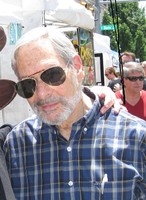 Our longtime colleague, Ira Perelle, died on March 18, 2012 at age 86. Ira was a fixture at ABS meetings for the past three decades. He served our organization as Chair of the Development Committee from 1995 to 2005 and received the society’s Exceptional Service Award. Ira was a multi-talented teacher and scholar. His teaching included classes, among many, in marketing research, laterality (handedness), animal facilitated therapy, applied statistics, and acoustics. He was on the faculty at Mercy College from 1973 until his death; Ira was still teaching and was about to retire this year. In addition to his many years at Mercy College, he served as a faculty member at Fordham University, SUNY College at Purchase, Long Island University - Westchester Campus, New York University-Westchester Campus, Farleigh-Dickinson University, and Marymount College. His 40+ publications cover a range of topics from developmental psychology, and genetics, to a lengthy series of papers on handedness.
Ira attended several undergraduate colleges, interrupted for military service in World War II, finishing his B.S. in education from Fordham in 1970. He obtained both the M.S. and Ph.D. degrees in psychology from Fordham. In addition to his work in academics, Ira was involved as a businessman with three firms: Arden Manufacturing, Westlab, and Interlink/Chester Electronics Division of G.T. & E., serving in various managerial capacities. Beyond the dedicated work he performed on behalf of the ABS, Ira was a member of 17 other professional societies and organizations, and served some of these in various capacities over four decades. His wide-ranging talents and knowledge resulted in consulting with school districts, business firms, government agencies, and various professional associations.
Ira was a true Renaissance man. He shared his gifts with all of us, both in professional endeavors and as a good friend. We will have a mealtime gathering at the ABS meeting in Albuquerque to share stories and reminiscences about Ira Perelle.
Lee C. Drickamer, ABS Historian
GENESIS AWARD POSTER REMINDER
The Genesis Award, first presented at the 2000 meeting, was created to encourage undergraduates from academic institutions of all sizes to participate in research and present their findings in a professional forum. Please note that this year, undergraduates who wish to enter the Genesis Award Poster Competition must indicate this as part of the abstract submission process. Judging criteria are listed on the ABS website and include significance of the research topic, research methodology, research results, and presentation. Presentation encompasses the student's oral discussion with the judges and the poster itself, including clear statements of the question and results, demonstration that there has been appropriate literature review, good organization, and visual appeal. Students should be prepared to demonstrate a mastery of their subject material.
2012 FOUNDERS' MEMORIAL POSTER
The Founders’ award is given to the best poster paper in the Founders' poster session at the annual meeting and is open to all members of the Society in good standing. To join that session (and thus receive consideration from the judging panel), you must have indicated your interest on the registration form for the scientific program.
SILENT AUCTION REMINDER
Bring Items to Albuquerque to Donate!!
Bring Items from Home, Pick up Items in your Travels or from your Field Sites, or Obtain Donations from Supportive Colleagues and Organizations. The more items we have, the more likely the auction will be as successful as it was last year!
What kind of items or services seem to be desirable?
• Books on Animal Behavior, Biology, Ecology, Conservation, Applied Animal Behavior, etc.
• Autographed books from ABS authors
• Items with animal themes (t-shirts, jewelry, calendars, decor, greeting cards, posters, etc.)
• Software useful for members (statistics, data collection, etc.)
• Videotapes for teaching or entertainment with behavior themes.
• Donations from zoo gift shops
• Memorabilia from past ABS meetings and members (vintage artifacts)
• Animal Photography
• Animal Artwork
• Statistical consulting, behind-the-scenes tour of the zoo, etc.
• Items from past meetings
• Anything legal that appeals to ABS Members!!
Items that you donate for the auction will be placed at the meeting on tables next to bidding forms, or described if the item is not present. During the meeting, members will visit the tables and bid on items by entering their bid on the bidding form. The auction will continue for several days while members bid against one another. The member with the highest bid at the deadline wins the item and takes it home with them.Drop your items at the Registration Desk!
Funds raised will support Graduate Student Research and Latin American Affairs!
Contact Us About Your Donations
James Ha ( [email protected] )
Renee R. Ha ( [email protected] )
EDUCATION OUTREACH EVENT
AT THE 2012 MEETING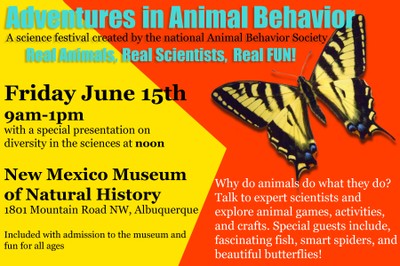
NEW AND NOTEWORTHY PUBLICATIONS
Comportamento animal, teoria e prática pedagógica (Animal Behavior, theory and pedagogic practice), organized by Eduardo Bessa and Ana Arnt, published by Editora Mediação.
To enchant young school students is a challenge faced by many teachers, especially when children perceive biology as a long list of names to be memorized. This book intends to introduce animal behavior as a core subject through which biology teachers can access scientific thinking, instead of presenting names to be remembered. Each chapter introduces and explains one ‘why question’ on animal behavior followed by a simple experiment or simulation to be developed with students. The book, published in Portuguese in Brazil, uses mostly national fauna as examples.
Games Primates Play: An Undercover Investigation of the Evolution and Economics of Human Relationships
By Dario Maestripieri, published by Basic Books. For complete review, please see http://amzn.to/wLeUin
ANNOUNCEMENTS
http://www.marmosetcare.com/ - A new interactive website on common marmosets
http://www.marmosetcare.com/ is a new open access internet resource providing information on common marmoset (Callithrix jacchus) behaviour and promoting their welfare in captivity. This website is intended for use by a broad audience, including private owners, educators, academic researchers, zoo, laboratory and veterinary professionals. Designed to be welcoming and fun to use, as well as instructive, the site is interactive and is illustrated extensively with photos and over 120 video clips to enjoy.
Callithrix jacchus is probably the most frequently privately kept non-human primate, and is the most-used New World primate in laboratory research and testing worldwide. Although the website conveys relevant advice, the private ownership of marmosets is strongly and persuasively discouraged. Being able to understand and assess the welfare state of marmosets in captive contexts is essential for ethical reasons, and in laboratory research and testing is important for the quality of scientific output, and to assess the efficacy of planned Refinements to housing, husbandry and procedures (the 3Rs of Replacement, Reduction and Refinement being the principles underpinning humane research).
The three main divisions of marmosetcare.com aim respectively to promote: an understanding of the range of behaviour in this species, placing this behaviour in the context of its natural habitat and promoting good welfare in captive environments. Topics covered in the ‘care in captivity’ section include grouping and breeding, feeding, health, interaction with human caregivers, positive reinforcement training and the vital importance of conspecific companionship. An interactive section demonstrates the features of good housing for common marmosets. Videos illustrate practical examples of cognitive, sensory, food and social enrichment and highlight the welfare benefit of encouraging natural behaviour. In a second section, captivating footage and a photo gallery show the daily experience of marmosets living ‘in the wild’. The third section presents a novel modern, multimedia update of the ‘ethogram’; a ground-breaking and detailed online database of much of the behavioural repertoire of this species covering calls, behaviours, postures, facial expressions, sensory capabilities and developmental stages. Videos and images supplement and clearly illustrate the text descriptions. Welfare interpretation is also communicated and an interactive quiz invites visitors to test their knowledge.
Hosted by the University of Stirling, Scotland, this website was created by Claire Watson and Hannah Buchanan-Smith (the latter drawing on more than 25 years of research on marmosets) and developed by Richard Assar. Funding was generously provided by the National Centre for the Replacement, Refinement and Reduction of Animals in Research (http://www.nc3rs.org/), and the Primate Society of Great Britain’s Captive Care Working Party.
Survey: Research Experiences in Introductory Biology
Submitted by Christopher Beck and Rachelle Spell, Emory University
As a part of REIL Biology -- an NSF-funded Research Coordination Network in Undergraduate Biology Education on Research Experiences in Introductory Laboratories (REIL), we are conducting a national survey to assess the current state of authentic research experiences in introductory biology laboratory courses. The survey asks about essential components of authentic research experiences and barriers to the implementation of authentic research experiences. Individuals who are involved in introductory biology laboratory courses are asked to provide basic information about introductory biology laboratory courses at your institution, including degree of authentic research and demographic information, such as number of students taught and number of laboratory sections per semester.The survey is anonymous and should take approximately 15 minutes to complete.
Please disseminate this announcement to anyone that you know who is involved with introductory biology at your institution or other institutions. If you have received this announcement more than once, we apologize, but we are trying to disseminate it as broadly as possible.
To complete the survey, go to http://www.ableweb.org/surveys/index.php?sid=47259&lang=en.
If you have questions about this survey, please contact us. For information about REIL Biology, please visit rcn.ableweb.org. Thank you for participating in the survey.
Radio Systems Corporation Announces Animal Behavior Studies Funding Opportunities
-Radio Systems Corporation (RSC) is now accepting pre-proposals for funded research projects-
KNOXVILLE, TN- Jim Tedford, Director of Animal Welfare Initiatives and Alliances at PetSafe is pleased to announce there will be funding for animal behavior studies to be conducted in 2013 in three areas: pet fountains, treat-dispensing toys, and remote training collars. PetSafe is now accepting pre-proposals through June 30, 2012. Total funding for each the treat-dispensing toys and pet fountain project is up to $25,000 and up to $200,000 in funding for the remoter trainer study.
“We have put together a group of eminent experts- academics, veterinarians and a combination of both-- in the field of animal behavior, to develop a request for proposals and submission forms for potential researchers,” said Tedford. “We are very excited to announce we now have funding available for investigators interested in researching our three key topics.”
Applications are invited from any organization, institution, interest group or individual who can meet the application requirements. While these are mainly targeted towards those in academic institutions with access to departmental resources, support and expertise, other organizations and individuals working in the field of feline and canine behavior and training, welfare etc. may also be eligible and are encouraged to apply. Interested parties can visit www.animalbehaviorstudies.com and click to download the Pre-Proposal Submission Form.
“This is a great way for students, trainers, behaviorists, veterinarians and various industry professionals to potentially get published and lead a research project funded by one of the leading pet companies in the industry,” said Tedford.
Research funds may be requested for student stipends, research assistants/technicians, statistical assistance, animal per diem, essential basic equipment, materials, supplies, study-related travel, recruitment costs, relevant consultant fees, participant incentives, publication costs, etc.
Based upon pre-proposal submissions, a limited number of investigators will be invited to submit full proposals. Full proposals will be reviewed by the Research Panel and one investigator for each project category will be chosen by the end of the year. Selected investigators will commence research in 2013 and are required to:
• Provide a written 300-word research update to RSC at the end of the project period.
• Provide a 600-word final research summary suitable for publication in media targeted to the general public no later than 12 months after the end of the project period.
• If appropriate, submit the results of their studies for publication in a peer-reviewed journal as well as present the findings at an appropriate scientific conference.
Visit www.animalbehaviorstudies.com for additional details of each project, regarding application, funding, deadlines and project requirements. Interested parties can please direct any questions to Jim Tedford [email protected] or (865)-824-5240.
About PetSafe®
Headquartered in Knoxville, Tennessee, PetSafe leads the industry in the development of innovative pet behavior, containment, lifestyle product solutions and services. Visit: www.petsafe.net.
Latin American Memberships
At the August 2005 ABS Executive Committee Meeting in Snowbird, Utah, a new initiative was approved to aid with recruitment of Latin American faculty and students. This endeavor involves contributions from ABS Members to a fund that will be maintained at the Central Office. Each year, the Membership Committee will fund a certain number of new subscriptions from the fund (depending upon contributions). Student Developing Nations memberships are $45 (for paper journals) or $15 (for online journal access only). Faculty rates are $50 (for paper journals) and $20 (for online access only). The Membership Committee has already compiled a list of 60+ students who would like to join the ABS. We ask that you consider making a contribution to the Latin American Membership Fund (checks made out to Animal Behavior Society with appropriate notation for this fund). Please send your contribution to the ABS Central Office, 2111 Chestnut Ave, Suite 145 Bloomington, IN, 47408, noting that your gift is for this program. THANKS in advance to all who contribute -- this sort of endeavor is exactly what we, as a society, have decided to make a high priority. If you have questions, please contact the Chair of the Membership Committee, Kaci Thompson by e-mail at [email protected].
Turner Award for Undergraduate Travel to ABS
The ABS Diversity Committee has once again been awarded funding from the National Science Foundation to bring a diverse group of undergraduates to the Annual Meeting. You can learn more about the travel award and Charles H. Turner at the following site: http://www.indiana.edu/~animal/Turner/. We need your help to make sure that these students get the most that they can out of the experience. If you are coming to the meeting, please consider volunteering to serve as a mentor (via email to [email protected]).
2013 ABS MEETING
To organize a symposium, an invited paper session, or a workshop for the ABS Annual Meeting, you should contact one of the Program Officers to discuss your ideas. We will first make sure that there are no potential conflicts with the topic that you are considering. Then we will ask you to prepare a pre-proposal and submit it to the Program Officer Elect. Organizers often find that consultations with the Program Officers are helpful when drafting the pre-proposal. The pre-proposal should be a page or two summarizing your intent for the session, and suggesting potential participants.
A symposium should be a profound and stimulating review of an important subject area that currently is a major focus of research. It should be a thorough treatment of past work and current research advances, and should be of general interest to the majority of ABS members.
An invited paper session is a special grouping of papers that focus upon empirical results relating to a particular topic. Usually there is no all-encompassing historical-theoretical perspective, although the organizer(s) may wish to summarize the individual papers or arrange them according to some theme.
Pre-proposals for the 2013 meeting are due before the annual meeting in Albuquerque in 2012 and will be circulated to the Executive Committee (EC) prior to the Annual Meeting and then discussed at the EC meeting.
The 2013 meeting is scheduled for 28 July-2 August. The Program Officer Elect encourages potential organizers to begin discussions about proposals for that conference. Further information can be found on the ABS website or by contacting the ABS Program Officers: Program Officers: Maydianne Andrade, Integrative Behaviour & Neuroscience Group, Department of Biological Sciences, University of Toronto at Scarborough, 1265 Military Trail, Scarborough, Ontario M1C 1A4, Canada. E-mail: [email protected]; and Michael D. Beecher, Departments of Biology and Psychology, Department Box 351525, University of Washington, Seattle, WA 98195.Phone: 206-543-6545. E-mail: [email protected]
SYMPOSIA FOR THE 2013 AAAS MEETING
ABS is striving to expand awareness of its excellent science via symposia for the annual AAAS meeting. The target date for the next symposium is 14-18 February, in Boston, MA. Anyone interested in organizing a symposium please contact Maydianne Andrade at: [email protected].
NOTICE TO DEVELOPING NATION SCIENTISTS PLANNING TO ATTEND ABS 2012
The Latin American Affairs Committee and/or Diversity Committee can provide letters of invitation to help scientists (faculty or students) from developing countries obtain travel funding from their universities in order to attend the ABS meeting in 2012. If such a letter would be useful in helping you to obtain funding, please contact Zuleyma Tang-Martinez: [email protected] to request an invitation. Please provide your name and address, as well as the title or topic of the paper you will be presenting at the conference.
From the archives:
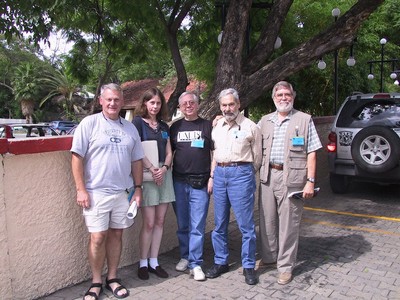
ABS Oaxaca 2004. From left: Neil Mercando, Laurie Hiestand, Steve Rebach, Ira Perelle, David Dunham
A B S n e t THE ELECTRONIC MAIL NETWORK OF THE ANIMAL BEHAVIOR SOCIETY
ABSnet provides a fast electronic forum for animal behaviorists, and others interested in the study of animal behavior, in a digest or newsletter form. ABSnet provides job announcements, requests for information, computer related news (virus and bug alerts), appropriate software and hardware reviews, and news of Society activities and business. ABSnet is not an interactive, listserv-type discussion group, but rather a moderated forum for the exchange of information of interest to animal behaviorists. The digest or newsletter does not replace the official Society newsletter sent to all Society members via email and/or regular mail. Questions? To SUBSCRIBE to ABSnet, go to http://new.animalbehaviorsociety.org/web and click on the News and Announcements link, then on the Subscribe/Unsubscribe link under ABSNet and fill out the Web-based form. Links to post an article or view the archives are also available.
MEETINGS
2012: 10-14 June, followed by the Human Behavior and Evolution Society (HBES) meeting from June 13-17 (one day overlap of open sessions for members of both societies) at Albuquerque, New Mexico.
2013: 28 July-2 Aug, University of Colorado at Boulder.
OTHER US MEETINGS2013: American Association for the Advancement of Science (AAAS), 14-18 February, Boston, MA.
INTERNATIONAL MEETINGS2012: Australasian Society for the Study of Animal Behaviour, 26-28 June, Deakin University, Geelong Botanic Gardens, Victoria. http://www.assab.org/conference/
2012: 46th Congress of the International Society for Applied Ethology (ISAE), 31 July-4 August, Vetmeduni Vienna, Vienna, Austria http://isae2012.com/home.html
2012: 1st Joint Congress on Evolutionary Biology, European Society for Evolutionary Biology Congress, 6-10 July, Ottawa Convention Centre, Ottawa, Ontario, Canada. http://www.confersense.ca/Evolution2012/index.htm.
2012: International Society for Behavioral Ecology (ISBE). The 14th International Behavioral Ecology Congress will be hosted by the Department of Biology at Lund University, Sweden, 12-17 August
2012: 3-7 December, Annual Conference of the Ecological Society of Australia. Melbourne, Victoria
NOTICE
Issues of the ABS Newsletter are published first on the ABS Web page. Hard copies of the Newsletter are delivered by mail and may take weeks to arrive. To get ABS news fast, point your browser to: http:// animalbehaviorsociety.org/central-office/abs-newsletters
OPPORTUNITIES
CALL FOR PROPOSALS
SABBATICAL SCHOLARS, WORKING GROUPS AND CATALYSIS MEETINGS
Proposals for Sabbaticals, Working Groups and Catalysis Meetings are now being accepted at The National Evolutionary Synthesis Center (NESCent). We are looking to support innovative approaches to outstanding problems in evolutionary biology. In particular, proposals that have a clear interdisciplinary focus, or involve evolutionary concepts in non-traditional disciplines, are strongly encouraged, as are proposals that demonstrate international participation and a mix of senior and emerging researchers, including graduate students. Proposals are accepted twice a year, with deadlines on July 10 and December 1. Proposals for Sabbaticals may be for up to a full year. We also accept proposals for short-term visits (2 weeks to 3 months; deadlines on January 1, April 1, July 1 and September 1). For more information, please see https://www.nescent.org/science/proposals.php.
DONATIONS TO ABS FUNDS
(Contributors in alphabetical order by first name)
Abby L. Schwarz,Special Contributions
We thank the 20 donors who made contributions of nearly $2000 in memory of Ira B. Perelle.
Animal Behavior Society (49th Annual Meeting)
at The University of New Mexico. Albuquerque
10-14 June, 2012
(Please check http://abs-hbes.unm.edu/ for updates!)
The 49th Annual meeting of the Animal Behavior Society will be held at the University of New Mexico, Albuquerque, New Mexico from June 10 to 14 2012, hosted by Steven Gangestad. This meeting features a special joint meeting day with the Human Behavior & Evolution Society (HBES) meeting (June 13-17) which promises to be a unique opportunity for cross-fertilization of ideas relating to overlapping areas of interest. The joint meeting day will include plenary talks, symposia and talk sessions open to members of both societies.
The Full Program is now available on the conference website http://abs-hbes.unm.edu/programs and society website http://new.animalbehaviorsociety.org/web/
Plenary Speakers:
• Dr. Joan Silk, University of California, Los Angeles. Fellow, ABS
• Dr. William Rice, University of California, Santa Barbara
• Dr. Scott Carroll, Director, Institute for Contemporary Evolution
• Dr. Mary Jane West-Eberhard, Smithsonian Tropical Research Institute, Universidad de Costa Rica. Fellow, ABS
• Sexual Selection in the Neotropics: Celebrating Diversity (Monday June 11) Organizers: Regina Macedo & Glauco Machado
Speakers: Regina Macedo, Rogelio Macías-Ordóñez, Alex Córdoba-Aguilar, Glauco Machado, Molly Morris, Jeff Podos
• Distinguished Teaching Award Symposium (Monday June 11)
Organizers: Penny Bernstein, ABS Education Committee This evening symposium and discussion will feature past winners of the Distinguished Teaching Award offering their insights on effective pedagogical patterns for educators in Animal Behaviour.Speakers include: William G. Eberhard, H. Jane Brockmann, Michael Noonan, Stan Braude
• Evolution of Communication (Tuesday June 12)
A symposium to honor R. Haven Wiley (recently retired, UNC Chapel Hill) Organizers: Marc Naguib & J. Jordan Price
Speakers: Steve Nowicki, Haven Wiley, Steve Pruett-Jones, Marc Naguib, Jordan Price, Barbara Ballentine, Jeremy Hyman, David Luther, Dana Moseley, David Westneat, William Searcy, Donald Dearborne, Bernard Lohr
• Presidents’ Symposium: Behavioural Plasticity and Evolution (Wed. June 13 & Thurs June 14)
Organizers:Susan Foster & Andy Sih
Speakers include:Emilie Snell-Rood, Suzy Renn, Reuven Dukas, Niels Dingemanse, Max Wolf, Rafael Rodriguez, Michael Kasumovic, Susan Foster, Andy Sih, Hans Slabberkorn, Daniel Sol, Georgia Mason, John Wingfield
Note: This two-day symposium includes members of ABS and ASAB (Association for the Study of Animal Behaviour, our European counterpart), and will form the basis of a first-ever Special Issue of Animal Behaviour
Other special sessions and events (see website for more details):• Animal Behavior Fair.
A post-conference public outreach event at the New Mexico Museum of Natural History (June 15).
• Feline Social Behavior:An Animal Behavior Society Public Symposium. This special evening event is open to the public. Speakers include Penny Bernstein, Kathryn Haupt, Michael Tewes (June 10).
• Undergraduate Student Luncheon and Reception. (June 11). Sponsored by the ABS Diversity Committee, all undergraduates attending the conference are invited to this luncheon, but attendees must RSVP to Dan Howard ([email protected]) prior to the conference.• ABS Film Festival
. The annual commercial and non-commercial film competition (June 12).
• Panel Discussion:Broader Impact Statements, Diversity, and Grant Writing: What Works and What Doesn't. (June 12). This evening panel discussion, moderated by Zuleyma Tang-Martinez will include contributions from S. Vessey, R. Calisi and C. Gabor.
• NSF Presentation and Q&A session.(June 12). This mid-day session will be presented by D.W. Stephens, Program Director, Behavioral Systems Cluster, NSF.
• Poster Sessions.Posters will be on display at two evening poster sessions (June 12 and 13), and the June 13 session will include a special Poster Symposium on Behavioral Plasticity.
• Opening Reception and Closing Reception.The conference begins with an opening reception on Sunday June 10, and ends with a Closing Reception on Thursday June 14.
• ABS Business meeting and Awards Ceremony.The ABS Business meeting will be on Wed., June 13, and awards will be given at a special ceremony on Thursday June 14 (preceding the closing reception).
• Silent Auction.A fund-raiser for student research, travel to future conferences by researchers from emerging nations, etc. (donor’s choice). Please bring items to donate such as animal behavior books, artwork, software, and conference memorabilia. Donated items will be on display throughout the meeting. Conference participants will visit the display and bid against each other throughout the conference by writing their bids on forms. The person with the highest bid at the deadline wins the item and takes it home with them.
Registration fees:| Membership | Early(Before May 8) | Late |
| Full-Member | $200 | $280 |
| Non-Member | $260 | $340 |
| Student | $100 | $150 |
| Guest/Partner | $100 | $150 |
| Developing Country* | $70 | $70 |
| Developing Country Student* | $50 | $50 |
Lodging
On-campus lodging will be available at the Redondo Village Apartment-Style Dormitories, located across Johnson Field on the UNM campus, a 5-10 minute walk from the main conference site, the UNM Student Union Building. Each 4-bedroom/1-bath furnished apartment includes a full kitchen, bar-style eating, and a living area complete with a sofa, easy chair, a coffee table and two end tables. Rates are $50 per night for one bedroom. (An additional one-time $5 university fee also applies. On-campus parking passes are also available.). Several nearby hotel options are also available at special rates. Please see the website for details (http://abs-hbes.unm.edu/accommodations/index.html).
For Further Information Check the links on these pages and the conference website: http://abs-hbes.unm.edu/, or contact the conference host, Steve Gangestad ([email protected]).