


May 2013 Vol. 58, No. 2
 |
Animal Behavior SocietyNEWSLETTERMay 2013 Vol.58 No.2 |
| Sue Margulis, Secretary Department of Animal Behavior, Ecology and Conservation Department of Biology Canisius College, Buffalo, NY 14208 |
Lindsey Perkes-Smith, Editorial Assistant Department of Animal Behavior, Ecology and Conservation Canisius College, Buffalo, NY 14208 |
TABLE OF CONTENTS
ANNOUNCING THE 2013 STUDENT GRANT AWARDS
Kevin McGraw, Senior Member-at-Large,Chair 2013 Student Research Grant Committee
We are pleased to announce the recipients of the 2013 Student Research Grants. We received many high-quality proposals, but as in previous years, the number of applications exceeded the number we could fund. Of the 107 applications submitted, 42 were awarded funding.
Each proposal was evaluated by two independent reviewers. This would have been an impossible task without the dedication of an all-star team of colleagues who volunteered their time and expertise. I extend a sincere thank you to the following reviewers: Erol Akcay, Lisa Angeloni, Alex Baugh, Patricia Brennan, Rich Buchholz, Rebecca Calisi, Rulon Clark, Barbara Clucas, Crista Coppola, Don Dearborn, Reuven Dukas, Sam Flaxman, Rebecca Fox, Clinton Francis, Jim Ha, Brian Johnson, Michele Johnson, Matina Kalcounis-Rueppell, Stan Kuczaj, Chris Leary, Karen Mabry, Nathan Morehouse, Doug Nowacek, Susan Parks, Stephen Pratt, Suzy Renn, Christina Riehl, Lauren Riters, Kim Rosvall, Dai Shizuka, Robin Tinghitella, Steven Wagner, Victoria Voith, and Stephen Zawistowski.
I would also like to thank Shan Duncan and Lori Pierce for administrative support; Gail Patricelli (2nd MAL) for administering the Developing Nations Research Awards, reviewing proposals and providing guidance; John Swaddle (3rd MAL) for reviewing proposals and providing guidance; and especially to all ABS members who donated the funds that make this program such a success.
GEORGE W. BARLOW AWARD
Emily Kay, Harvard University, Effects of the prenatal environment on sexual imprinting
E. O. WILSON CONSERVATION AWARD
Dara Adams, Ohio State University, Predation risk and alarm calling behavior in Peruvian bald-faced saki monkeys (Pithecia irrorata): an experimental approach
AMY R. SAMUELS CETACEAN BEHAVIOR AND CONSERVATION AWARD
Megan Wallen, Georgetown University, The Impact of a sexually coercive mating system on female reproduction, sociality, and ecology
DAVID TUBER APPLIED ANIMAL BEHAVIOR AWARD
Alexandra Sutton, Duke University, Saving lions with fences and footprints: using non-invasive behavioral monitoring and boma fortification to stop lion killing in Narok County, Kenya
STUDENT RESEARCH AWARDS
Zachary Aidala, City University of New York, The role of avian visual perception in parasitic egg rejection: mechanisms, behavior, and sensory coevolution
Rob Aldredge, University of North Carolina, The proximate regulation of avian clutch size
Marek Allen, Western University (Canada), The effects of anti-predator behavior on juvenile songbird condition, dispersal, and survival
Carolyn Bauer, Tufts University, Does plural breeding with communal care buffer post-natal stress in the degu (Octodon degus)?
Daniel Becker, University of Georgia, Host behavior and resource shifts: foraging activity of vampire bats and implications for rabies transmission in the Peruvian Amazon
Emerson Bowers, Illinois State University, Induced immune responses as a source of maternal effects: an inquiry into the proximate mechanisms of terminal investment
Gerald Carter, University of Maryland, Food sharing in vampire bats: does reciprocity prevent cheating?
Laure Cauchard, University of Montreal (Canada), The role of cognitive abilities in the use of social information for breeding site selection: an empirical approach in passerine populations
Chelsea Cook, University of Colorado, Coordination of thermal stress response in honey bees
Catherine Dana, University of Illinois, Behavioral responses of honey bees, Apis mellifera, to dietary toxins
Garrett Davis, University of Tennessee-Chattanooga, Is non-kin social structure in Octodon degus linked to intraspecific variation in ecology and social network structure?
Lindsey Dougherty, University of California-Berkeley, Mechanisms, ultrastructure and behavioral function of flashing in Ctenoides ales: “disco clams"
Karen Field, Louisiana State University, Chemosensory communication during reproduction in the social African cichlid fish Astatotilapia burtoni
Alexa Fritzsche, University of Georgia, Exploring the relative costs of reproductive and migratory behaviors for immunity in the monarch butterfly (Danaus plexippus)
Kelsey Graham, Tufts University, Investigation into a recent North American invader, Anthidium manicatum (Linnaeus) (Hymenoptera: Megachilidae)
Mélanie Guigueno, Western University (Canada), Sex differences in spatial cognition in brown-headed cowbirds: testing the adaptive specialization hypothesis
Sarah Guindre-Parker, Columbia University, The costs of reproduction and the evolution of cooperative breeding in African starlings
Jennifer Hellmann, Ohio State University, Social networking and spatial structure within colonies of a cooperatively breeding cichlid Neolamprologus pulcher
Amberleigh Henschen, University of Wisconsin-Milwaukee, Immune genes and male ornaments in the common yellowthroat
Megan Jones, Florida State University, Why do dominant individuals cooperate? Fitness consequences of cooperative courtship in a system with variable cooperative partnerships
Ipek G. Kulahci, Princeton University, Spread of novel information through social networks
Irene Liu, Duke University, The role of mating system in sperm competition and protein evolution in Agelaius blackbirds
Susan Lyons, University of North Carolina, Behavioral and neural plasticity in Lincoln's sparrows (Melospiza lincolnii): does the quality of song experienced early in life matter?
James Mason, Boise State University, The impacts of anthropogenic noise on northern saw-whet owl hunting ability
Matthew McKim-Louder, University of Illinois, The role of adult females in species recognition of juvenile brood parasites
Sahnzi Moyers, Virginia Tech, Personality and disease: are bolder hosts more likely to acquire and spread disease?
Karan Odom, University of Maryland-Baltimore County, Untangling complex birdsong: understanding the functional differences among male and female song and duets in troupials (Icterus icterus)
Timothy Polnaszek, University of Minnesota, Signal cost, conflict of interest and honesty in an experimental signaling game
Breanna Putman, San Diego State University, Sending signals: experimentally testing why ground squirrels tail-flag at rattlesnakes
Tricia Rubi, University of Minnesota, Complex signals, detectability, and receiver behavior
Andrew Rush, University of California-Berkeley, The role of song in the diversification of a suboscine species complex
Molly Schumer, Princeton University, Sexual selection and hybridization in Xiphophorus fishes
Amanda Tan, Nanyang Technological University (Singapore), Ontogenetic and social influences on stone-tool use skill development in macaques
Kristyn Shreve, Miami University, Factors influencing social behaviors of feral cats (Felis silvestris catus)
Yi-Jiun Tsai, Georgetown University, Controlled studies of sexual selection in a parasitoid wasp: does contest success necessarily predict subsequent mating and reproductive success?
Julie Turner, Michigan State University, The ontogeny of dynamic social networks in a social carnivore
Melinda Weaver, Arizona State University, Novelty in the city: relationship between different types of neophobia and human urbanization in a fragile, human-impacted ecosystem
ANNOUNCING THE 2013 DEVELOPING NATIONS RESEARCH AWARDS
Gail Patricelli, 2nd Member-at-Large,
2013 Student Research Grant Committee
Congratulations to the 2013 Developing Nations Research Grant (DNG) awardees! We were able to fund our top two proposals. We are pleased to make awards to the following applicants:
Zachary Culumber, Universidad Autonoma del Estado de Hidalgo, Mating decisions and maintenance of genetic variation in an ecologically important trait
Won Young, Seoul National University, South Korea,
Parental provisioning strategy in relation to brood sex ratio in the black-billed magpie (Pica pica): an experimental study
DONATIONS TO ABS FUNDS
A BIG THANK YOU TO ALL CONTRIBUTORS!
Almost $9000 was contributed in the calendar year from May 1, 2012 to April 30, 2013 to support the student grant competitions and other ABS activities, as detailed here:
Student Research Grants: $960
Barlow Award: $185
Silent Auction: $480
E.O. Wilson Conservation Award: $135
Cetacean Behavior and Conservation Award: $334.28
Ethnic Diversity Award: $55
Latin American Initiatives Fund: $60
Latin American Member Support: $10
Unrestricted funds: $2325
Credit card offset donations: $35
Genesis Award: $100
Founders Award: $10
Tuber Award: $110.52
Film Committee income: $4000
Teaching Animal Behavior Fund: $144.41
Amazon.com referral commission: $34.25
Contributors are listed at the end of the Newsletter in alphabetical order.
CALL FOR ABS MEETING INVITATIONS
ABS is seeking proposals for future meeting venues. Sites can be a resort or hotel, university campus or a mixture of the two. Contact ABS Past President, Joan Strassmann, Washington University in St. Louis, Campus Box 1137, St. Louis, MO 63130-4899, USA. E-mail: [email protected]
GEORGE W. BARLOW AWARD FOR OUTSTANDING STUDENT RESEARCH PROPOSAL
An endowment fund has been established in memory of George W. Barlow for the purpose of encouraging excellence in graduate student research in the field of animal behavior. The Barlow Award is awarded annually to one top-ranked proposal in the Student Research Grant cycle in accordance with the most recent ABS Student Research Grant competition rules. A cash award and a certificate will be given to the student selected. The amount of the Barlow Award will be the maximum amount allowed for a Student Grant Award as specified in the most recent ABS bylaws or policies.
If you would like to make a US tax-deductible donation to this cause, please send your donation to: Animal Behavior Society, 2111 Chestnut Ave, Suite 145, Glenview, IL 60025-3828, USA (with appropriate notation for this fund). We will recognize major donors in a future issue of the newsletter. Thanks to Dr. Judy Stamps for arranging for ABS to manage this endowment and for her generous seed donation.
DIRECTION OF CORRESPONDENCE
ABS Newsletter and general correspondence concerning the Society should be sent to Sue Margulis, [email protected]. Deadlines are the 15th of the month preceding each Newsletter. The next deadline is 15 July 2013. Articles submitted by members of the Society and judged by the Secretary to be appropriate are occasionally published in the ABS newsletter. The publication of such material does not imply ABS endorsement of the opinions expressed by contributors.
Animal Behavior Society Website:
The Animal Behavior Society's website has moved to a new domain located at http://new.animalbehaviorsociety.org/web
Animal Behaviour, manuscripts and editorial matters:Animal Behavior Society, 2111 Chestnut Ave, Suite 145., Glenview, IL 60025, USA. E-mail: [email protected] . Phone (812) 856-5541, Fax (812) 856-5542.
Change of address, missing or defective issues: Animal Behavior Society, 2111 Chestnut Ave, Suite 145., Glenview, IL 60025, USA. E-mail: [email protected]. Phone (812) 856-5541, Fax (812) 856-5542.
2012-2013 ABS OFFICERS
President: Robert Seyfarth, Department of Psychology, University of Pennsylvania, 3815 Walnut Street, Philadelphia, Pennsylvania 19104-6196, USA. E-mail: [email protected]
First President-Elect: Dan Rubenstein, Department of Ecology and Evolutionary Biology, Princeton University, Princeton, NJ 08544, USA. Phone: (609) 258-5698. E-mail: [email protected]
Second President-Elect: Regina H. Macedo, Departamento de Zoologia, Universidade de Brasília 70910-900 - Brasília - DF – Brazil. Phone: +55-61-3307-2265. E-mail: [email protected]
Past President: Joan Strassmann, Department of Biology, Washington University in St. Louis, One Brookings Drive, Campus Box 1137, St. Louis MO 63130, USA. Phone: (314) 935-3528. E-mail: [email protected]
Treasurer: Molly Cummings, Section of Integrative Biology, University of Texas at Austin, Austin, TX, 78712 USA. Phone: (512) 471-5162 Email: [email protected]
Secretary: Sue Margulis, Departments of Biology and Animal Behavior, Ecology, and Conservation, Canisius College, 2001 Main Street, Buffalo, NY 14208, USA. Phone: (716) 888-2773. Email: [email protected]
Program Officer: Maydianne Andrade, Integrative Behaviour & Neuroscience Group, Department of Biological Sciences, University of Toronto at Scarborough, 1265 Military Trail, Scarborough, Ontario M1C 1A4, Canada. E-mail: [email protected]
Program Officer-Elect: Michael D. Beecher, Departments of Biology and Psychology, Department Box 351525, University of Washington, Seattle, WA 98195 USA. Phone: (206) 543-6545. E-mail: [email protected] [email protected]
Parliamentarian: Peggy Hill, Department of Biological Sciences, University of Tulsa, 800 Tucker Drive, Tulsa, Oklahoma 74104 USA. Phone: (918) 631-2992. E-mail: [email protected]
Executive Editor: Michelle Pellissier Scott, Department of Zoology, University of New Hampshire, Durham, NH, 03824, USA. Phone: (603) 862-4749. E-mail: [email protected]
Kevin McGraw, School of Life Sciences, Arizona State University, Tempe, Arizona 85287-4501, USA. Email: [email protected]
Gail L. Patricelli, Department of Evolution and Ecology, University of California, One Shields Avenue 2320 Storer Hall, Davis, CA 95616, USA. Phone: (530) 754-8310. E-mail: [email protected]
John Swaddle, Department of Biology, College of William and Mary, Williamsburg, VA 23187-8795, USA. Phone: (757) 221-2231. E-mail: [email protected]
Historian: Lee Drickamer, Department of Biological Sciences, Northern Arizona University, Flagstaff, Arizona, 86011-5640, USA. Phone: (520) 523-0388. E-mail: [email protected]
NOTICE TO DEVELOPING NATION
SCIENTISTS PLANNING TO ATTEND ABS 2013
The Latin American Affairs Committee and/or Diversity Committee can provide letters of invitation to help scientists (faculty or students) from developing countries obtain travel funding from their universities in order to attend the ABS meeting in 2012. If such a letter would be useful in helping you to obtain funding, please contact Zuleyma Tang-Martinez: [email protected] to request an invitation. Please provide your name and address, as well as the title or topic of the paper you will be presenting at the conference.
ABS Standing Committee and Subcommittee Chairs 2012-2013
If you would you like to volunteer for one of the society's active committees listed below, contact ABS President Robert Seyfarth, Department of Psychology, University of Pennsylvania, 3815 Walnut Street, Philadelphia, Pennsylvania 19104-6196, USA. E-mail: [email protected]
Committee Chairs 2012-2013Animal Care: Alexander Ophir, Department of Zoology, Oklahoma State University, 205 Life Sciences West, Stillwater OK, 74078. Phone: (405) 744-1715, E-mail: [email protected]
Board of Professional Certification Subcommittee: Crista Coppola Ph.D., Certified Applied Animal Behaviorist, Dog and Company Behavior Consulting, PO Box 69158, Tucson, AZ 85737, Phone: (217) 337-9785, E-mail: [email protected]
Career Awards: Joan Strassmann, Department of Biology, Washington University in St. Louis, One Brookings Drive, Campus Box 1137, St. Louis MO 63130, USA. Phone: (314) 935-3528. E-mail: [email protected]
Conservation: Bruce A. Schulte, Ph.D., Department Head of Biology, Western Kentucky University (WKU), 1906 College Heights Blbd. #11080, Bowling Green, KY 42101-1080. Phone: (270) 745-4856, E-mail: [email protected]
Development: Jeff Galef, McMaster University (retired), Hamilton, Ontario, Canada L8S 4Kl. Phone: (905)-525-9140, ext. 23017, E-mail: [email protected]
Diversity: Zuleyma Tang-Martinez, Whitney R. Harris World Ecology Center, B216 Benton Hall One University Boulevard, St. Louis, MO 63121-4400 USA. Phone: (314) 516-6203, E-mail: [email protected]
Education: Susan Foster, Department of Biology, Clark University, 950 Main St., Worcester, Massachusetts 01610-1473 USA. Phone: (508) 793-7204, E-mail: [email protected]
Film: Mike Noonan Department of Biology, Canisius College, Buffalo, NY 14208-1098, USA. Phone: (716) 888-2518, E-mail: [email protected]
Historian: Lee Drickamer, Department of Biological Sciences, Northern Arizona University, Flagstaff, AZ 86011-5640, USA. Phone: (520) 523-0388, E-mail: [email protected]
Issues in Applied Animal Behavior: Stephen Zawistowski, ASPCA, 520 Eighth Avenue, 7th Floor,
New York, NY 10018, USA. Phone: 212-876-7700, Ext. 4401, E-mail: [email protected]
Latin American Affairs: Oscar Ríos-Cárdenas, Instituto de Ecologia, Mexico. Phone: (52) (228) 8421-800 Ext. 3009, E-mail: [email protected]
Membership Committee: Kaci Thompson, College of Life Sciences, University of Maryland, College Park, Maryland 20742, USA. E-mail: [email protected]
Nominations: Joan Strassmann, Department of Biology, Washington University in St. Louis, One Brookings Drive, Campus Box 1137, St. Louis MO 63130, USA. Phone: (314) 935-3528. E-mail: [email protected]
Public Affairs: Caitlin Gabor, Department of Biology, Texas State University, 601 University Dr., San Marcos, TX 78666-4615, USA. Phone: (512) 245-3387, E-mail: [email protected]
Student Research Grants Committee:Kevin McGraw, School of Life Sciences, Arizona State University, Tempe, Arizona 85287-4501, USA. Email: [email protected]
Ad Hoc Committees
Web Policy and Website Review: Shan D. Duncan, Indiana University, c/o Animal Behavior Society, 402 North Park Ave, Bloomington, IN 47408, USA. Phone: (812) 856-5541, E-mail: [email protected]
NEWS FROM ABS COMMITTEES
ABS Film Committee (Michael Noonan, Chair)
Informal film event
At this year’s annual meeting in Boulder, the ABS Film Committee will be hosting an informal film clip evening. This new and exciting event will be an opportunity for ABS members to show brief videos depicting unique aspects of animal behavior obtained during their own observations of their favorite species. All members of the society are welcome to attend.
If you have an unedited clip, 1-5 minutes in length, please bring it to this event. It will be an opportunity to share and discuss behavior with others in an informal and relaxed atmosphere. For more information, contact Mike Noonan at [email protected].
Board of Professional Certification Subcommittee(Crista Coppola, Chair)
 Certification in Applied Animal Behavior
The field of Applied Animal Behavior specializes in the behavior of all animals, including companion animals (i.e. behavior modification, welfare and enrichment), the behavior of farm, zoo and laboratory animals (i.e. animal management and welfare) and studies of the behavior of wild animals when these studies are relevant from an applied perspective, (i.e. wildlife management, pest management and nature conservation) as well as methodological studies.
Applied animal behavior is often the ultimate test of theories on how an animal’s behavior is motivated and maintained. Because the applied animal behaviorist works outside the protective walls, and controlled conditions of the laboratory, their interventions need to have an impact that cuts through the noise of the many extraneous events and stimuli that the real world presents. This ultimate goal is to benefit the animal (and humans) and in many circumstances applied animal behavior is used to mediate conflicts or problems that exist between humans and animals in a way that does not require killing or hurting animals.
Animal behaviorists are educated in a variety of disciplines, including psychology, biology, zoology or animal sciences. An ABS Board Certified Behaviorist has demonstrated expertise in the principles of animal behavior, the research methods of animal behavior, the application of animal behavior principles to applied behavior problems and in the dissemination of knowledge about animal behavior through teaching, research and public forums. These Behaviorists have successfully completed a rigorous application process and have been approved by a committee of their peers, the Board of Professional Certification.
 The ABS certification program for Applied Animal Behaviorists, including full certification (CAAB), and Associate certification (ACAAB) was founded in 1990 with five founding members and has grown to over 45 CAABs today. Applicants seeking certification are required to have a graduate degree (PhD or MS), five years of experience in the field, and a record of professional accomplishment and contribution to the practice of applied animal behavior. Additional details on the certification program can be found here: http://www.animalbehavior.org/ABSAppliedBehavior/the-animal-behavior-society-program-for-certification-of-applied-animal-behaviorists
The CAAB program is very excited to announce some of their upcoming events at this year’s annual meeting in Boulder. On Sunday, there is a Public Day devoted to Pet Quality of Life; on Tuesday evening there is an Applied Animal Behavior Poster Symposium and Tuesday during lunch there is a Q&A session for interested students to come and meet, mingle and ask questions about the Certification program and the application process.
The ABS certification program for Applied Animal Behaviorists, including full certification (CAAB), and Associate certification (ACAAB) was founded in 1990 with five founding members and has grown to over 45 CAABs today. Applicants seeking certification are required to have a graduate degree (PhD or MS), five years of experience in the field, and a record of professional accomplishment and contribution to the practice of applied animal behavior. Additional details on the certification program can be found here: http://www.animalbehavior.org/ABSAppliedBehavior/the-animal-behavior-society-program-for-certification-of-applied-animal-behaviorists
The CAAB program is very excited to announce some of their upcoming events at this year’s annual meeting in Boulder. On Sunday, there is a Public Day devoted to Pet Quality of Life; on Tuesday evening there is an Applied Animal Behavior Poster Symposium and Tuesday during lunch there is a Q&A session for interested students to come and meet, mingle and ask questions about the Certification program and the application process.
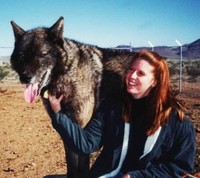
In the picture: Crista Coppola, Ph.D., CAAB
ABS Conservation Committee(Bruce Schulte, Chair)
Since its inception in 1997, the Animal Behavior Society's Conservation Committee mission has been to assist society members who want to apply their professional skills to help in the solution of conservation problems.
We have a very exciting summer ahead as we look forward to the 50th Anniversary meeting of ABS in Boulder, Colorado. The ABS-CC is sponsoring a Conservation Behavior workshop on July 28 (the day of check-in). A description of the workshop and a preliminary schedule are provided below. In addition, on Monday of the meeting, we will be hosting a symposium on Trends in Conservation Behavior (see below for more details). The ABS Conservation Committee members and our associate members – 50 strong and growing – have assisted greatly with the workshop and symposium. In addition to these special activities, ABS offers oral and poster presentation sessions on conservation at the annual meeting. We also hold a lunchtime meeting for the ABS-CC, associate members and any interested persons each year at the annual meeting – so please come join us this year in Boulder!
Last year marked the publication of the 10th volume of the Conservation Behaviorist – our biannual online news journal about conservation behavior (http://new.animalbehaviorsociety.org/web/Committees/ABSConservation/ConservationBehaviorist). Debra Shier is now the editor with Guillermo Paz-y-Miño-C serving as associate editor. We have expanded the staff with two ABS-Conservation Committee associate members, Chelsea Blake (PhD Candidate Texas State) and Elizabeth K. Petersen (Ph.D. candidate University of Albany) joining the ranks. We were greatly in need of additional help and their involvement with the Conservation Behaviorist has been and will continue to be invaluable. These positions will rotate over time and new opportunities will become available, so please contact Deb or Bruce Schulte if you would like to be involved.
Members of the ABS-CC often assist the ABS Grants and Award committee in the selection of students’ awards
for the E.O. Wilson and the Amy R. Samuels Cetacean Behavior and Conservation (CBC) Awards. More information about these awards can be found at the ABS website (http://new.animalbehaviorsociety.org/web/grants-and-awards/student-releated-research-awards).
You also can find the ABS-CC on Facebook (thanks to the efforts of associate member Amaranta Kozuch).
Membership on the ABS-CC is for a three-year term and each year we rotate off three to four members. Our newest members are Drs. Lisa Angeloni, Debbie Boege-Tobin and Sarah Mesnick –more information on these dynamic scientists can be found in volume 10(2) of the Conservation Behaviorist: (http://new.animalbehaviorsociety.org/web/Committees/ABSConservation/ConservationBehaviorist/TCB%20Vol.%2010%20issue%202.pdf). This year marks the ends of terms for Daniel Blumstein, Richard Buchholz, Guillermo Paz-y-Miño-C and Mark Wildhaber – big shoes to fill! We will need four new members! If you are interested, please send a statement of interest, description of your ABS involvement, your conservation behavior activities and any other relevant information (ca. one page of text will suffice). We look forward to seeing you in Boulder!
Conservation Behavior Workshop – 28 July 2013: Merging science and application
There is often a lack of communication between the fields of conservation and animal behavior. To bridge this gap, we will be conducting a one-day workshop aimed at applying behavioral theory and research to solving real-world conservation problems. The workshop will provide a unique and valuable opportunity for the practitioners to learn about the challenges and rewards of applying behavioral biology in the field. Ideally, this two-way interaction will inspire future research and networking to aid in solving the increasingly complex problems of real-world conservation.
Three conservation problems for which a behavioral approach is likely to facilitate solutions will be presented by wildlife managers at the beginning of the day. We will then break out into focus groups and discuss potential solutions. At the end of the day we will regroup, report on the potential solutions and identify commonalities that may be applicable more broadly to other systems. New collaborations between wildlife managers and animal behaviorists are expected to emerge from this workshop.
Speakers and conservation issues:
Valerie Matheson, Urban Wildlife Conservation Coordinator for the City of Boulder. Human wildlife conflict - Coyotes and bicycles
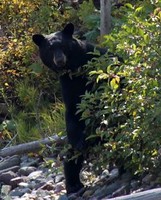
Heather Johnson, Colorado Parks & Wildlife. Human wildlife conflict - influence of anthropogenic and natural food resources on black bear behavior and demography
Verene Gill, US Fish & Wildlife Service.Sea otter and commercial fisheries regulation in Alaska
David Bradbeer, Vancouver Airport. Management of protected bird species at the Vancouver airport
Tentative schedule:
| 10:30 | Introduction to workshop |
| 10:45 | Presentation of conservation problems |
| 12:45 | Break |
| 1:00 | Breakout sessions to work on problems, lunch provided |
| 3:00 | Break |
| 3:15 | Session reports |
| 4:30 | Wrap up |
| 5:00 | Conclude |
Registration is $25, which includes lunch and snacks.
Contributed Symposium 1:
Trends in Conservation Behavior
Monday 29 July
Organizers: Esteban Fernandez-Juricic & Bruce A. Schulte http://bioweb.wku.edu/faculty/schulte/
Speakers:
Lisa Angeloni (CSU)
Esteban Fernandez-Juricic (Purdue University)
Brad Blackwell (USDA)
Daniel Blumstein (UCLA)
Connie O’Connor (Carleton University, Canada)
Andy Sih (UC Davis)
Craig Willis (University of Winnipeg, Canada)
Marian Wong (University of Wollongong, Australia)
Bruce A. Schulte (Western Kentucky University)
Conservation behavior is the application of knowledge of animal behavior to solve wildlife conservation problems. This discipline has made important empirical contributions to multiple conservation aspects, from captive breeding to managing interactions between humans and wildlife. This symposium will address the future of conservation behavior in the next decade. Early and mid-career researchers from academia and environmental agencies will address the novel conceptual frameworks that apply behavior to conservation biology and the new methodological tools used to solve challenging conservation problems that involve animal behavior. One of the goals of the symposium is to develop a list of basic behavioral problems that need more research that would facilitate their application to wildlife management problems (e.g., habituation).
GENESIS AWARD POSTER REMINDER
The Genesis Award, first presented at the 2000 meeting, was created to encourage undergraduates from academic institutions of all sizes to participate in research and present their findings in a professional forum. Please note that this year, undergraduates who wish to enter the Genesis Award Poster Competition must indicate this as part of the abstract submission process. Judging criteria are listed on the ABS website and include significance of the research topic, research methodology, research results, and presentation. Presentation encompasses the student's oral discussion with the judges and the poster itself, including clear statements of the question and results, demonstration that there has been appropriate literature review, good organization, and visual appeal. Students should be prepared to demonstrate a mastery of their subject material.
2013 FOUNDERS' MEMORIAL POSTER
The Founders award is given to the best poster paper in the Founders' poster session at the annual meeting and is open to all members of the Society in good standing. To join that session (and thus receive consideration from the judging panel), you must have indicated your interest on the registration form for the scientific program.
SILENT AUCTION REMINDER
Bring Items to Boulder to Donate!!
Bring items from home, pick up items in your travels or from your field sites, or obtain donations from supportive colleagues and organizations. The more items we have, the more likely the auction will be as successful as it was last year!
What kind of items or services seem to be desirable?
- Books on Animal Behavior, Biology, Ecology, Conservation, Applied Animal Behavior, etc.
- Autographed books from ABS authors
- Items with animal themes (t-shirts, jewelry, calendars, decor, greeting cards, posters, etc.)
- Software useful for members (statistics, data collection, etc.)
- Videotapes for teaching or entertainment with behavior themes.
- Donations from zoo gift shops
- Memorabilia from past ABS meetings and members (vintage artifacts)
- Animal Photography
- Animal Artwork
- Statistical consulting, behind-the-scenes tour of the zoo, etc.
- Items from past meetings
- Anything legal that appeals to ABS Members!!
Items that you donate for the auction will be placed at the meeting on tables next to bidding forms, or described if the item is not present. During the meeting, members will visit the tables and bid on items by entering their bid on the bidding form. The auction will continue for several days while members bid against one another. The member with the highest bid at the deadline wins the item and takes it home with them.
Drop your items at the Registration Desk!
Funds raised will support Graduate Student Research and Latin American Affairs!
Contact Us About Your Donations
James Ha ( [email protected] )
Renee R. Ha ( [email protected] )
2013 ABS Education Workshop: Developing Animal Behavior Classroom Activities
Submitted by Cindy WeiAre you interested in discussing ideas for teaching animal behavior with your fellow ABS colleagues? Do you have a classroom activity related to animal behavior that you think works well and that you’d be willing to share? Or maybe you have an idea for a classroom activity but haven’t fully developed it yet. If so, please join us for an ABS Education Workshop- Developing Animal Behavior Classroom Activities- at this year’s Annual Meeting! The workshop is scheduled for Wednesday evening, July 31st, 2013 from 8-9pm.
This workshop will provide an opportunity to discuss effective teaching methods for animal behavior and to contribute to the development of the ABS Teaching Resources Collection, which will be housed within the LifeDiscoveryEd Digitial Library (http://lifediscoveryed.org/)
Participants will join small group discussions where they will share their classroom activities (or ideas for activities) and provide helpful feedback to each other on how to develop, improve, and disseminate the activity. We will also discuss how you can submit your animal behavior teaching activity/resource for publication in the ABS Teaching Resources Collection digital library.
Sharing a classroom activity is not a requirement to attend the workshop, but is highly encouraged. If you would like to share an activity at the workshop, please fill in this brief survey before the meeting: http://www.surveymonkey.com/s/GPNHMC7. Presenter spots will be reserved on a first-come, first-serve basis based on this survey. If you'd like to attend but not present a resource, please let us know to help us with our planning. For this or any questions, please contact Cynthia Wei at: [email protected].
This workshop is organized by the ABS Education Portal Subcommittee of the Education Committee: Ipek Kulahci, Colleen McLinn, Susan Longest, Laura Sirot, Cynthia Wei, and Heather Zimbler-DeLorenzo
A B S n e t
ABSnet provides a fast electronic forum for animal behaviorists, and others interested in the study of animal behavior, in a digest or newsletter form. ABSnet provides job announcements, requests for information, computer related news (virus and bug alerts), appropriate software and hardware reviews, and news of Society activities and business. ABSnet is not an interactive, listserv-type discussion group, but rather a moderated forum for the exchange of information of interest to animal behaviorists. The digest or newsletter does not replace the official Society newsletter sent to all Society members via email and/or regular mail. Questions? To SUBSCRIBE to ABSnet, go to http:// animalbehaviorsociety.org and click on the News and Announcements link, then on the Subscribe/Unsubscribe link under ABSNet and fill out the Web-based form. Links to post an article or view the archives are also available.
In honor of this 50th anniversary year for the Society, the 2013 issues of the Newsletter will feature selected photos from the archives. Thanks to former ABS Historian Don Dewsbury and current ABS Historian Lee Drickamer for providing these historic images. If anyone has photos they would like to submit for possible inclusion in the newsletter, please submit to Sue Margulis, [email protected]. The deadline is the 15th of the month preceding the issue.
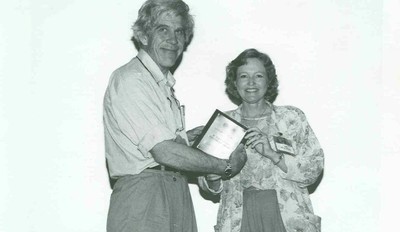
ABS President Jane Brockmann presents the Distinguished Animal Behaviorist Award to W. D. Hamilton, Kingston, ON 1992
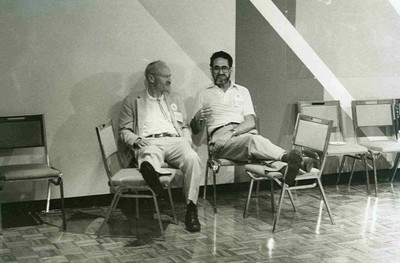
John Paul Scott and Stuart Altmann relax during the social hour at the 1992 ABS meeting in Kingston, ON
Latin American Memberships
At the August 2005 ABS Executive Committee Meeting in Snowbird, Utah, a new initiative was approved to aid with recruitment of Latin American faculty and students. This endeavor involves contributions from ABS Members to a fund that will be maintained at the Central Office. Each year, the Membership Committee will fund a certain number of new subscriptions from the fund (depending upon contributions). Student Developing Nations memberships are $45 (for paper journals) or $15 (for online journal access only). Faculty rates are $50 (for paper journals) and $20 (for online access only). The Membership Committee has already compiled a list of 60+ students who would like to join the ABS. We ask that you consider making a contribution to the Latin American Membership Fund (checks made out to Animal Behavior Society with appropriate notation for this fund). Please send your contribution to the ABS Central Office, 2111 Chestnut Ave, Suite 145 Bloomington, IN, 47408, noting that your gift is for this program. THANKS in advance to all who contribute -- this sort of endeavor is exactly what we, as a society, have decided to make a high priority. If you have questions, please contact the Chair of the Membership Committee, Kaci Thompson by e-mail at [email protected].
2014 ABS MEETING - Organizing Symposia and Paper Sessions
The 51st meeting of the Animal Behavior Society will be held 9-14 August at Princeton University. Members interested in hosting a symposium, an invited paper session, or a workshop are encouraged to contact the Program officers to discuss preparation of a proposal. We will first make sure that there are no potential conflicts with the topic that you are considering. Then we will ask you to prepare a pre-proposal and submit it to the Program Officer Elect. Organizers often find that consultations with the Program Officers are helpful when drafting the pre-proposal. The pre-proposal should be a page or two summarizing your intent for the session, and suggesting potential participants.
A symposium should be a profound and stimulating review of an important subject area that currently is a major focus of research. It should be a thorough treatment of past work and current research advances, and should be of general interest to the majority of ABS members.
An invited paper session is a special grouping of papers that focus upon empirical results relating to a particular topic. Usually there is no all-encompassing historical-theoretical perspective, although the organizer(s) may wish to summarize the individual papers or arrange them according to some theme.
Pre-proposals for the 2014 meeting are due before the annual meeting at the University of Colorado Boulder in 2013 and will be circulated to the Executive Committee - EC prior to the Annual Meeting and then discussed at the EC meeting.
Further information can be found on the ABS website or by contacting the ABS Program Officers: Maydianne Andrade, Department of Biological Sciences, University of Toronto Scarborough, 1265 Military Trail, Scarborough, Ontario, Canada M1C 1A4. Phone (416) 287-7425, E-mail: [email protected] and Michael Beecher, University of Washington, Animal Behavior Program, Seattle, WA 98195-1525, USA. Phone: (206) 543-6545, E-mail: [email protected]
ANNOUNCEMENTS
ABS 2013
University of Colorado-Boulder
28 July – 1 August
http://www.colorado.edu/ebio/abs2013
The historic 50th Anniversary of the Animal Behavior Society will be marked by a rich 5 day conference at the University of Colorado Boulder with strong representation from North American, South American and European researchers. CU-Boulder, the flagship university in Colorado, has a dynamic community of scholars on one of the most spectacular & scenic college campuses in the country. This promises to be a large and dynamic meeting. As of May 3, we have 700 registrants, and over 200 contributed talks and 150+ posters.
Abstract submission & early registration are closed.
https://cucs.colorado.edu/confreg/animal-behavior-society-2013
https://cucs.colorado.edu/confreg/animal-behavior-society-2013-housing
Registration:
| Category | Late | Late (plus cons workshop) |
| Non-Member | $575 | $600 |
| Member | $425 | $450 |
| Member Student | $200 | $210 |
| Developing Nations* (Includes Conservation Workshop) |
150 | N/A |
| Developing Nations Student* (Includes Conservation Workshop) |
100 | N/A |
*Developing country attendees are those currently enrolled or working at an institution in the developing world. This does NOT include persons currently working or enrolled in institutions in the USA, Canada or other developed countries, regardless of country of origin.
The 2013 meeting has many exciting symposia, plenary speakers, workshops and special events.
Keynote and plenary speakers include: Barbara Smuts, Elizabeth Adkins-Regan, Donald Dewsbury, Patricia Gowaty, Gene Robinson, Rebecca Safran, and Robert Seyfarth.
50th Anniversary Plenary Symposium
Organizer: Lee Drickamer
Founded in 1964, the Animal Behavior Society is now entering its 50th year of promoting and supporting research in this broad field. Changing political climates and funding models now challenge all researchers, and justification of the importance of one’s approach and field are important tools for successful grant writing, and for predicting areas where impact will be felt in the future. This plenary symposium offers perspectives on the history of our society and field, and developing areas of importance. Speakers include Donald Dewsbury, Elizabeth Adkins-Regan and Patricia Gowaty
President's symposium
Social evolution: William D. Hamilton’s 50-year legacy
Organizers: Joan Strassmann & David Queller
At this 50th anniversary of the ABS we will mark the 50th anniversary of the publication of WD Hamilton seminal contributions: The genetical evolution of social behavior (I & II, 1964). This symposium will focus on how Hamilton field-changing insights have affected research in diverse areas (from sexual selection to eusociality), and across taxa (from primates to microbes). This two-day symposium will be the basis of a special issue of Animal Behavior. Confirmed speakers include: Marlene Zuk, Elizabeth Tibbetts, Jennifer Smith, Joan Strassmann, David Queller, Rob Page, Kevin Foster, Bernard Crespi, Koos Boomsma, Sarah Brosnan, and Maydianne Andrade
Symposium: Trends in Conservation Behavior
Organizers: Esteban Fernandez-Juricic & Bruce A. Schulte
Conservation behavior is the application of knowledge of animal behavior to solve wildlife conservation problems. This discipline has made important empirical contributions to multiple conservation aspects, from captive breeding to managing interactions between humans and wildlife. This symposium will address the future of conservation behavior in the next decade. Early and mid-career researchers from academia and environmental agencies will address the novel conceptual frameworks that apply behavior to conservation biology and the new methodological tools used to solve challenging conservation problems that involve animal behavior. One of the goals of the symposium is to develop a list of basic behavioral problems that need more research that would facilitate their application to wildlife management problems (e.g., habituation). Confirmed speakers include: Lisa Angeloni, Brad Blackwell, Daniel Blumstein, Connie O’Connor, Andy Sih, Craig Willis, and Marian Wong.
Symposium: Effects of plasticity and individual variation in sensory biology on sexual selection
Organizers: Jeffrey Lucas & Esteban Fernández-Juricic
Many signalers convey information about their quality in mating displays. While much is known about how signalers vary in terms of signaling, individual variation in detection of these signals is relatively unexplored. This is a critical issue in communication, particularly with respect to the role of communication in mating contexts, because individual variation in signal processing can generate variability in signal content from the sender’s perspective. For example, seasonal patterns in signal processing provide one source of individual variation if individuals vary in the extent and timing of seasonal changes in sensory physiology. Thus the theoretical understanding of phenomena such as honest signaling, sensory drive, and assortative mating, may need to be re-evaluated in light of individual variation in signal processing. This half-day symposium will address these issues over a diversity of taxonomic groups (birds, fish) and focusing on a diversity of sensory modes (auditory, visual, electrical). Confirmed speakers include Lainy Day, Kim Hoke, Philip Stoddard, Joseph Sisneros, Megan Gall, Esteban Fernández-Juricic and Jeffrey Lucas.
WARDER CLYDE ALLEE SYMPOSIUM
Organizer: Regina Macedo
This annual symposium of graduate student research, with an award for the best paper, is a highlight of the ABS meeting. Talks are often an introduction to the most promising young researchers studying animal behavior. Eleven graduate students presenters have been selected by the president-elect and a panel of judges. The session honors Dr. Warder Clyde Allee (1885–1955), an animal behavior researcher who was very influential in the development and direction of animal behavior research in the 20th century. Speakers include Catherine Markham, Eric Patterson, Karyn Collie, Sara Kaiser, Dana Moseley, Jessica Yorzinski, Leslie Curren, Steven Schwartz, Emily MacLeod, Justin Golub, and Roslyn Dakin
POSTER SYMPOSIA
Poster symposia are clusters of posters curated by the symposium organizer. Any poster presenter with research relevant to a symposium theme can enter their poster for consideration for inclusion in the symposium by selecting the relevant subject category when their abstract is submitted. Poster symposia include: Applied Animal Behavior Poster Symposium. Organizer: Crista Coppola; President’s Poster Symposium: ‘Social Evolution: Hamilton’s 50 year legacy’.Organizer: Joan Strassmann
Special events and workshops at the 2013 Meeting
Applied Animal Behavior Public Day
Creating Quality Lives for Dogs and Cats through the Science of Animal Behavior
Sunday July 28
Organizer: Suzanne Hetts
This event is free and open to the public. Confirmed speakers include: Patricia McConnell, Marc Bekoff, Pam Reid, Suzanne Hetts, Daniel Q. Estep, and Julie Hecht.
Conservation Behavior Workshop
Sunday July 28
Organizers: Bruce Schulte & Misty McPhee
This workshop will include several speakers/groups who will present specific problems with the conservation of particular threatened or endangered species, and how a behavioral approach is likely to facilitate solutions. Information about the problem and system will be disseminated to workshop participants prior to the meeting. After the presentations at the workshop, the presenters and participants will break out into workgroups that will focus on problem-solving. This workshop has the potential to initiate collaborations on the featured problems.
This workshop will incur a moderate additional registration fee for most attendees.
Undergraduate Luncheon & Reception
Monday July 29
Organizer: Dan Howard
The reception provides a networking platform for undergraduate students attending ABS, and an opportunity for ABS faculty members to introduce their programs to potential graduate school applicants. The event includes lunch for undergraduate attendees. The ABS Diversity Committee has developed this event as part of an on-going effort to broaden participation of under-represented groups within the field of Animal Behavior, with an emphasis on translating the diverse demographics evident at the undergraduate level to the graduate and professional levels in the field. Students or faculty who wish to participate in this luncheon should contact Dan Howard ([email protected]).
Diversity committee panel/workshop
How social media tools can enhance your science, your career, and promote diversity
Monday July 29
Organizer: Danielle Lee
Web 2.0 social media tools provide new channels for promoting your science and career. It can be an especially important tool for raising professional profiles of women and minority scientists. Panelists will describe how they use online tools to discuss science, engage the public, publicize accomplishments, as well as engage broader audiences in science. Speakers include Danielle Lee, Alberto I. Roca, and Samuel Diaz-Munoz.
‘Academic orphans’ Lunch
Organizer: Chelsa Cook
Monday July 29
Are you a grad student or post-doc attending the meeting alone? Or are you just interested in meeting people from other labs/countries? Why not eat your lunch with local grad students and others in the same situation? Anyone interested should meet at the start of the lunch-break on Monday at the tables in front of Domino's Pizza (first floor of the University Memorial Center, http://umc.colorado.edu/about/maps ). Note that lunch is NOT provided for this event.
ABS Film Festival
Monday July 29 & Tuesday July 30
Organizer: Mike Noonan
Now in its 30th year, this film festival features outstanding amateur (non-commercial) and professional (commercial) films produced in the preceding five years that portray important concepts in animal behavior research and education.
ABS Annual General Meeting & Raffle
Tuesday July 30
What is your society doing with your money? How much is spent on graduate student research awards? What advice does the editor of Animal Behavior have about publishing your papers? Hear brief overviews of ABS business, committee accomplishments and budget of the last year, have your say on policy, and enter a raffle to win a cash prize that will cover your registration costs, or a mystery prize. You can only win if you are there!
NSF Q& A
Tuesday July 30
A representative from the NSF program office will be available to answer questions about the research grant program, and give advice to new investigators. Details TBA.
CAAB Meet & Greet
Tuesday July 30
Organizer: Crista Coppola
Are you interested in becoming a Certified Applied Animal Behaviorist (CAAB), or do you want to learn more about this career? Attend this round-table to learn more about the certification process and chat with practicing CAABs.
Post-poster session Dance
Tuesday July 30
Organizer: Chelsea Cook
Following Poster Session A, ABS members are invited to assemble at Blues and Greens at the Outlook Hotel for dancing and socializing with other registrants and the local community. There will be live music & a cash bar (no cover charge).
ABS Education Portal workshop
Wednesday July 31
Organizers: Cynthia Wei, Susan Longest, Laura Sirot & Heather Zimbler-DeLorenzo
Come help us build the ABS Education Portal, an online collection of animal behavior teaching resources developed by ABS members! In this interactive workshop, we will begin to build this portal by creating a special collection of ABS resources to be housed within the Ecological Society of America’s EcoEd Digital Library. Please join the discussion and bring your ideas for teaching resources related to animal behavior!
Round Table Discussion: Time to step up! Defending basic science and OUR science in particular
Wednesday July 31
Organizer: Patty Brennan
Fundamental research is frequently misrepresented by those with political agendas. Funded research projects of ABS members are sometimes highlighted as examples of wasteful government spending. This can have a pervasive effect on funding that affects us all. Patricia Brennan's research on duck penis evolution was recently attacked in by some sections of the media. Her published response ignited a media storm. Rulon Clark’s research utilizing robotic squirrels to probe anti-predator responses was mocked by KY senator Rand Paul. They, along with a special guest from the media, will discuss their stories and resources for effective responses/interaction with the press and public. Should we respond as a research community to these attacks? Can we better support our members? Should we be more proactive? Please join the discussion.
 ABS 5K Fun Run
Thursday Aug 1
Organizer: Caitlin Gabor
Meeting registrants or accompanying guests are invited to participate in this 6th annual recreational walk/run/sprint. Sign-up will occur at the conference. A nominal registration fee will be charged, proceeds are donated to support ABS Student Research Grants.
Animal Behavior Public Day
Friday August 2 (post-conference) 9 am to noon, University of Colorado Museum of Natural History
Organizer: Emilie Snell-Rood
The ‘Outreach’ subcommittee of the ABS-Education committee has organized a daytime event to introduce animal behavior research to the public through a combination of engaging activities and hands-on exhibits. This event has been held for the past several years and is well received by local communities -- in 2011, 50 scientists from 18 labs shared their research with over 550 attendees. This year the event will be hosted by the University of Colorado Museum of Natural History. Please contact Emilie Snell-Rood ([email protected]) if your lab is interested in participating.
IN MEMORIUM: DAVID A. CHISZAR
1944-2013
 Many of us were looking forward to conversing with David Chiszar (Chiz) at the upcoming ABS meeting in Boulder; we will not have that opportunity. David died in early January, 2013. He was born October 21, 1944 in Sioux City, IA. Chiz did his B.A. (1966), M.S. (1969), and Ph.D. (1970) degrees at Rutgers, with support from both NASA and NIMH fellowships. He spent his entire academic career at the University of Colorado in Boulder, beginning as a Visiting Assistant Professor in 1970, and achieving the rank of Full Professor in 1980. He retired in 2011.
David’s early academic work was with rodents, primarily rats; he was ‘raised’ in a traditional comparative psychology background. He also worked on fish during the early years of his career. By 1975, he was launching a true comparative research program focusing on reptiles, primarily snakes, but including turtles and several other groups. Over three decades, he made enormous contributions to the literature on the geographical distributions of dozens of reptiles throughout the states of the Great Plains and surrounding region. Additionally, his work provided valuable insights concerning the taxonomical nomenclature for reptiles.
David’s experimental research centered on chemical communication and taste, though he also worked on thermal cues, mimicry, and anti-predator interactions. He used a variety of behaviors, including tongue flicking, striking, orientation, and head movements as measures of responses to prey items, sensory cues from prey, and potential threats in order to dissect the sensory world of snakes. His subjects ranged from rattlesnakes to garter snakes; more than a dozen species were studied in a span of 25 years of work on these problems. Later in his career, David became involved with surveys and studies of the brown tree snake as a threat to many forms of wildlife, particularly birds, on Guam and neighboring islands and the potential to spread further in the Pacific. In total, David, his students, and colleagues, authored more than 400 articles, book chapters, and notes. His work on snake predatory behavior was funded by the M.M. Schmidt Foundation. His brown snake endeavors were carried out under contracts with the U.S. Department of the Interior.
One of David’s special interests was in zoo biology. He served on the Science Advisory Board at the Denver Zoo and wrote a series of articles about reptiles in zoo settings. Chiz wrote nearly 25 book reviews for a journals and popular publications and covering a large range of topics; this is emblematic of his broad interests and scholarly knowledge. David served as Secretary of the Animal Behavior Society from 1989 to 1992; during that time, he was part of lively discussions on issues in applied animal behavior and ethical issues in the conduct of animal behavior research. In a real sense, Chiz was one of those stalwarts who, often working away from the mainstream, made significant and lasting contributions to both animal behavior and herpetology. He was an exemplar of modern comparative psychology. As a first-rate colleague and collaborator, David was gifted with broad intellectual knowledge and a wealth of fresh and creative ideas that he shared with everyone.
Contributed by Lee C. Drickamer, ABS Historian
Methods for Animal Behavior Research DVD available
The “Methods for Animal Behavior Research” DVD is a complete tutorial in all the steps of the research process from literature searching to data analysis as they pertain to behavioral studies. The DVD is designed for undergraduates but can be used for high school students through professionals new to behavior research. The DVD is available for $5/copy and is available now. The tutorial has received favorable reviews from the International Society of Behavioral Ecologists and Zoo Biology. The DVD was developed by the Behavior Advisory Group of the Association of Zoos and Aquariums. A full description of the DVD, video samples, and ordering information are available at: http://www.aza.org/methods-for-animal-behavior-research-dvd/ Over 2000 copies have been distributed to teachers and professors in over 20 countries with an estimated 45,000 students using the DVD each year.
MEETINGS
ANIMAL BEHAVIOR SOCIETY
ANNUAL MEETINGS
2013: 28 July-1 August, Animal Behavior Society – 50th Annual Meeting, Boulder, Colorado.
2014: 9-14 August, Animal Behavior Society – 51st Annual Meeting, Princeton, New Jersey.
OTHER US MEETINGS
2013: 5-6 June, Chicago Zoological Society 2nd International Symposium on Zoo Animal Welfare, Chicago, Illinois.
Please remember to save the date for the Chicago Zoological Society’s 2nd International Symposium on Zoo Animal Welfare. The symposium will be held at Brookfield Zoo on June 5-6, 2013. A pre-symposium workshop will be offered on June 4 for those interested in participating in a hands-on training session for WelfareTrak (a separate registration fee applies). For more information, please visit: www.czs.org/symposium
2013: 18-22 June, American Society of Primatologists- 36th Meeting, San Juan, Puerto Rico.
2013: 17-20 July, Human Behavior and Evolution Society (HBES) – 25th Annual Meeting, Miami Beach, Florida.
INTERNATIONAL MEETINGS
2013: 16-19 May, International “Stress and Behavior” Neuroscience and Biopsychiatry Conference 19th Annual Meeting, St. Petersburg, Russia.
2013: 22-25 May, Congress of the International Society for Behavioral Ecology (ISBE) - Annual Meeting, Ghent, Belgium.
2013: 21-25 July, Annual Congress for Conservation Biology (ICCB) – 26th Annual Meeting, Baltimore, Maryland
2013: 4-8 August, joint meeting of International Ethological Conference (IEC) and the Association for the Study of Animal Behavior (ASAB)-33rd Conference, Gateshead, England.
The 33rd joint meeting of International Ethological Conference (IEC) and the Association for the Study of Animal Behaviour (ASAB) is taking place from 4th - 8th August 2013 in Newcastle Gateshead, England.
Behaviour 2013 is the largest gathering of researchers working in animal and human behaviour to be held in 2013. More than 800 participants from all around the world are expected to attend, our aim is to stimulate exchanges between researchers from different disciplines within behaviour.
Behaviour2013 highlights:
- Hear from leading academics showcasing different areas of behavioural research
- Choose from 33 symposia spanning all areas of behaviour and applied ethology
- Engage in a packed social programme including a Tyne river boat cruise and a three course dinner at St James Park football stadium
- Enjoy a special celebration of Aubrey Manning presented by friends and colleagues as well as the man himself!
- Network with an expected 800+ behaviour research professionals in our exhibition and refreshment areas
For more information please visit www.iec2013.com or email [email protected]
2014: 31 July-5 August, International Society for Behavioral Ecology (ISBE)- Annual Meeting, New York City, New York.
OPPORTUNITIES
Senior Lecturer/Associate Professor/ Professor
Faculty of Science, Universiti Brunei Darussalam
Area of Specialization: Animal Behavior Ecology and Conservation
Applicants must have a Ph.D. in Zoology or in a related discipline specialized in Conservation Biology (Preferably in the areas of small mammals/birds), Ecology and Evolution from a recognized university, and demonstrated outstanding record of research productivity and teaching excellence. Experience in postgraduate level teaching and research supervision is essential. Major interest in field studies would be an advantage. The successful applicant will join a team of excellent field researchers/academics with immediate effect and is expected to assist the existing staff in conducting graduate and undergraduate programmes in Biology. Active participation in the academic and research activities of the Biology group, Field research center on Biodiversity Studies and leading field excursions including dissemination of knowledge and administration is also expected.
Closing date for the application is 31st May 2013. Please find details of the application process at: http://fos.ubd.edu.bn/node/256#biology
Workshop: Multidisciplinary Approaches to Analyzing Animal Vocal Communication Sequences
The National Institute for Mathematical and Biological Synthesis (NIMBioS) is now accepting applications for its Investigative Workshop, "Multidisciplinary Approaches to Analyzing Animal Vocal Communication Sequences," to be held October 21-23, 2013, at NIMBioS.
Objectives: The aim of this workshop is to bridge the gap between mathematical and biological researchers with an interest in the quantitative analysis of animal vocal sequences. Recent developments in the mathematical analysis of complex animal communication have generated opportunities to understand the functional aspects of animal vocalizations, their role in social organization, and ultimately to explore the origins and evolution of human language. Until now, however, the collaboration between mathematicians/computer scientists and biologists/zoologists in this field has been very limited. We aim to define the state of the art in this field, explore new horizons for collaboration, and provide new techniques through a synthesis of the mathematical and biological approaches to communication analysis. We will also use this unique gathering to define some of the key questions that need to be posed to address ultimate and proximate hypotheses about behavior, in the context of animal vocal communication systems.
Location: NIMBioS at the University of Tennessee, Knoxville
Co-Organizers: Dan Blumstein, Ecology & Evolutionary Biology, Univ. of California, Los Angeles; Marie A. Roch, Computer Science, San Diego State Univ.; and Arik Kershenbaum, NIMBioS, Univ. of Tennessee, Knoxville
For more information about the workshop and a link to the online application form, go to http://www.nimbios.org/workshops/WS_vocal
Participation in the workshop is by application only. Individuals with a strong interest in the topic are encouraged to apply, and successful applicants will be notified within two weeks of the application deadline. If needed, financial support for travel, meals, and lodging is available for workshop attendees.
Application deadline: June 24, 2013
The National Institute for Mathematical and Biological Synthesis (NIMBioS) (http://www.nimbios.org) brings together researchers from around the world to collaborate across disciplinary boundaries to investigate solutions to basic and applied problems in the life sciences. NIMBioS is sponsored by the National Science Foundation, the U.S. Department of Homeland Security, and the U.S. Department of Agriculture with additional support from The University of Tennessee, Knoxville.
NOTICE!
Issues of the ABS Newsletter are published first on the ABS Web page. Hard copies of the Newsletter are delivered by mail and may take weeks to arrive. To get ABS news fast, point your browser to: http://new.animalbehaviorsociety.org/web/central-office/newsletters
RECENT PUBLICATIONS
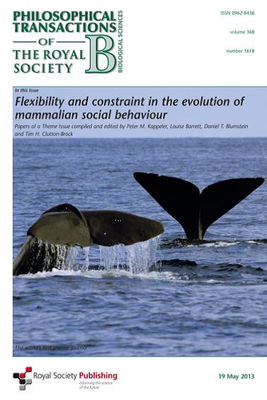
Royal Society Publishing has just published Flexibility and Constraint in the Evolution of Mammalian Social Behaviour, compiled and edited by Peter M Kappeler, Louise Barrett, Daniel T Blumstein and Tim H Clutton-Brock. This content can be accessed at: http://bit.ly/11uva6b. A print version is also available at the special price of £35.00. You can order online via the above web page (enter special code TB 1618 when prompted) or, alternatively, you can contact
[email protected].
DONATIONS TO ABS FUNDS
(Contributors in alphabetical order by first name)
Special Contributions
We thank the donors who made contributions in memory of Ira B. Perelle and Penny Bernstein.