


February 2013 Vol. 58, No. 1
 |
Animal Behavior SocietyNEWSLETTERFebruary 2013 Vol.58 No.1 |
| Sue Margulis, Secretary Department of Animal Behavior, Ecology and Conservation Department of Biology Canisius College, Buffalo, NY 14208 |
Lindsey Perkes-Smith, Editorial Assistant Department of Animal Behavior, Ecology and Conservation Canisius College, Buffalo, NY 14208 |
TABLE OF CONTENTS
- Results ABS Elections
- Direction of Correspondence
- 2012-2013 ABS Officers
- Congratulations to the Newly Elected Fellows
- 2013 Warder Clyde Allee Competition
- Genesis Award Poster Competition
- Debut of New ABS Logo
- Student Funds for Annual Meetings
- A Message from the President
- Notice to Developing Nation Scientists Planning to Attend ABS 2013
- From the Archives - Historic photo taken in 1984
- Call for ABS Meeting Invitations
- Career Awards
- Call for Symposia
- Call for Resolutions
- Join an ABS Committee
- Attention Authors
- ABSnet
- From the Archives - Photo from 1990 & 1992
- Announcements
- George W Barlow Award for Outstanding Student Research Proposal
- Opportunities
- Meetings
- Did You Know?
- Active Fellows of the Society
RESULTS ABS ELECTION
A total of 695 validated ballots were cast in the 2012 – 2013 election. This represents approximately 38% of the ABS membership, and a 2% increase over the proportion that voted last year. A big THANK YOU to those who voted, and to Shan Duncan and Lori Pierce for their help in the Central Office.
Congratulations to the new officers:
Second President-Elect: Emilia Martins
Parliamentarian: Eileen Hebets
Member-at-Large: Alison Bell
Program Officer-Elect: Mark Hauber
DIRECTION OF CORRESPONDENCE
ABS Newsletter and general correspondence concerning the Society should be sent to Sue Margulis, [email protected]. Deadlines are the 15th of the month preceding each Newsletter. The next deadline is 15 April 2013. Articles submitted by members of the Society and judged by the Secretary to be appropriate are occasionally published in the ABS newsletter. The publication of such material does not imply ABS endorsement of the opinions expressed by contributors.
Animal Behavior Society Website:
The Animal Behavior Society's website has moved to a new domain located at http://new.animalbehaviorsociety.org/web
Animal Behaviour, manuscripts and editorial matters: Animal Behavior Society, 2111 Chestnut Ave, Suite 145., Glenview, IL 60025, USA. E-mail: [email protected] . Phone (812) 856-5541, Fax (812) 856-5542.
Change of address, missing or defective issues: Animal Behavior Society, 2111 Chestnut Ave, Suite 145., Glenview, IL 60025, USA. E-mail: [email protected]. Phone (812) 856-5541, Fax (812) 856-5542.
2012-2013 ABS OFFICERS
President: Robert Seyfarth, Department of Psychology, University of Pennsylvania, 3815 Walnut Street, Philadelphia, Pennsylvania 19104-6196, USA. E-mail: [email protected]
First President-Elect: Dan Rubenstein, Department of Ecology and Evolutionary Biology, Princeton University, Princeton, NJ 08544, USA. Phone: (609) 258-5698. E-mail: [email protected]
Second President-Elect: Regina H. Macedo, Departamento de Zoologia, Universidade de Brasília 70910-900 - Brasília - DF – Brazil. Phone: +55-61-3307-2265. E-mail: [email protected]
Past President: Joan Strassmann, Department of Biology, Washington University in St. Louis, One Brookings Drive, Campus Box 1137, St. Louis MO 63130, USA. Phone: (314) 935-3528. E-mail: [email protected]
Treasurer: Molly Cummings, Section of Integrative Biology, University of Texas at Austin, Austin, TX, 78712 USA. Phone: (512) 471-5162 Email: [email protected]
Secretary: Sue Margulis, Departments of Biology and Animal Behavior, Ecology, and Conservation, Canisius College, 2001 Main Street, Buffalo, NY 14208, USA. Phone: (716) 888-2773. Email: [email protected]
Program Officer: Maydianne Andrade, Integrative Behaviour & Neuroscience Group, Department of Biological Sciences, University of Toronto at Scarborough, 1265 Military Trail, Scarborough, Ontario M1C 1A4, Canada. E-mail: [email protected]
Program Officer-Elect: Michael D. Beecher, Departments of Biology and Psychology, Department Box 351525, University of Washington, Seattle, WA 98195 USA. Phone: (206) 543-6545. E-mail: [email protected]
Parliamentarian: Peggy Hill, Department of Biological Sciences, University of Tulsa, 800 Tucker Drive, Tulsa, Oklahoma 74104 USA. Phone: (918) 631-2992. E-mail: [email protected]
Executive Editor: Michelle Pellissier Scott, Department of Zoology, University of New Hampshire, Durham, NH, 03824, USA. Phone: (603) 862-4749. E-mail: [email protected]
Members-at-Large:
Kevin McGraw, School of Life Sciences, Arizona State University, Tempe, Arizona 85287-4501, USA. Email: [email protected]
Gail L. Patricelli, Department of Evolution and Ecology, University of California, One Shields Avenue 2320 Storer Hall, Davis, CA 95616, USA. Phone: (530) 754-8310. E-mail: [email protected]
John Swaddle, Department of Biology, College of William and Mary, Williamsburg, VA 23187-8795, USA. Phone: (757) 221-2231. E-mail: [email protected]
Historian: Lee Drickamer, Department of Biological Sciences, Northern Arizona University, Flagstaff, Arizona, 86011-5640, USA. Phone: (520) 523-0388. E-mail: [email protected]
Congratulations to newly-elected fellows
The Animal Behavior Society is pleased to announce the election of six new Fellows of the Society. The awards will be presented at the 2013 meeting. The newly-elected Fellows are, in alphabetical order:
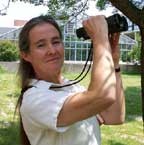
Anne Clarke, Associate professor, department of biological sciences, Binghamton University. The breadth and depth of Anne’s body of work encompasses theoretical, empirical, and applied research with an emphasis on evolution of behavior. Her long-term studies on wild populations of crows have utilized innovative techniques and addressed important questions in the evolution of behavior.

Anne Pusey, Professor and chair, department of evolutionary anthropology, Duke University. Anne has been a leader in research on the social behavior, ecology, and social development of mammals, particularly chimpanzees and lions. Since 1995, she has been the Director of the Jane Goodall Institute’s Research Center.

David Queller, Professor of biology, Washington University in St Louis. David’s research has focused on selfishness and cooperation in social species. Work with social wasps paved the way for important theoretical and empirical work on the evolution of cooperation and cheating in social amoeba.

Jan Randall, Professor emerita, San Francisco State University. Jan’s long and productive research career has focused on social behavior in species once considered “asocial” such as the kangaroo rat. Her work has demonstrated the importance of social structure in such species.

Sandy Vehrencamp, Professor emerita, Cornell Laboratory of Ornithology. Sandy is one of the founders of the field of behavioral ecology. Her work has explored ecological factors that determine the spatial distribution patterns of animals, and the social, cooperative, energetic, and communication phenomena that result from this spatial distribution.
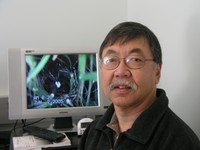
Ken Yasukawa, Professor of biology, Beloit College. Ken’s long-term research has focused on sexual selection, using red-winged blackbirds as model system. His decades of correlational and experimental work has led to an amazingly complete picture of sexual selection in this species.
2013 WARDER CLYDE ALLEE COMPETITION
The 2013 Warder Clyde Allee Competition for Best Student Paper will take place on 31 July at the University of Colorado in Boulder, Colorado. All eligible students are encouraged to participate. The following rules govern the Allee Award for best student paper presented in the Warder Clyde Allee session at the annual meeting:
Eligibility requirements: Any independent graduate student research (including, but not limited to, the doctoral dissertation) is eligible. The work presented may be part of a larger collaborative effort, but the student should be first author and have the principal responsibility for the conceptualization and design of the research, the collection and analysis of the data, and the interpretation of the results. The entrant cannot have been awarded the Ph.D. degree before the preceding ABS annual meeting (for the 2013 competition, this date is June 10, 2012). An individual can enter the session only once per lifetime.
To enter: Students must indicate their desire to be considered for the competition by checking the appropriate box on the abstract submittal form for the annual meeting; submit an electronic version of their paper, which includes their addresses, telephone numbers, and e-mail addresses; fill out a signed and dated form indicating that they meet all eligibility requirements (to be supplied to entrants after receipt of their papers); present a spoken version during the 2013 Annual Meeting; attend both the Allee welcoming dinner on the evening before the competition day and the banquet during the Annual Meeting. The spoken portion of the competition is limited by the number of papers that can be presented on the day assigned for the competition. Applications for the 2013 competition, including the written paper, will be due on 1 March, 2013. This will enable the Allee judges to evaluate the written papers and determine further eligibility. Applicants will be informed of status prior to the abstract submission due date for the meeting. The manuscript must be submitted in electronic PDF format, of no more than seven double-spaced, line-numbered, text pages, and no more than a total of four tables and/or figures (this limit does not include abstract, references, or acknowledgments), and must be received by ABS 2nd President-Elect Regina H. Macedo, Departamento de Zoologia – IB, Universidade de Brasilia, 70910-900 Brasilia, DF, Brazil. E-mail: [email protected]. Electronic submission is required. If you do not receive acknowledgement of receipt within 7 days, please send a follow-up query. Papers MUST be formatted using the instruction for authors for a research paper in the journal Animal Behaviour to insure eligibility. Check instructions at the site. If significant new results arise after submission, students may submit a one-page addendum to their papers up to 30 days before the first day of the Annual Meeting. Questions should be addressed to Regina Macedo, [email protected].
GENESIS AWARD POSTER COMPETITION
Undergraduates who submit posters for presentation at the annual meeting of the Animal Behavior Society are automatically entered in the Genesis Award poster competition unless they indicate they do not want to be included in the competition when they submit their abstract. Judging criteria include significance of the research topic, research methods, research results, and presentation. Presentation encompasses the student's oral discussion with the judges and the poster itself, including clear statements of the questions and results, demonstration that there has been appropriate literature review, good organization and visual appeal. Students should be prepared to demonstrate a mastery of their subject material. Information about this award is available at the ABS website link. Further information, if needed, can be obtained from the Education Committee Chair, Susan Foster, [email protected].
DEBUT OF NEW ABS LOGO
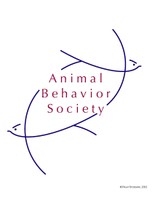 In recognition of the 50th Anniversary of the Animal Behavior Society, our new logo has been unveiled on the cover of the January issue of Animal Behaviour, and in this, the first newsletter of 2013. Designed by ABS member, and former EC member, Philip Stoddard, the logo has been a long time in the making. In describing the development of the logo, Stoddard says: “When ABS sought a logo, I looked for the right animal, a creature with well-known behavior that would be recognized by everyone from just a few simple lines. From my grad school beginnings with Mike Beecher I chose the barn swallow. Years ago, I was struck by the work of a young native American artist from one of the plains tribes. He took his own life, and I misplaced his name in my memory, but the ethos of his simple line art has lived on in my soul. In his elegant style, I drew one swallow, but it wasn't doing anything. It needed a partner. I added a second swallow by extending the curves of the first, and the logo emerged.”
STUDENT FUNDS FOR ANNUAL MEETINGS
Latin American Travel Award
The Latin American Travel Awards are intended to encourage greater participation of Latin American researchers in ABS meetings, by helping to defray the costs of international travel, housing, and/or meals at meetings. These awards are restricted to Latin American graduate students enrolled in programs in Latin American institutions, who will be presenting a talk/poster at the ABS meeting. Priority will be given to Ph.D. students who are attending an ABS meeting for the first time and who have not received a Latin American Travel Award in previous years. Award values vary according to funds available. The deadline for applying is 1 APRIL 2013.
You may apply for a Latin American Travel Award once you have successfully submitted an abstract for a talk or poster, via the 2013 meeting web page. To apply for a Latin American Travel Award, please submit by email a single electronic file (.pdf is preferred) that contains the following materials, to Member at Large, Gail L. Patricelli, [email protected]: (1) a copy of the abstract of your talk or poster; (2) a short CV (two pages maximum); (3) a brief statement (one page maximum) explaining how the meeting will enhance the applicant's career development; and (4) an itemized budget estimating travel costs, the amount of funds available or requested from other sources, and the amount requested from ABS.
Diversity Fund Student Registration Fee Award
The Diversity Fund Student Registration Fee Awards are intended to encourage participation and defray costs of attending the annual Animal Behavior Meetings by covering registration fees for graduate students and, in some cases (see below), established professionals, of under-represented minorities. Awards will be made by lottery of all valid applications received before the deadline, which is 1 APRIL 2013. Applications should be emailed to ABS Treasurer, Molly Cummings (mcummings@ mail.utexas.edu). Please include in the subject line "ABS Diversity" followed by your name. Preference is given to individuals presenting research results.
Eligibility: Applicants from North America must be enrolled in a graduate program at the time of application and must be members of under-represented minorities who are of African, Asian, or Latin American descent or of Native American heritage. Citizens (graduate students or established professionals) of Latin American countries and non-white citizens of African countries are also encouraged to apply here.
Charles H. Turner Award
The Animal Behavior Society has once again been awarded travel funding from the National Science Foundation to bring undergraduates to the Annual Meeting. The ABS Diversity Committee is calling on the membership to identify applicants for the Charles H. Turner Award, and to encourage them to apply right away. This travel grant is geared toward addressing the Society’s goal of increasing diversity of our membership through supporting undergraduate student attendees of our annual meetings.
Look for the Charles H. Turner Program website to learn more about Charles H. Turner, or go directly to the online form on that site to apply for funding for the 2013 Annual Meeting in Boulder, Colorado.
The deadline for applications is March 1, 2013, and this will be the absolute deadline for those wishing to bring a poster. Preliminary decisions for most of the awards will be made soon after the deadline. Interested students should apply as early as possible.
A MESSAGE FROM THE PRESIDENT
To all ABS members:
Those of you who attended last year’s business meeting may remember that we discussed and passed a motion that ended the certification program for Applied Animal Behaviorists. Secretary Sue Margulis, acting for Parliamentarian Peggy Hill, presented the motion on behalf of the Executive Committee (EC). The EC’s proposal came after a lengthy discussion at the EC meeting earlier that week. At that meeting, some people expressed frustration at what they felt was a lack of participation by applied animal behaviorists in ABS activities, while others expressed concern that by certifying applied animal behaviorists ABS was making the society vulnerable to lawsuits. Since then, three sorts of information have been brought to our attention.
First, when we voted to end the certification program few if any of us had any idea how important certification was, both scientifically and economically, to applied animal behaviorists, nor did we fully appreciate the contribution made by applied animal behaviorists to ABS activities or the extent to which ABS’ certification requirements had become part of the curriculum in many colleges and universities. ABS’ certification of applied animal behaviorists now sets the gold standard for qualification in this field, and many large, national organizations working in conservation and animal welfare regard the possession of ABS certification as a major asset in their applicants. Given the importance of certification to the careers of our colleagues (known collectively as CAABs), and in light of all that we learned about the CAABs and the role they play both within and outside ABS, members of the EC decided to reconsider the decision we made in Albuquerque.
Second, to our chagrin we realized that, despite the vote at the ABS Business Meeting, we did not take the necessary steps to change the wording in our bylaws or modify the relevant section of the ABS Handbook. Because we failed to follow proper procedure, the vote at the Business Meeting had not, in fact, changed anything.
Third, in September the CAABs presented the EC with a detailed proposal that would both retain the certification program and require certificate holders to participate at a reasonable level in ABS activities. In November, I received assurances from ABS’ lawyer and insurance agent that, as long as specific changes were made in the wording of the certificate holders’ liability insurance, ABS would be insured against any legal action brought against a certificate holder.
Armed with all of this information, in December the members of the EC voted in favor of retaining the certification program, with appropriate modifications. And this time we specified changes to be made to the ABS Handbook and Bylaws.
I am telling you all this because those of you who attended the Business Meeting and voted on the motion presented by the EC deserve an explanation of why that motion hasn’t and will not be implemented. If you have any questions, please feel free to direct them to me or any other member of the EC.
Sincerely,
Robert Seyfarth
President, ABS
NOTICE TO DEVELOPING NATION SCIENTISTS PLANNING TO ATTEND ABS 2013
The Latin American Affairs Committee and/or Diversity Committee can provide letters of invitation to help scientists (faculty or students) from developing countries obtain travel funding from their universities in order to attend the ABS meeting in 2013. If such a letter would be useful in helping you to obtain funding, please contact Zuleyma Tang-Martinez: [email protected] to request an invitation. Please provide your name and address, as well as the title or topic of the paper you will be presenting at the conference.
FROM THE ARCHIVES
In honor of this 50th anniversary year for the Society, the 2013 issues of the Newsletter will feature selected photos from the archives. Thanks to former ABS Historian Don Dewsbury and current ABS Historian Lee Drickamer for providing these historic images. If anyone has photos they would like to submit for possible inclusion in the newsletter, please submit to Sue Margulis, [email protected]. The deadline is the 15th of the month preceding the issue.
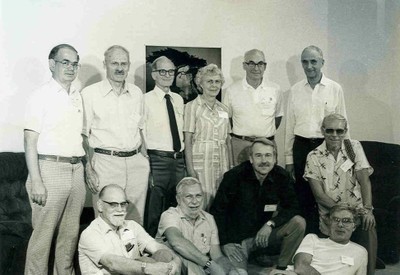
This historic photo, taken at the 1984 ABS meeting in Cheney, Washington, depicts many of the founders of the Animal Behavior Society. Taken during the taping of a short program on the early days of ABS, the photo includes the following founders and others:
Rear row, from left: Don Dewsbury (consultant), John Paul Scott, Nicholas Collias, Elsie Collias, David Davis, Jerry Hirsch. Front row: E. B. Hale. Martin W. Schein, John Vandenbergh (narrator), Charles Carpenter ( on one knee) and George We. Barlow (lying down).
CALL FOR ABS MEETING INVITATIONS
ABS is seeking proposals for future meeting venues. Sites can be a resort or hotel, university campus or a mixture of the two. Contact ABS Past President Joan Strassmann, Department of Biology, Washington University in St. Louis, One Brookings Drive, Campus Box 1137, St. Louis MO 63130, USA. Phone: (314) 935-3528. E-mail: [email protected]
CAREER AWARDS
The Animal Behavior Society has a series of Career Awards which include the following: Distinguished Animal Behaviorist - outstanding lifetime achievement in animal behavior; Exemplar Award - major long-term contribution to animal behavior; Outstanding New Investigator - outstanding contribution by a new investigator; Quest Award - outstanding seminal contribution; Exceptional Service Award - sustained service contributions to the Animal Behavior Society; and Distinguished Teaching Award - distinguished contributions in teaching animal behavior to undergraduates.
All members of the society are encouraged to prepare and submit nominations for these awards. To aid the Selection Committee and to help codify the procedures involved, the following items must be submitted for a nomination: (1) a letter of nomination indicating the award for which the nominee is being proposed. It should provide details on the reasons the nominee should be considered for that award; (2) a curriculum vitae of the nominee; and (3) additional supporting letters from colleagues solicited by the nominator. The Call for Nominations will be published in the August Newsletter and the deadline for submission of material will be Nov. 30th, 2013. Further instructions will be forthcoming.
Recipients of the 2013 awards will receive their awards during the Awards Ceremony at the annual meeting in Boulder.
CALL FOR SYMPOSIA
2014 ABS MEETING - Organizing Symposia and Paper Sessions
The 51st meeting of the Animal Behavior Society will be held 9-14 August at Princeton University. Members interested in hosting a symposium, an invited paper session, or a workshop are encouraged to contact the Program officers to discuss preparation of a proposal. We will first make sure that there are no potential conflicts with the topic that you are considering. Then we will ask you to prepare a pre-proposal and submit it to the Program Officer Elect. Organizers often find that consultations with the Program Officers are helpful when drafting the pre-proposal. The pre-proposal should be a page or two summarizing your intent for the session, and suggesting potential participants.
A symposium should be a profound and stimulating review of an important subject area that currently is a major focus of research. It should be a thorough treatment of past work and current research advances, and should be of general interest to the majority of ABS members.
An invited paper session is a special grouping of papers that focus upon empirical results relating to a particular topic. Usually there is no all-encompassing historical-theoretical perspective, although the organizer(s) may wish to summarize the individual papers or arrange them according to some theme.
Pre-proposals for the 2014 meeting are due before the annual meeting at the University of Colorado Boulder in 2013 and will be circulated to the Executive Committee - EC prior to the Annual Meeting and then discussed at the EC meeting.
Further information can be found on the ABS website or by contacting the ABS Program Officers: Maydianne Andrade, Department of Biological Sciences, University of Toronto Scarborough, 1265 Military Trail, Scarborough, Ontario, Canada M1C 1A4. Phone (416) 287-7425, E-mail: [email protected] and Michael Beecher, University of Washington, Animal Behavior Program, Seattle, WA 98195-1525, USA. Phone: (206) 543-6545, E-mail: [email protected]
CALL FOR RESOLUTIONS
Resolutions that deal with timely and substantive political or social issues that members wish to submit for the consideration of the ABS membership should be submitted by 20 April, 2013. Submitted resolutions should provide direction to the ABS President to facilitate prompt action and will be evaluated by the Public Affairs Committee for appropriateness. Resolutions will be voted on at the annual business meeting in Boulder. Approved resolutions reflect the views of the Animal Behavior Society membership and are sent to the appropriate external agencies, organizations, or to the general public. Send resolution proposals to the Chair of the Public Affairs Committee Caitlin Gabor, Department of Biology, Texas State University, San Marcos, TX 78666, USA, or electronically to [email protected].
Join an ABS Committee!
Would you like to volunteer for one of the society's active committees? This is an important and rewarding way to participate in the business of the society, and we need your help! Committees include Membership, Policy, Public Affairs, Education, Latin American Affairs, Conservation, Animal Care, Film and others. Contact ABS President Robert Seyfarth, Department of Psychology, University of Pennsylvania, 3815 Walnut Street, Philadelphia, Pennsylvania 19104-6196, USA. E-mail: [email protected].
ATTENTION AUTHORS
Are you an author or editor of a book related to animal behavior? If so, we would like to list it on the ABS Books by Members Web page (http://animalbehavior society.org/abs-media/abs-books/). Listing your book is quick and easy! And remember, if the book is still available, there is a direct link to Amazon.com from the web site for interested buyers (and ABS earns up to 5% from purchases made through this link). Send the following information to the Chair of Public Affairs Committee Caitlin Gabor, at [email protected]: Author name(s), book title, publication year, publisher, number of pages, ISBN number (specify whether for hardcover or paperback), and a *brief* abstract of the book.
A B S n e t
THE ELECTRONIC MAIL NETWORK OF THE ANIMAL BEHAVIOR SOCIETY
ABSnet provides a fast electronic forum for animal behaviorists, and others interested in the study of animal behavior, in a digest or newsletter form. ABSnet provides job announcements, requests for information, computer related news (virus and bug alerts), appropriate software and hardware reviews, and new of Society activities and business. ABSnet is not an interactive, listserv-type of discussion group, but rather a moderated forum for exchange of information of general interest to animal behaviorists. The digest or newsletter does not replace the official Society newsletter sent to all Society members via email link or regular mail.
Note: ABSnet is moving to a new system. In the meanwhile, all announcements can go to ABSNews located at http://new.animalbehaviorsociety.org/web section.
FROM THE ARCHIVES
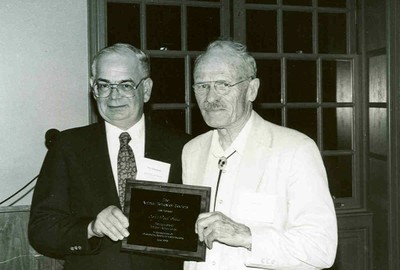
John Paul Scott receiving the first Distinguished Animal Behaviorist Award from Don Dewsbury, 1990
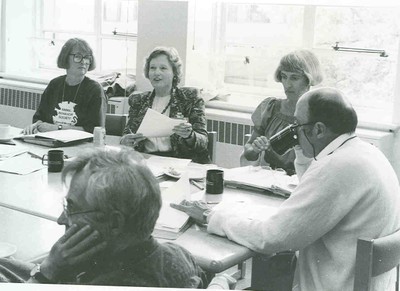
The Executive Committee at the 1992 Animal Behavior Society Meeting in Kingston, Ontario. The only difference between then and now? No laptops or smartphones anywhere to be seen.
ANNOUNCEMENTS

ABS 2013
University of Colorado-Boulder
28 July – 1 August
http://www.colorado.edu/ebio/abs2013
The historic 50th Anniversary of the Animal Behavior Society will be marked by a rich 5 day conference at the University of Colorado Boulder with strong representation from North American, South American and European researchers. CU-Boulder, the flagship university in Colorado, has a dynamic community of scholars on one of the most spectacular & scenic college campuses in the country.
Registration & Accommodation booking is now open!
https://cucs.colorado.edu/confreg/animal-behavior-society-2013
https://cucs.colorado.edu/confreg/animal-behavior-society-2013-housing
Abstract Submission opens on 1 April 2013
Deadline for abstract submission is 30 April 2013
http://new.animalbehaviorsociety.org/web/abstractsubmit2013/
Registration:
| Category | Early | Early (plus cons workshop) |
Late | Late (plus cons workshop) |
| Non-Member | $475 | $500 | $575 | $600 |
| Member | $325 | $350 | $425 | $450 |
| Member Student | $150 | $160 | $200 | $210 |
| Developing Nations* (Includes Conservation Workshop) |
$100 | N/A | 150 | N/A |
| Developing Nations Student* (Includes Conservation Workshop) |
$50 | N/A | 100 | N/A |
Late Registration begins after April 15th.
*Developing country attendees are those currently enrolled or working at an institution in the developing world. This does NOT include persons currently working or enrolled in institutions in the USA, Canada or other developed countries, regardless of country of origin.
The 2013 meeting has many exciting symposia, plenary speakers, workshops and special events.
Keynote and plenary speakers include: Barbara Smuts, Elizabeth Adkins-Regan, Donald Dewsbury, Patricia Gowaty, and Gene Robinson.
50th Anniversary Plenary Symposium
Organizer: Lee Drickamer
Founded in 1964, the Animal Behavior Society is now entering its 50th year of promoting and supporting research in this broad field. Changing political climates and funding models now challenge all researchers, and justification of the importance of one’s approach and field are important tools for successful grant writing, and for predicting areas where impact will be felt in the future. This plenary symposium offers perspectives on the history of our society and field, and developing areas of importance. Speakers include Donald Dewsbury, Elizabeth Adkins-Regan and Patricia Gowaty
President’s symposium
Social evolution: William D. Hamilton’s 50-year legacy
Organizers: Joan Strassmann & David Queller
At this 50th anniversary of the ABS we will mark the 50th anniversary of the publication of WD Hamilton’s seminal contributions: The genetical evolution of social behavior (I & II, 1964). This symposium will focus on how Hamilton’s field-changing insights have affected research in diverse areas (from sexual selection to eusociality), and across taxa (from primates to microbes). This two-day symposium will be the basis of a special issue of Animal Behavior. Confirmed speakers include: Marlene Zuk, Elizabeth Tibbetts, Joan Strassmann, David Queller, Rob Page, Kevin Foster, Bernard Crespi, Koos Boomsma, Sarah Brosnan, and Maydianne Andrade
Symposium: Trends in Conservation Behavior
Organizers: Esteban Fernandez-Juricic & Bruce A. Schulte
Conservation behavior is the application of knowledge of animal behavior to solve wildlife conservation problems. This discipline has made important empirical contributions to multiple conservation aspects, from captive breeding to managing interactions between humans and wildlife. This symposium will address the future of conservation behavior in the next decade. Early and mid-career researchers from academia and environmental agencies will address the novel conceptual frameworks that apply behavior to conservation biology and the new methodological tools used to solve challenging conservation problems that involve animal behavior. One of the goals of the symposium is to develop a list of basic behavioral problems that need more research that would facilitate their application to wildlife management problems (e.g., habituation). Confirmed speakers include: Brad Blackwell, Daniel Blumstein, Steven Cooke, Connie O’Connor, Andy Sih, and Craig Willis.
Symposium: Effects of plasticity and individual variation in sensory biology on sexual selection
Organizers: Jeffrey Lucas & Esteban Fernández-Juricic
Many signalers convey information about their quality in mating displays. While much is known about how signalers vary in terms of signaling, individual variation in detection of these signals is relatively unexplored. This is a critical issue in communication, particularly with respect to the role of communication in mating contexts, because individual variation in signal processing can generate variability in signal content from the sender’s perspective. For example, seasonal patterns in signal processing provide one source of individual variation if individuals vary in the extent and timing of seasonal changes in sensory physiology. Thus the theoretical understanding of phenomena such as honest signaling, sensory drive, and assortative mating, may need to be re-evaluated in light of individual variation in signal processing. This half-day symposium will address these issues over a diversity of taxonomic groups (birds, fish) and focusing on a diversity of sensory modes (auditory, visual, electrical). Confirmed speakers include Philip Stoddard, Joseph Sisneros, Megan Gall, Esteban Fernández-Juricic and Jeffrey Lucas.
POSTER SYMPOSIA
Poster symposia are clusters of posters curated by the symposium organizer. Any poster presenter with research relevant to a symposium theme can enter their poster for consideration for inclusion in the symposium by selecting the relevant subject category when their abstract is submitted. Poster symposia include: Applied Animal Behavior Poster Symposium. Organizer: Crista Coppola; President’s Poster Symposium: ‘Social Evolution: Hamilton’s 50 year legacy’.Organizer: Joan Strassmann
Special events and workshops at the 2013 Meeting
Applied Animal Behavior Public Day
Creating Quality Lives for Dogs and Cats through the Science of Animal Behavior
Sunday July 28
Organizer: Suzanne Hetts
This event is free and open to the public. Confirmed speakers include: Patricia McConnell, Marc Bekoff, Pam Reid, Suzanne Hetts, Daniel Q. Estep, and Julie Hecht.
Conservation Behavior Workshop
Sunday July 28
Organizers: Bruce Schulte & Misty McPhee
This workshop will include several speakers/groups who will present specific problems with the conservation of particular threatened or endangered species, and how a behavioral approach is likely to facilitate solutions. Information about the problem and system will be disseminated to workshop participants prior to the meeting. After the presentations at the workshop, the presenters and participants will break out into workgroups that will focus on problem-solving. This workshop has the potential to initiate collaborations on the featured problems.
This workshop will incur a moderate additional registration fee for most attendees.
Undergraduate Luncheon & Reception
Monday July 29
Organizer: Dan Howard
The reception provides a networking platform for undergraduate students attending ABS, and an opportunity for ABS faculty members to introduce their programs to potential graduate school applicants. The event includes lunch for undergraduate attendees. The ABS Diversity Committee has developed this event as part of an on-going effort to broaden participation of under-represented groups within the field of Animal Behavior, with an emphasis on translating the diverse demographics evident at the undergraduate level to the graduate and professional levels in the field. Students or faculty who wish to participate in this luncheon should contact Dan Howard ([email protected]).
Diversity committee panel/workshop
How social media tools can enhance your science, your career, and promote diversity
Monday July 29
Organizer: Danielle Lee
Web 2.0 social media tools provide new channels for promoting your science and career. It can be an especially important tool for raising professional profiles of women and minority scientists. Panelists will describe how they use online tools to discuss science, engage the public, publicize accomplishments, as well as engage broader audiences in science. Speakers include Danielle Lee, Alberto I. Roca, and Samuel Diaz-Munoz.
ABS Film Festival
Monday July 29 & Tuesday July 30
Organizer: Mike Noonan
www.canisius.edu/~noonan/
Now in its 30th year, the ABS Film Festival features outstanding film that portray important concepts in animal behavior research and education. Categories include both amateur (non-commercial) and professional (commercial) films produced in the preceding five years. In addition, ABS members are encouraged to bring short video clips of their own to share in an informal film event (http://new.animalbehaviorsociety.org/web/absfilm)

ABS 5K Fun Run
Thursday Aug 1
Organizer: Caitlin Gabor
Meeting registrants or accompanying guests are invited to participate in this 6th annual recreational walk/run/sprint. Sign-up will occur at the conference. A nominal registration fee will be charged, proceeds are donated to support ABS Student Research Grants.
Animal Behavior Public Day
Friday August 2 (post-conference) 9 am to noon, University of Colorado Museum of Natural History
Organizer: Emilie Snell-Rood
The ‘Outreach’ subcommittee of the ABS-Education committee has organized a daytime event to introduce animal behavior research to the public through a combination of engaging activities and hands-on exhibits. This event has been held for the past several years and is well received by local communities -- in 2011, 50 scientists from 18 labs shared their research with over 550 attendees. This year the event will be hosted by the University of Colorado Museum of Natural History. Please contact Emilie Snell-Rood ([email protected]) if your lab is interested in participating.
GEORGE W. BARLOW AWARD FOR OUTSTANDING STUDENT RESEARCH PROPOSAL
An endowment fund has been established in memory of George W. Barlow for the purpose of encouraging excellence in graduate student research in the field of animal behavior. The Barlow Award will be awarded annually to one top-ranked proposal in the Student Research Grant cycle in accordance with the most recent ABS Student Research Grant competition rules. A cash award and a certificate will be given to the student selected. The amount of the Barlow Award will be the maximum amount allowed for a Student Grant Award as specified in the most recent ABS bylaws or policies.
If you would like to make a US tax-deductible donation to this cause, please send your donation to: Animal Behavior Society, 2111 Chestnut Ave, Suite 145, Glenview, IL 60025-3828, USA (with appropriate notation for this fund). We will recognize major donors in a future issue of the newsletter. Thanks to Dr. Judy Stamps for arranging for ABS to manage this endowment and for her generous seed donation.
OPPORTUNITIES
Mountain Lake Biological Station announces Early-Career Fellowships
The University of Virginia’s MLBS is excited to offer a limited number of fellowships to support station and residency costs for researchers to explore new projects or collect preliminary data. This is a rare opportunity to make an extended stay of up to 2 months at one of North America’s premier field stations at no cost to the researcher. Preference will be given to individuals and projects with the potential to develop into long-term research activities at the Station. MLBS welcomes researchers from any discipline that can benefit from the Station experience and facilities. We especially encourage applications from individuals in the postdoctoral or early faculty phases of their careers, but will not exclude other individuals from consideration.
Interested individuals should submit a single pdf file including CV and a 2-3 pp. proposal outlining the proposed research to [email protected]. Review of proposals will begin February 20, 2013. For more information about the fellowship program, research opportunities or Mountain Lake Biological Station (mlbs.org), please contact the Director – Butch Brodie ([email protected]).
MEETINGS
ANIMAL BEHAVIOR SOCIETY
ANNUAL MEETINGS
2013: 28 July-1 August, Animal Behavior Society – 50th Annual Meeting, Boulder, Colorado.
2014: 9-14 August, Animal Behavior Society – 51st Annual Meeting, Princeton, New Jersey.
OTHER US MEETINGS
2013: 15-16 March, Life Discovery-Doing Science, St. Paul, Minnesota.

If you are interested in promoting teaching and learning in organismal and environmental biology, please consider attending this unique event.
This conference is one of two major efforts being developed by a partnership of societies and spearheaded by the Ecological Society of America. The Animal Behavior Society is a conference collaborator, and we are joining the partnership in their second major effort: the development of the Life Discovery Digital Library (which will house teaching resource collections from various societies including ABS). Please help ABS spread the word about both efforts.
More information about the conference can be found at: http://www.esa.org/ldc/
Please contact Cynthia Wei at [email protected] for more information.
2013: 21-23 March, “Living with Animals,” Eastern Kentucky University, Richmond, Kentucky.
KEYNOTE SPEAKERS:
Margo DeMello/Francine Dolins/Ken Shapiro/Kari Weil
CONFERENCE CO-CHAIRS:
Dr. Robert Mitchell and Julia Schlosser
[email protected]
[email protected]
CONFERENCE WEBPAGE:
Very soon, we will have a link for the conference that you can access from: http://www.eku.edu/academicspotlight/animal-studies-program
You can also email Julia Schlosser with questions: [email protected]
2013: 5-6 June, Chicago Zoological Society 2nd International Symposium on Zoo Animal Welfare, Chicago, Illinois.
Please remember to save the date for the Chicago Zoological Society’s 2nd International Symposium on Zoo Animal Welfare. The symposium will be held at Brookfield Zoo on June 5-6, 2013. A pre-symposium workshop will be offered on June 4 for those interested in participating in a hands-on training session for WelfareTrak (a separate registration fee applies). For more information, please visit: www.czs.org/symposium
Please note that the deadline for abstract submission has been extended to February 15, 2013.
2013: 18-22 June, American Society of Primatologists- 36th Meeting, San Juan, Puerto Rico.
2013: 17-20 July, Human Behavior and Evolution Society (HBES) – 25th Annual Meeting, Miami Beach, Florida.
INTERNATIONAL MEETINGS
2013: 15-19 April, Animal Behavior Management Alliance Conference – Annual Meeting, Toronto, Canada
2013: 16-19 May, International “Stress and Behavior” Neuroscience and Biopsychiatry Conference 19th Annual Meeting, St. Petersburg, Russia.
2013: 22-25 May, Congress of the International Society for Behavioral Ecology (ISBE) - Annual Meeting, Ghent, Belgium.
2013: 21-25 July, Annual Congress for Conservation Biology (ICCB) – 26th Annual Meeting, Baltimore, Maryland
2013: 4-8 August, joint meeting of International Ethological Conference (IEC) and the Association for the Study of Animal Behavior (ASAB)-33rd Conference, Gateshead, England.
Behaviour 2013-this conference will be the largest gathering of researchers working in various fields of animal and human behaviour that comprise the discipline of ethology to be held in 2013.
The organizing committee invites submissions for symposia. Symposia may be in ANY AREA OF ETHOLOGY. We would particularly like to encourage submissions in the following areas:
- Applied Ethology and Animal Welfare
- Animal Learning and Cognition
- Behavioural Ecology
- Human Ethology
- Neuroethology
- Primate Cognition and Behaviour
- Robot models of Animal Behaviour
For fully symposia submission guidelines, please visit iec2013.com
Registration opens January 2013 and early bird deadline ends 7th April 2013.
2014: 31 July-5 August, International Society for Behavioral Ecology (ISBE)- Annual Meeting, New York City, New York.
DID YOU KNOW?
Consider helping the Animal Behavior Society earn up to 7.5% on your purchases by ordering your books and other qualifying products from Amazon.com (up to 5%) or Powell's Bookstore (up to 7.5%) using the links found here: http://new.animalbehaviorsociety.org/web/abs-media/abs-books/.ACTIVE FELLOWS OF THE SOCIETY
In keeping with tradition, and in recognition of this historic 50th Anniversary of the Society, following is a list of current, active Fellows of the Society:
|