Donald Dewsbury
Aug. 11, 1939 ~ Mar. 26, 2025
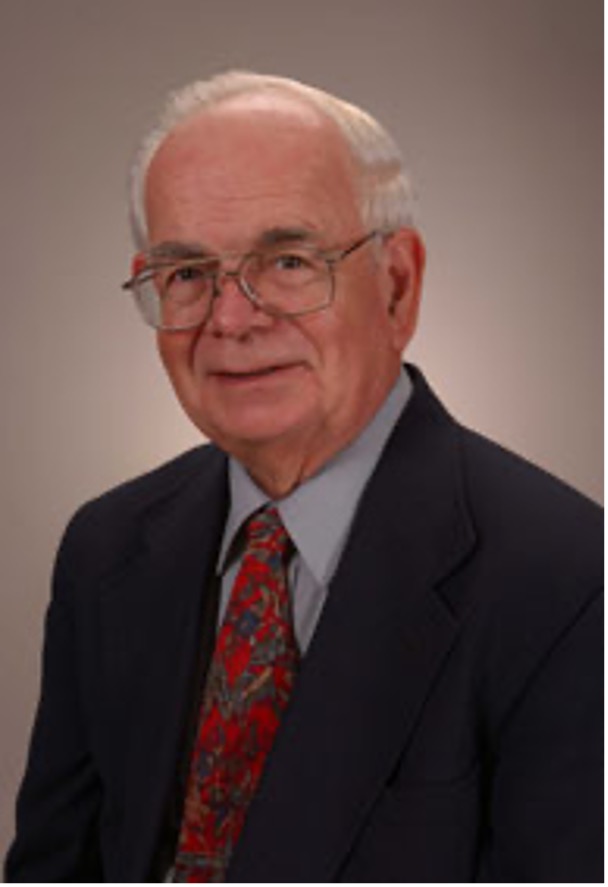
Photo credit: University of Florida
Compiled by Sue Margulis
Long-time ABS member and past Society President Don Dewsbury passed away March 26, 2025 at the age of 85. Don held so many roles in the Society it is a challenge to list them all, but his contributions to the growth and management of the Society are enormous. He served as Society treasurer from 1973-1976, and as soon as this term ended, he was elected to the presidential track in 1976, serving as President in 1978. He served as the Society’s historian for almost 20 years, from 1988 – 2007. He received the Exemplar Award in 1977, the Exceptional Service Award in 2003, and was elected as a Fellow of the Society in 1983. Don was equally active in the American Psychological Association, where he served as president of three several divisions including behavioral neuroscience and comparative psychology from 1991-1993, and then as its historian and archivist from 1991-2008. Clearly, his fascination with history grew as he compiled historical records. He also served as historian of the Psychonomic Society and was an advisor to the Archives of the History of American Psychology.
Don began his academic career as an undergraduate at Bucknell University, graduating right around the time that the university’s animal behavior program was launched. After completing his PhD at the University of Michigan, he completed several post-docs and then settled into a faculty position at the University of Florida where he remained throughout his academic career, retiring after 40+ years in 2007. Don mentored over 30 graduate students during his career, many of whom are well known in our discipline.
A comparative psychologist by training, Don’s early work focused on copulatory behavior in rodents. He dealt with wide-ranging topics including the evolution of monogamy, paternal behavior, comparative social behavior, and behavioral endocrinology. His interest in the history of science grew over the years – this proved to be an incredibly valuable direction for the Society, as he was instrumental in compiling many of the records that now reside in the archive. He has edited a number of volumes on the history of psychology and animal behavior, including biographical sketches of many of the founders. The value of these works is enormous. In total, he authored approximately 400 publications in animal behavior, comparative psychology, history of science and over a dozen edited volumes.
Don grew up on Long Island, NY but his academic trajectory took him to all parts of the United States: Pennsylvania, Michigan, California, and eventually Florida. He was a devoted baseball fan and continued to cheer for the Giants – the New York Giants – even after they moved to California. He was a true Renaissance Man – a scientist, a historian, a sports aficionado, an avid fan of opera and jazz. He was a devoted husband and father, and will be missed by all who knew him, worked with him, and learned from him.
Stephen H. Vessey
March 7, 1939 - December 21, 2025
Comments by Comments by Doug Meikle, Donna Holmes Parks, Susan Meikle, Dan Wiegmann, Beth Jakob, and Vern Bingman
Stephen Vessey’s curiosity about the natural world was sparked early in his life. During his time as a pupil at Mrs. Hackley’s School for Boys (now the Hackley School) in Tarrytown, NY, Steve was inspired by a teacher who taught his class how to identify birds. Steve described the first time he was able to locate a bird and how excited he was to see the details of its plumage with his binoculars. That excitement sparked a love of birding, his career studying animal behavior, and a commitment to environmental issues that remained with him for the rest of his life. Steve passed away peacefully on Dec. 21, 2025; he was 86.
Steve moved on from Miss Hackley’s School, graduated from Swarthmore College (1961) and then earned his doctorate at Pennsylvania State University under the direction of David E. Davis. Ironically, while Steve was both the quintessential gentleman and a gentle man, he focused much of his research on agonistic behavior and social dominance relations in mammals.
At Penn State, he studied the effects of social grouping and dominance rank on circulating levels of antibodies and immune function in house mice. He found that social stress diminished immune function, but that high social dominance rank ameliorated the effects of social stress. After completing his doctorate, Steve conducted postdoctoral research for four years as a commissioned officer for the National Institutes of Health at the Caribbean Primate Research Center (CPRC) in La Parguera, Puerto Rico. There he studied the population dynamics and social behavior of free-ranging rhesus monkeys.
Working with collaborators at La Parguera, Steve found that the social dominance ranks of male rhesus monkeys was a function of their mother’s rank while they were in their natal group, but in non-natal social groups their rank was a function of their tenure in that group. They also studied the timing of reproduction in relation to seasonal rainfall and elucidated the matrilineal dominance relations that underlie the fissioning of social groups.
After his postdoctoral stint at CPRC, Steve took a tenure track position at Bowling Green State University. He spent most of his career at Bowling Green, where he retired from the Department of Biological Sciences after 31 years. At Bowling Green, Steve mentored the research of a large number of graduate and undergraduate students. He was a tireless advocate for students. Sharing his enthusiasm and expertise with his students piqued their curiosity about the natural world and inspired many to pursue their own careers in biology. For one of us, one of the fondest memories of Steve enjoying the company of graduate students and junior faculty was an ill-fated “biggest-day birding competition” when Steve’s team accumulated what was thought to be a winning total of 128 species only to be crushed by most of the other teams, with the winning team coming in with a 170+ species; Steve and his team were gracious losers! In addition, he was a caring and effective mentor for new faculty navigating their first tenure-track jobs. He subsequently served as a Program Director and, later, as a Divisional Deputy Director, for over ten years at the National Science Foundation.
Steve’s work on Peromyscus leucopus (white-footed mice) in northwest Ohio, a 30+ year mark–recapture study that extended well past his retirement, involved a succession of graduate and undergraduate students. This study became something of a classic for integrating questions about life history trade-offs, behavior, and population ecology in small rodent populations. Vessey’s team helped establish that these mouse populations are resource-driven, regulated behaviorally in a density-dependent fashion, and constrained by female territoriality and resource use.
Until shortly before his passing, Steve always maintained a home in Bowling Green, and after his time with NSF he would be a continual and inquisitive participant at Biology Department seminars and a presence as one of the many bicyclists on the local bike trail. His love of birds never diminished, and he continued to serve the Bowling Green community by often volunteering to lead community birding excursions in the local woodlands. He enjoyed annual treks to view the spring migrants on the Lake Erie shore.
Steve’s expertise took him around the world: he studied the population dynamics of rodents at the Enewetak Atoll and in Cuba; he was recruited by the Smithsonian Institution to conduct a survey of primates in Guyana; and he was invited to teach several classes on rodent control in Africa. He co-authored multiple editions of two widely used textbooks, Animal Behavior: Mechanisms, Ecology, and Evolution and Mammalogy: Adaptation, Diversity and Ecology.
Steve shared many adventures with his beloved wife Kristin, who predeceased him. He leaves two children, Nathan Vessey and Samantha Vessey, along with grandchildren and great-grandchildren.
Steve approached life with curiosity, enthusiasm, and purpose. He was a devoted environmentalist, a staunch advocate for women’s rights and a lifelong learner who inspired those around him through both his intellect and his example. Even at the age of 80, his sense of adventure endured, and he navigated the rapids of the Grand Canyon on a week-long rafting expedition. He was still like the kid from Mrs. Hackley’s School who had spotted a bird with his binoculars, full of awe and wonder at the natural world.
Gail Michener
1946-2026
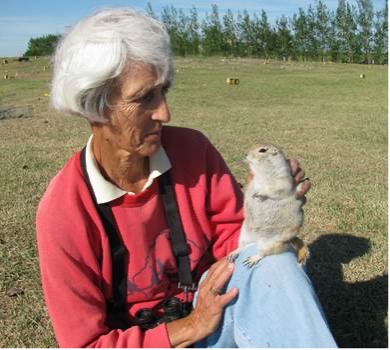
Photo credit: https://naturealberta.ca/underground-life/
Compiled by Jennifer Mather
Gail Michener (1946-2026) carried on a fairly conventional academic career with a record of excellence in many areas. She was international before she was a scholar, born in England but raised in Australia where she received her undergraduate education at the University of Adelaide. She moved to Canada for graduate work, receiving a doctorate from University of Regina in 1972. She married into a distinguished academic family, as her father-in-law was the renowned entomologist CD Michener. After graduate work they moved to Alberta, where her husband Dan chose farming over an academic career, and they owned a farm near Picture Butte outside Lethbridge. Gail held a Killam postdoc at the University of Alberta then taught as a sessional lecturer at the University of Lethbridge. In 1980 she received a prestigious NSERC University Research Fellowship and an appointment as an Assistant Professor. Her lifelong fascination was the natural history and sociobiology of Richardson’s ground squirrels, and she was actually able to set up a colony that she could view from her study window. For her research accomplishments she was awarded the C. Hart Mirriam award from the American Society of Mammalogists in 1995 and the University of Lethbridge Speaker research award in 2003. After retirement in 2008, she continued her NSERC-funded research for several years. She resolved to teach better than her often pedantic professors and was both popular and accomplished. In 2000 she received the William C Brown Distinguished Teaching Award from the Animal Behavior Society and in 1993 the Distinguished Teacher award from the University of Lethbridge (she is one of the very few individuals to receive both the awards, for research and for teaching). She did not avoid service. She was the Chair of the Biology Department from 1993-1996, on the Board of Directors of the American Society of Mammalogists from 2001-2004 and associate editor of the Journal of Mammalogy from 1983-1987. From 1987 to 1990 she was a member of the Executive of the Canadian Council of Animal Care and its President from 1988-1989. Among other activities, she spearheaded the recognition of cephalopods as suitable subjects for formal ethical recognition and welfare concerns, making Canada the first country in the world to do so. Gail was a member of the Animal Behavior Society Executive from 1985-1988 and 1990-1994, and its President from 1988-1989. In 1997 she became a Fellow of the Animal Behavior Society.