Lee C. Drickamer
1946-2026
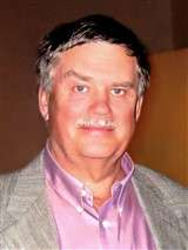
Photo credit: https://marquistopeducators.com/
Submitted by Sue Margulis, ABS Historian
It is with great sadness that I share the passing of Dr. Lee Drickamer on April 6, 2026. Lee’s contributions to our discipline, to the Animal Behavior Society, and to the world at large are substantial and he will be deeply missed.
Born in Ann Arbor Michigan, Lee spent his early life in Urbana-Champaign, IL. He completed his bachelor’s degree at Oberlin College, then returned to Michigan for graduate school, receiving his PhD from Michigan State University at the impressive age of 24. He held numerous faculty positions, first at Williams College, then Southern Illinois University and Northern Arizona University. He retired as Regents Professor of Biology from NAU in 2010. He hosted the Animal Behavior Society Meeting twice: in 1987 at Williams College, and in 1998 at Southern Illinois University.
His contributions to the field of animal behavior focused largely on chemical communication and signals and their impact on sexual maturation in mice. However, the nearly 200 publications on his CV include both laboratory and field work on species as diverse as rhesus macaques, house mice, stink bugs, flour beetles, domestic swine, and Cooper’s Hawks. His CV spans well over 50 pages and demonstrates his lifelong commitment to learning and research. He served as an advisor to 24 master’s students and 4 PhD students and was a committee member for 11 additional PhD candidates and another 20 master’s candidates. While at Williams College, he mentored numerous undergraduate students, many of whom went on for graduate and professional degrees. His teaching spanned diverse courses from introductory biology to advanced graduate seminars, with both theoretical and applied aspects.
Lee joined the Animal Behavior Society shortly after it was established (he joined in 1967; the Society was formed in 1964) and served the Society in numerous ways. He was in fact, a member of the Executive Committee nearly continuously from 1983 through 2015. He served as President, Program Officer, Journal Editor, Treasurer, and Historian. I note that prior to around 2006, Executive Committee meetings were all day affairs at the meeting, often lasting well into the evening. Lee was elected as a Fellow of the Animal Behavior Society in 1993, and received the Exceptional Service Award in 1999, and the Distinguished Animal Behaviorist Award in 2010.
As ABS Historian, Lee contributed significantly to the establishment and maintenance of the Society Archive at the Smithsonian Institution. His interest in history more broadly expanded over time, including numerous articles and books on civil war history.
His contributions to the history of our field are truly significant. He co-edited two volumes: one with Lynn Houck (Foundations of Animal Behavior), and one Don Dewsbury (Leaders in Animal Behavior: the Second Generation) as well as a foundational textbook, first published in 1982 with Steve Vessey (Animal Behavior: Concepts, Processes, and Methods). By the 3rd edition, this morphed slightly (Animal Behavior: Mechanisms, Ecology, and Evolution).
Lee was active not only in professional scientific organizations but in campus, community, and charitable organizations as well. In every state, city, and town in which he lived, he contributed. He was an avid traveler and has the distinction of having visited every US state – and state capitol – and 60 national parks, as well as 70+ other countries.
Lee was a reviewer on one of the first manuscripts I submitted to Animal Behaviour. While reviewers do have the option to sign reviews (this was of course back in the days when everything was on paper and via snail mail), they rarely do. Lee signed his review, and offered numerous positive and supportive suggestions. This was so important at this early stage in my career; I will never forget that, and am forever grateful for colleagues like Lee, who were able to offer support and couch critiques in a positive light. He will be deeply missed by all who knew him, worked with him, and had the privilege of connecting with him.
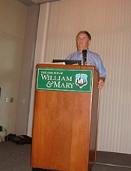
Accepting the Distinguished Animal Behaviorist Award